



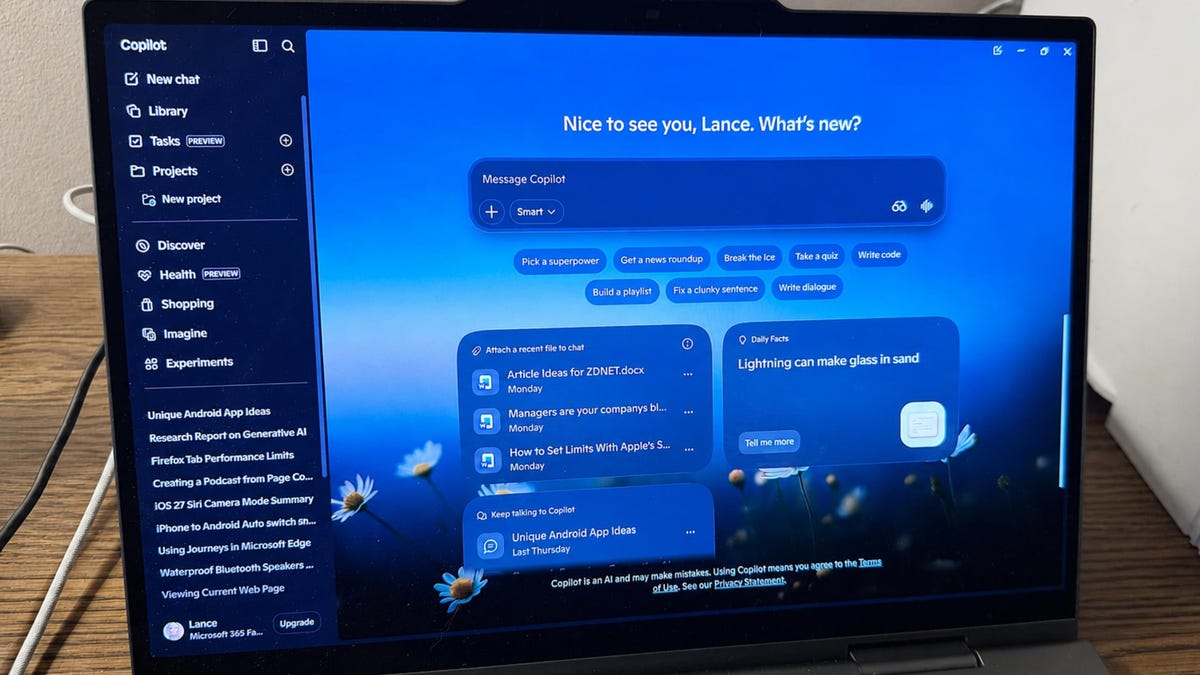
Microsoft is streamlining its Copilot offerings for a more unified experience. Currently, users navigate between two separate apps—the consumer-focused Copilot and the Microsoft 365 Copilot designed for professionals. This duality can create confusion, especially when switching between personal and work tasks.
To address this, the company is merging these applications into a single, unified Copilot app. This move aims to simplify the user experience by allowing individuals to sign in with one account—be it personal, work, or school—and access all necessary features and services.
### Key Features of the Unified Copilot App
The new unified app, set to roll out in mid-September, will cater to both free and paid users. Microsoft 365 subscribers will enjoy higher usage limits and direct access to other Microsoft 365 applications like Word, Excel, and Outlook. Free users will have access to standard Copilot features, including asking questions, creating images, and chatting via text or voice.
Account switcher within Copilot. (Credit: Lance Whitney/ZDNet)
If you use the regular Copilot app with a personal account, you’ll be guided through an update process, ensuring your chat history and content are carried over. Similarly, users of the Microsoft 365 Copilot app will experience visual and navigational updates, but their workflows will remain largely unchanged.
For those using both apps with a personal account, the transition will migrate all chat history and content into the new unified app. Microsoft emphasizes that work and personal environments will stay separate, ensuring no data flows between the two.
### Three Features Being Retired
As part of this consolidation, Microsoft is retiring three features:
– Group chats: Messages and content from group chats created before August 18 will no longer be accessible.
– Podcasts: Users will not be able to create or access existing podcasts generated in Copilot after August 18.
– Deep Research: This mode will be phased out, though existing reports will remain accessible. Only Microsoft 365 Premium subscribers can continue generating in-depth reports.
Transitioning to the new unified app. (Credit: Lance Whitney/ZDNET)
### A Positive Step Forward
This consolidation represents a significant improvement for Copilot. By merging two similar apps into one, Microsoft is reducing clutter and confusion. The seamless transition and commitment to keeping work and personal environments separate should enhance user experience. As the rollout begins, users can look forward to a more streamlined and efficient Copilot experience.
## FAQ
**Q: What is the difference between the regular Copilot app and Microsoft 365 Copilot?**
A: The regular Copilot app is designed for consumers and individual users, while Microsoft 365 Copilot is tailored for organizations and professional accounts, offering higher usage limits and direct access to other Microsoft 365 applications.
**Q: When will the new unified Copilot app be available?**
A: The unified Copilot app is scheduled to begin rolling out in mid-September.
**Q: Can I sign in with my work, school, or personal account?**
A: Yes, the new unified app allows users to sign in with their work, school, or personal account.
**Q: What happens to my chat history during the transition?**
A: Your chat history and most content will be migrated to the new unified app, ensuring a smooth transition.
**Q: Which features are being retired in the new app?**
A: Group chats, podcasts, and Deep Research mode are being retired. Group chat messages and podcasts created before August 18 will no longer be accessible, and Deep Research mode will no longer be available after that date.
## Conclusion
The merger of Microsoft’s Copilot and Microsoft 365 Copilot into a single unified app is a step toward simplifying the user experience. By allowing a single sign-in for various account types and ensuring the separation of work and personal environments, Microsoft is addressing previous confusion and clutter. As the rollout begins, users can anticipate a more streamlined and efficient interaction with Copilot, marking a positive evolution in Microsoft’s AI offerings.
