



# The Backbone of Urban Connectivity: How Wi-SUN Powers Smart Cities
Walking through a modern metropolis, it is easy to overlook the invisible web of sensors managing everything from traffic lights to air quality. These smart city applications represent some of the largest Internet of Things (IoT) deployments in existence. However, packing thousands of devices into a dense urban environment creates a significant networking challenge. The chosen wireless protocol must handle this massive scale while remaining reliable for years. Enter the Wireless Smart Ubiquitous Network (Wi-SUN), a powerful solution designed specifically for this level of connectivity.
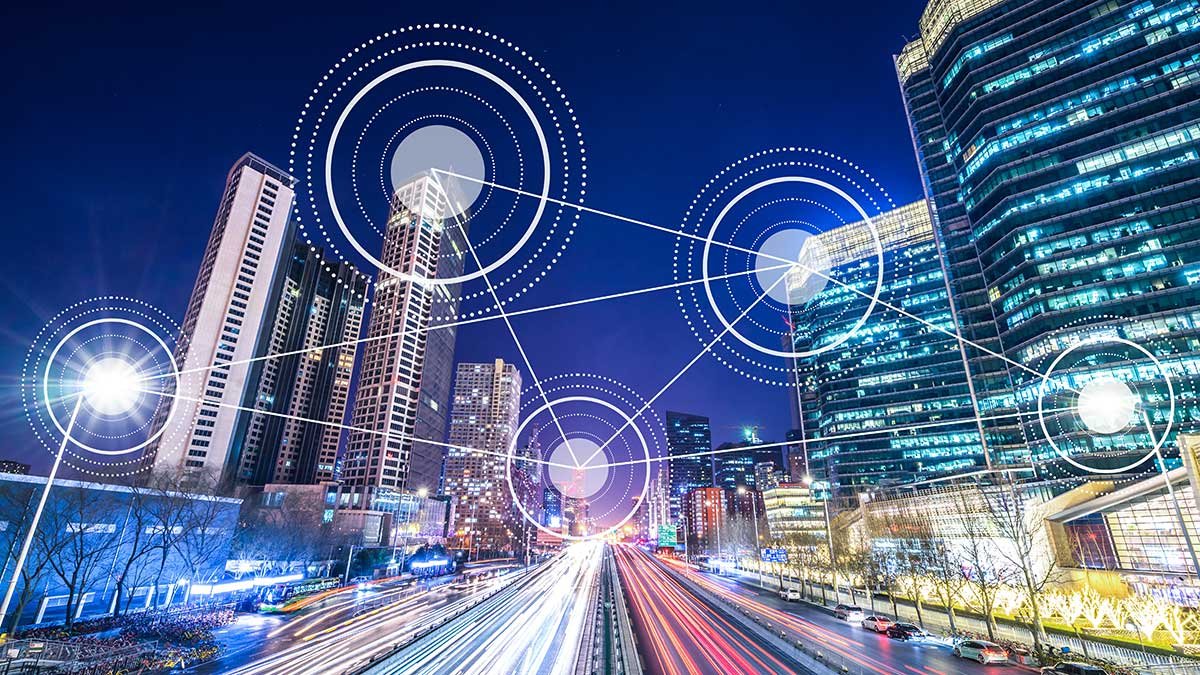
Wi-SUN is a low-power, wide-area network (LPWAN) that operates in the sub-1 gigahertz frequency range. It is a scalable, standards-based wireless mesh network that allows for flexible device integration. Unlike traditional star networks where every device communicates directly with a central hub, Wi-SUN’s mesh topology allows devices to relay data through their neighbors. This creates a self-organizing, self-healing network—meaning if one connection is disrupted, data simply routes through another device, keeping the entire system resilient and operational.
## Why Wi-SUN Excels in Urban Environments
Operating in the sub-GHz band provides significant advantages for large-scale cities. These lower frequencies achieve extended coverage and easily penetrate dense building materials and underground infrastructure. This robustness ensures reliable communications even in challenging urban canyons.
Beyond physical reach, Wi-SUN is built for efficiency. It offers low-latency communication, enabling near-real-time device monitoring and control. The protocol is also highly power-efficient, designed specifically for duty-cycled sensor applications, allowing devices to run on a single battery for multiple years. Furthermore, built-in security features ensure mutual authentication, protecting network access and safeguarding data integrity against unauthorized threats.
## The Role of Edge Intelligence and Hardware
Deploying this technology requires hardware capable of handling local processing. Modern wireless modules featuring Wi-SUN connectivity integrate processing power that supports Edge intelligence. This means sensors can analyze data locally, pre-process information, and trigger immediate actions—such as adjusting street lighting or HVAC systems—without constantly sending data to the cloud. These modules provide standard physical interfaces like GPIO, I2C, SPI, and UART, making it simple to connect a variety of sensors and peripherals. Many also support Bluetooth Low Energy (BLE) for straightforward local setup and remote provisioning.
## Connecting the Network to the Cloud
While the mesh network handles device-to-device communication, a gateway is still required to bridge the local network to the internet and cloud platforms. These gateway devices can support hundreds of end nodes and provide diverse uplink options, including Wi-Fi, cellular (LTE), and Ethernet. This redundancy ensures that the network stays connected even if one type of uplink fails, offering the flexibility needed to integrate with a city’s existing infrastructure.
## Conclusion
Wi-SUN is transforming how smart cities are built by providing a robust, secure, and scalable foundation for urban IoT. Its use of sub-GHz frequencies combined with a resilient mesh architecture makes it ideal for long-term deployments in smart metering, public infrastructure, and environmental monitoring. As cities continue to grow and adopt IoT, open-standard technologies like Wi-SUN will be crucial for creating connected, efficient, and responsive urban environments that can evolve over time.
## Frequently Asked Questions (FAQ)
**What does Wi-SUN stand for?**
Wi-SUN stands for Wireless Smart Ubiquitous Network. It is a wireless protocol specifically designed for large-scale IoT networks, particularly in smart city environments where dense device deployment is required.
**How does Wi-SUN differ from standard Wi-Fi?**
Standard Wi-Fi uses a star topology where all devices connect directly to a single router. Wi-SUN uses a mesh topology, allowing devices to relay data through one another. Additionally, Wi-SUN operates on sub-GHz frequencies, which travel farther and penetrate walls and buildings much better than the 2.4 GHz frequencies commonly used by Wi-Fi.
**How long can Wi-SUN sensors run on a battery?**
Because of its highly efficient power management and ultra-low sleep modes, Wi-SUN sensors can operate on battery power for several years. This greatly reduces the need for frequent maintenance or battery replacements in hard-to-reach areas.
**Why is using an open standard important for city networks?**
Open standards prevent vendor lock-in. Cities can mix and match hardware from different manufacturers, ensuring long-term flexibility. This makes it easier to expand or upgrade the network over time without replacing existing infrastructure or worrying about compatibility issues.
Thank you for reading
