



# How Technology Is Changing the Way Police Investigate Public Unrest
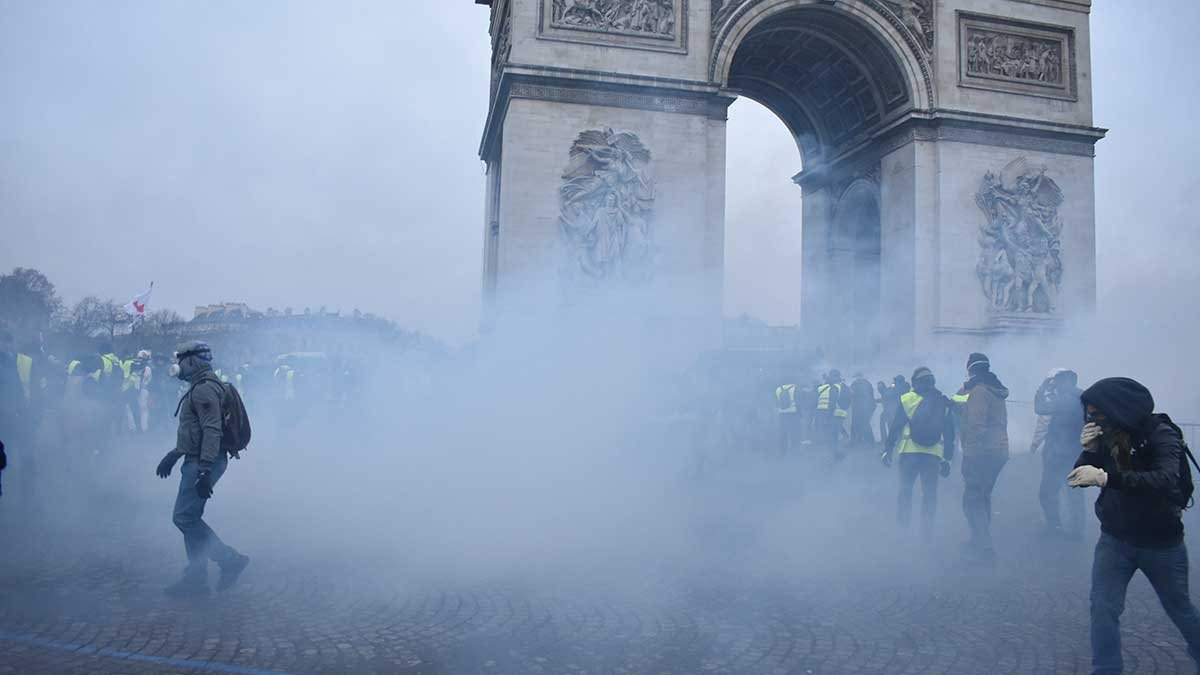
**France has long dealt with civil unrest, but the tools used to investigate it have changed dramatically in recent years. After a weekend of widespread disorder in October 2026, authorities launched one of the largest investigations the country has ever seen — and technology sits at the heart of the effort.**
Nearly 200 detectives in the Paris region have been assigned to sift through hours of surveillance video, social media posts, and digital marketplace listings to identify those responsible for looting, arson, and vandalism. The sheer scale of the response has sparked a broader conversation about the role of technology in public safety and the line between security and privacy.
Here is a look at the key tools now being used and what they mean for the future of policing during protests.
—
## Cameras Everywhere: The Rise of Networked Surveillance
One of the most powerful assets available to investigators is the network of cameras already in place across cities. Public CCTV systems, transport cameras on buses and trains, and private shop security feeds all offer a patchwork of visual evidence that can be stitched together to trace movements and identify individuals.
Investigators can match physical details — clothing, bags, height, and even the time of day — to follow a person from one camera to the next. With the help of artificial intelligence, this process is becoming faster and more efficient. Software can now scan thousands of hours of footage and flag only the clips that contain relevant people or objects.
—
## Eyes in the Sky: Drones on Patrol
While ground cameras capture what is happening at street level, drones offer a completely different perspective. Equipped with high-resolution cameras, they can monitor the movement of large crowds, track how disorder spreads across neighborhoods, and help commanders deploy resources more effectively.
French law allows aerial surveillance during public-safety operations, but only when it is considered proportionate and necessary. Courts have reviewed several drone deployments around schools during demonstrations, approving some requests while rejecting others where the justification was too vague. These legal checks suggest that drone use is not unlimited — it is subject to judicial oversight.
—
## The Digital Footprint: Social Media and Online Sales
Today, nearly every smartphone is a recording device. Protesters, bystanders, and even journalists upload photographs, live streams, and short videos to social media platforms in real time. For investigators, this creates a rich source of publicly available evidence.
A single video posted online can reveal the location, timing, and appearance of individuals involved in an incident. Officers can cross-reference this information with other evidence to build a picture of what happened.
But the digital trail does not stop when the protest ends. In Paris, police have reportedly begun searching online resale platforms for goods believed to have been stolen during the unrest. Listings on secondhand marketplaces can include photographs, detailed descriptions, and even the seller’s account history — all of which can provide valuable leads.
—
## Facial Recognition: A Controversial Tool
Facial recognition technology compares features from a face captured in an image or video against a database of known individuals. When paired with surveillance camera footage, it allows investigators to search for specific people across a vast number of recordings without having to watch each one manually.
This technology has been used in several countries during investigations into public disorder. In the United Kingdom, for example, police used facial recognition to analyze over 10,000 hours of CCTV footage following unrest in Sunderland in 2024. In France itself, a 2024 government report confirmed that facial recognition features were activated during the summer 2023 disturbances using video-analysis software.
Despite its usefulness, facial recognition remains one of the most debated technologies in modern policing. Concerns about accuracy, false matches, and the potential for mass surveillance continue to shape the conversation around its use.
—
## FAQ
**Why are authorities using so many technologies at once?**
The combination of CCTV, drones, social media, and facial recognition allows investigators to gather evidence from multiple angles. Each tool serves a different purpose — some capture what happened, others help identify who was involved — and together they create a more complete picture than any single tool could provide on its own.
**Can anyone be filmed without their consent?**
In many countries, laws permit surveillance cameras in public spaces as long as the recording serves a legitimate public-safety purpose. However, the use of more invasive tools like facial recognition is often subject to stricter legal standards and judicial review.
**Is the data collected during protests stored permanently?**
Data retention policies vary depending on the type of information and the jurisdiction. Surveillance footage may be kept for a set period unless it becomes part of an active investigation. Digital data from social media and online platforms is governed by separate privacy and data-protection regulations.
**Are courts involved in approving these technologies?**
Yes. In France, several court decisions in 2026 reviewed specific deployments of drones and other surveillance tools. These rulings suggest that authorities cannot use these technologies without proper justification, and that courts play a role in checking their use.
**What happens if someone is wrongly identified?**
Wrongful identification is one of the major concerns with technologies like facial recognition. Legal safeguards, including the right to challenge evidence and request independent review, exist to protect individuals — but critics argue these protections are often insufficient in practice.
—
## Conclusion
The integration of digital tools into policing has given authorities powerful new ways to investigate public disorder and hold individuals accountable. From city-wide camera networks to drones overhead and algorithms scanning social media posts, the technological toolkit available to law enforcement is expanding rapidly.
At the same time, these tools raise important questions about privacy, proportionality, and the right to peaceful protest. As the October investigation in France shows, the balance between public safety and civil liberties is a line that is not always easy to draw — and it is one that will continue to be tested as technology evolves.
The decisions made now by governments, courts, and law enforcement agencies will shape how future generations experience both security and freedom in public spaces.
Thank you for reading
