



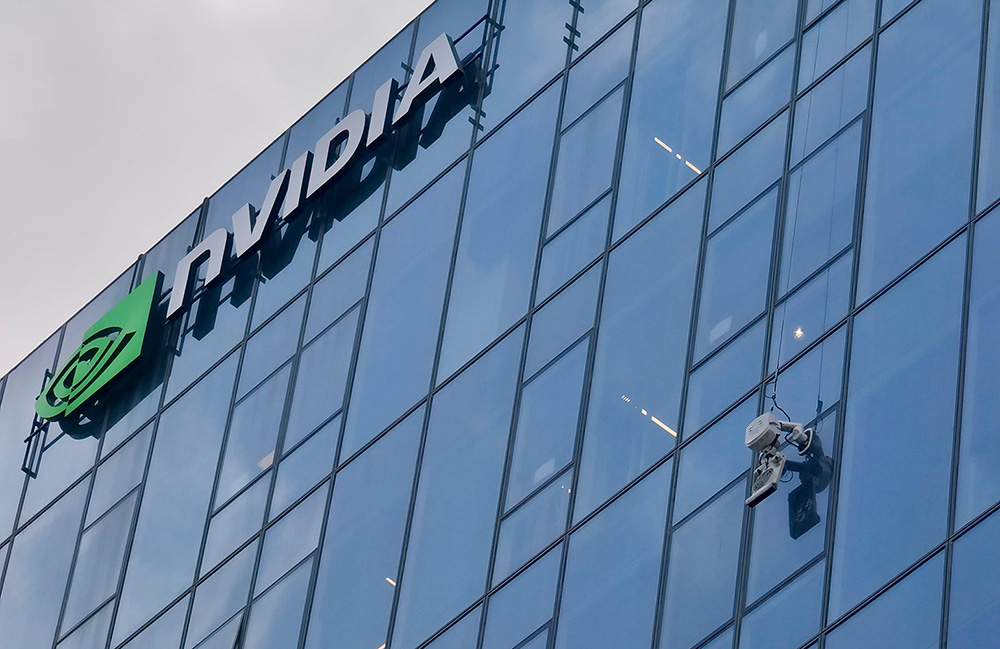
Verobotics designed a lightweight, surface-adaptable façade robot to deliver genuine mobility — not just suspended access — for exterior cleaning and inspection tasks. | Source: Verobotics
At NVIDIA’s Israel campus, façade cleaning turned into something much more meaningful than a simple upkeep task.
What started as a hands-on answer to a widespread headache — grimy windows and hard-to-reach high-rise exteriors — grew into a real-world showcase of how AI-driven robotics can fundamentally transform the way buildings are monitored, maintained, and safeguarded over the long term.
While every building owner instantly relates to the hassle and expense of façade cleaning, Verobotics’ true value goes deeper: it transforms routine upkeep into an ongoing stream of architectural intelligence.
Across a deployment spanning approximately 100,000 sq. ft. (9,290.304 sq. m) of building envelope and 3,000 windows and façade sections, Verobotics integrated robotic façade cleaning, AI-powered vision, and edge computing. The Tel Aviv-based company cut down on work-at-height risks while simultaneously building a large-scale visual dataset capturing the buildings’ exterior conditions.
A deployment designed for real-world conditions
The NVIDIA campus project mirrored the challenges of working in active commercial settings rather than controlled demonstration environments.
One of the buildings stood right next to an active construction site, leading to unusually heavy dirt buildup, uneven surface conditions, and significant contamination after an eight-month gap without cleaning. In certain areas, the level of debris was beyond what robotic cleaning could efficiently tackle on its own.
The final operational breakdown reflected those realities:
- Roughly 60% of façade cleaning performed by robots
- Around 40% handled with traditional cleaning methods
Rather than pushing for complete automation, Verobotics adopted a hybrid operational approach that blended robotics, human crews, and AI-supported inspection workflows.
That balance is exactly what makes this deployment noteworthy.
In commercial robotics, the real breakthrough isn’t about removing people from the equation. It’s about building systems that enhance safety, expand visibility, and continuously gather operational insights — all while integrating with existing infrastructure and working alongside current teams.
Why cleaning counts — and why inspection counts even more
Façade cleaning is one of the few building maintenance issues every property owner instantly understands. Dirty windows are obvious. Tenants see them. Visitors see them. Building managers wrestle with recurring cleaning costs, logistical complexity, safety hazards, and scheduling headaches year after year.
That makes cleaning the perfect entry point for robotics adoption. But the real long-term payoff comes once robots are already traversing the building envelope.
Every cleaning pass becomes a chance to inspect the façade at scale — repeatedly and consistently — something that is extremely difficult, costly, and risky to accomplish manually on tall structures.
Instead of treating façade maintenance as a recurring operational cost, Verobotics treats it as an ongoing building intelligence process. As the robots move across the structure, they capture detailed visual data covering windows, joints, panels, sealants, and structural surfaces, building a living historical record of the building envelope over time.
That shift completely redefines the role of façade robots. The machine is no longer just a cleaning device; it becomes a mobile AI inspection platform.
Edge AI on the building envelope
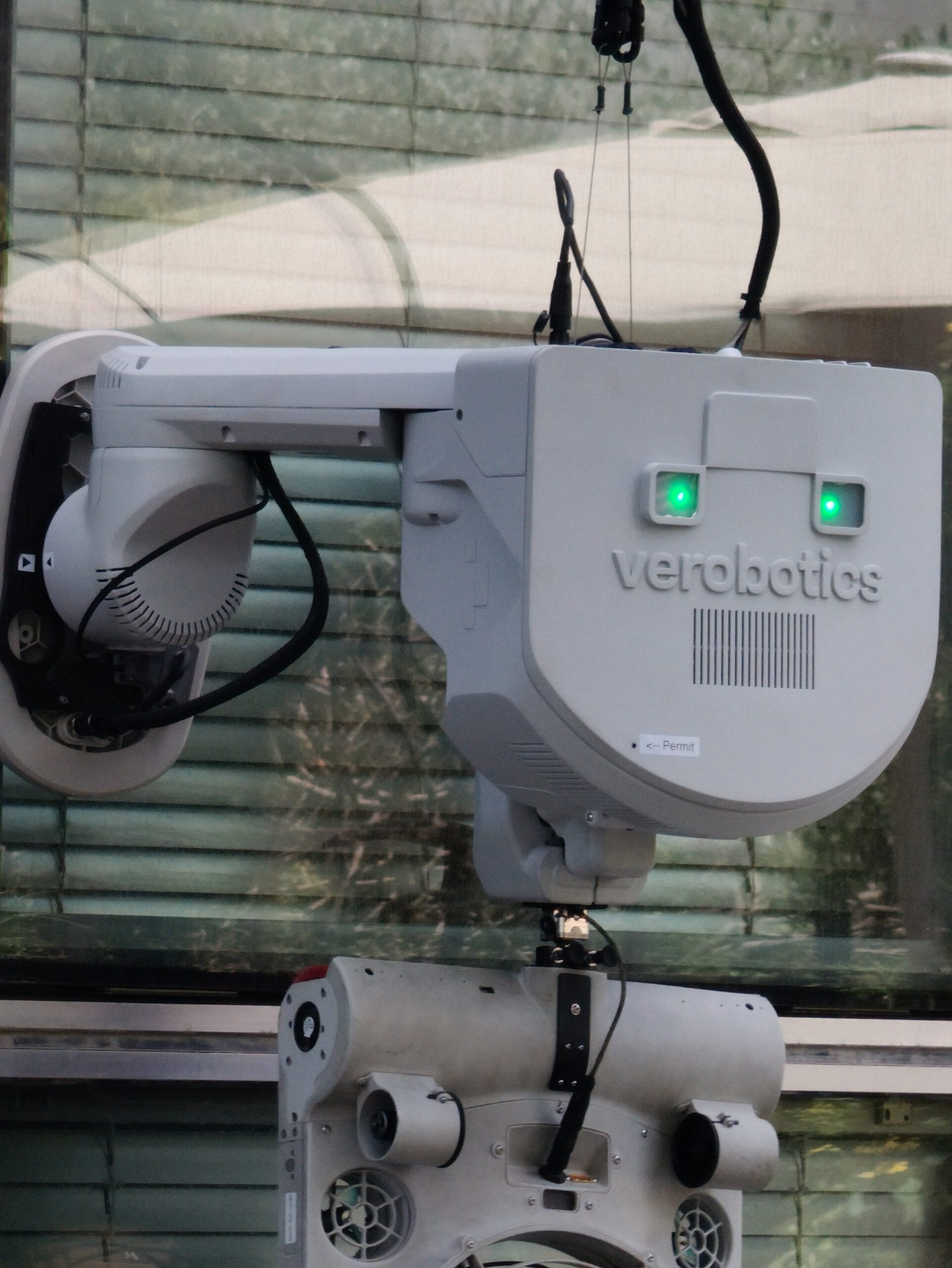
Verobotics’ robot continuously cleans and scans building exteriors, enabling owners to proactively maintain their buildings. | Source: Verobotics
The Verobotics platform runs on NVIDIA Jetson edge AI hardware, allowing visual data to be processed directly on the robot itself.
Façade environments are highly unpredictable. Glare, shadows, reflections, wind, dust, shifting geometry, and environmental exposure constantly challenge robotic perception and navigation.
By processing data locally on the robotic platform, reliance on cloud connectivity was reduced while enabling faster interpretation of changing conditions during live operation.
The images captured serve a purpose far beyond routine operational documentation. They form the basis for long-term façade analysis, spotting irregularities, monitoring gradual wear and tear, and ultimately building predictive maintenance systems tailored for high-rise structures.
With repeated robotic inspection cycles over time, building managers can catch minor changes before they develop into serious structural issues or costly repair projects.
Shifting from reactive fixes to predictive building intelligence
Through the AI-powered inspection process, Verobotics flagged 40 façade anomalies that required further escalation and detailed engineering assessment.
This is where robotic inspection delivers significant economic value. When it comes to high-rise buildings, façade problems are far more than surface-level concerns. If deterioration goes unnoticed, it can result in:
- Costly emergency repair work
- Water seepage and progressive structural harm
- Safety hazards for building occupants
- Increased liability risks
- Challenges meeting regulatory standards
- Accelerated decline of building assets
Conventional inspection methods tend to be infrequent, labor-intensive, costly, and limited by what inspectors can physically see and reach.
Verobotics brought a fundamentally different approach: ongoing, repeatable, AI-enhanced inspections woven directly into everyday building operations.
Put simply, the building façade is no longer checked on an occasional basis; it is under constant observation.
That shift opens the door to moving beyond reactive maintenance and toward predictive building intelligence. Risks can be spotted sooner, deterioration patterns can be tracked across months and years, and preventive action can be taken before small issues spiral into major failures.

A more grounded vision for commercial robotics
The NVIDIA campus deployment stands as a significant milestone not because it achieved flawless autonomy, but because it showcased what commercially practical robotics truly looks like in the real world: a hybrid approach, built incrementally, driven by data, and seamlessly integrated into operations.
Key results from the project included:
- 100,000 square feet of façade covered
- 3,000 windows and façade segments processed
- 20,000 images collected
- 40 anomalies detected
- A notable decrease in the need for workers to perform tasks at height
- Extensive façade data generated to support future inspection analysis
The project also confirmed a crucial operational lesson: robotic façade maintenance delivers the best results when buildings stick to regular cleaning schedules before dirt and grime accumulate to extreme levels.
But perhaps more significantly, it showed how façade cleaning can become something much greater than just keeping surfaces clean. As Verobotics explains, cleaning is not the final goal. It is the operational foundation that makes continuous, AI-powered understanding of the building possible.
And that could ultimately prove to be the most valuable contribution robotics makes to the future of commercial real estate: not merely automating upkeep, but enabling buildings to reveal their own condition before critical problems take hold.
