



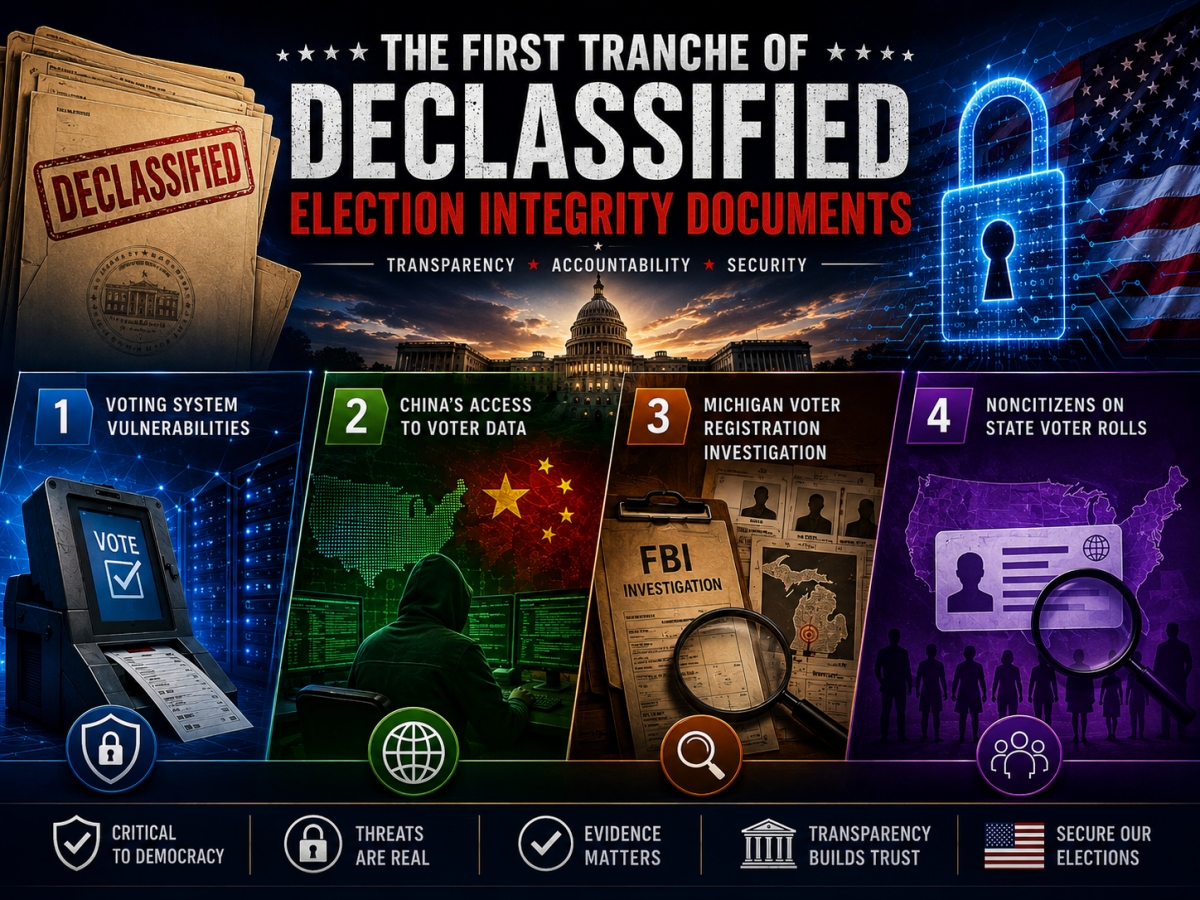
**Why Every Cybersecurity Professional Should Read the Original Records**
*By Gary S. Miliefsky, Publisher, Cyber Defense Magazine*
For more than a decade, cybersecurity professionals have watched researchers at DEF CON’s renowned Voting Village evaluate election technology under controlled conditions. Independent security researchers, engineers, academics, and former government officials have repeatedly demonstrated vulnerabilities in voting equipment, election management systems, electronic pollbooks, and the supporting networks that connect them.
Those demonstrations have never proven that any specific election was compromised. What they have proven is something equally important: **No electronic system should ever be considered beyond scrutiny.** Banks, power grids, military systems, and critical infrastructure are continuously tested; election infrastructure should be treated no differently.
As Publisher of *Cyber Defense Magazine*, I have spent decades interviewing many of the world’s leading CISOs, intelligence professionals, ethical hackers, cyber investigators, government officials, and researchers. One lesson has remained remarkably consistent throughout my career: **Security is never established through assumptions. Security is established through transparency, continuous testing, independent verification, and evidence.**
That is why the recently released White House Election Integrity archives deserve careful technical review. Regardless of where anyone stands politically, cybersecurity professionals should always begin with the original evidence instead of relying exclusively on headlines, social media, or television commentary. I downloaded and reviewed the first four declassified White House archives myself. Together they contain approximately **269 pages across 58 government documents** originating from agencies including the FBI, CIA, DHS, CISA, and other members of the U.S. Intelligence Community.
This article is not intended to determine guilt or innocence. It is intended to answer a simpler question: **What do these newly released government records actually contain, and why should cybersecurity professionals care?**
—
### 1. Vulnerabilities in Electronic Voting and Ballot-Counting Systems
The first collection contains intelligence assessments, technical reports, CISA evaluations, and interagency communications concerning election infrastructure security. Topics include election management systems, voter registration databases, electronic pollbooks, network segmentation, authentication weaknesses, remote access concerns, foreign cyber capabilities, and intelligence reporting concerning election infrastructure.
One particularly noteworthy component is the inclusion of CISA technical assessments discussing vulnerabilities identified during cybersecurity reviews of state and local government environments.
**My observations:** As cybersecurity professionals, we should not be surprised that every complex digital environment contains vulnerabilities. The more important question is whether vulnerabilities were identified, remediated, and whether any were successfully exploited. The documents demonstrate that election infrastructure was viewed internally as deserving continued cybersecurity attention—that should not be controversial. It is consistent with how cybersecurity professionals approach every other form of critical infrastructure.
—
### 2. China’s Acquisition and Exploitation of American Voter Data
This is the largest collection released thus far. It includes intelligence assessments, FBI reporting, CIA memoranda, National Intelligence Council documents, President’s Daily Brief coordination communications, and analytical products concerning China’s collection and exploitation of American voter information. Topics include large-scale acquisition of voter information, counterintelligence assessments, election-related intelligence reporting, foreign influence activities, internal intelligence coordination, and analytical assessments involving multiple states.
**My observations:** Regardless of politics, one conclusion is straightforward: Any foreign government’s acquisition and exploitation of extensive American voter information represents a serious national security issue. Modern cyber operations are driven by data—the more detailed the data, the more sophisticated influence operations, identity attacks, social engineering campaigns, disinformation efforts, and intelligence targeting can become. While the accuracy of every assessment may be debated, the fact that these concerns were taken seriously by portions of the U.S. Intelligence Community is significant.
—
### 3. Michigan Voter Registration Investigation
This collection documents a lengthy FBI investigation into suspicious voter registration activity that originated in Michigan. Unlike political commentary surrounding this issue, these records demonstrate that this was a real federal criminal investigation involving multiple agencies, extensive interviews, forensic analysis, and years of investigative work.
The archive includes FBI investigative timelines, witness interviews, forensic document examination requests, laboratory support requests, prosecutorial review memoranda, investigative summaries, allegations involving fraudulent voter registration applications, records discussing compensation and gift cards provided to canvassers, and documentation showing investigative activity extending into 2024.
**My Observations:** One of the most significant findings is not necessarily the allegations themselves, but the scope of the investigation. These documents demonstrate that federal investigators devoted years to examining these issues. Regardless of the ultimate prosecutorial outcome, this was clearly more than a rumor or an internet conspiracy theory. From a cybersecurity perspective, identity validation remains one of the most important components of election integrity. Any large-scale effort to introduce inaccurate registration data into election systems deserves serious technical and investigative scrutiny.
—
### 4. Noncitizens on State Voter Rolls
This archive contains DHS analyses concerning apparent noncitizen registrations identified during federal reviews of state voter registration records. Topics include apparent noncitizen registrations, state voter database comparisons, federal record matching, methodology summaries, expansion of additional state reviews, and statistical summaries referenced by the White House.
According to the White House, approximately 278,000 apparent noncitizen registrations were identified through these analyses. The supporting documents describe ongoing review efforts and note that additional verification remains necessary.
**My Observations:** This is perhaps the easiest archive to misunderstand. Registration is not the same as voting. Likewise, a database match is not automatically proof that an individual was ineligible at the time of registration or voting. Database comparisons require careful validation because immigration status changes, records are updated, and false positives can occur. That said, if federal analyses identify hundreds of thousands of apparent noncitizen registrations, those findings deserve transparent review by election officials, independent experts, and the affected states. Objective verification should strengthen public confidence, regardless of what the final numbers ultimately show.
—
### Key Conclusions
After reviewing all four archives, one conclusion stands above the others: **Election infrastructure should be treated exactly like every other form of critical infrastructure.** Cybersecurity professionals would never assume that a banking system is perfectly secure; we would never assume that a power grid is immune from attack; we would never assume that a military network cannot be compromised. Election infrastructure deserves the same mindset.
Continuous testing, independent assessment, responsible disclosure, technical validation, defense in depth, Zero Trust architecture, continuous monitoring, incident response planning, and independent auditing are principles that should not change simply because elections are politically sensitive. If anything, elections deserve even greater scrutiny because public confidence depends upon both actual security and demonstrable transparency.
—
### Frequently Asked Questions (FAQ)
**Q: What are the White House Election Integrity Archives?**
A: They are declassified government documents released by the White House containing intelligence assessments, technical reports, and investigative materials related to election infrastructure security, foreign influence activities, and election-related investigations.
**Q: Who released these archives?**
A: The documents were declassified and released by the U.S. government, originating from agencies including the FBI, CIA, DHS, and CISA.
**Q: What is the purpose of releasing these archives?**
A: The stated purpose is to provide transparency and allow independent technical review by cybersecurity professionals, Congress, journalists, researchers, and the public.
**Q: Do these archives prove that the 2020 election was compromised?**
A: No. The archives are not intended to and do not prove that any specific election was compromised. They are intended to provide evidence for independent evaluation.
**Q: What vulnerabilities are mentioned in the archives?**
A: The documents discuss vulnerabilities in election management systems, voter registration databases, electronic pollbooks, network segmentation, authentication weaknesses, remote access concerns, and foreign cyber capabilities.
**Q: Why should cybersecurity professionals care about election security?**
A: Election infrastructure is a critical infrastructure sector that requires the same rigorous cybersecurity scrutiny as banking, power grids, and military systems. Understanding these threats and mitigations is essential to the profession.
**Q: What is “Trust, but verify” in this context?**
A: It is a cybersecurity philosophy emphasizing the importance of transparency, continuous testing, independent verification, and evidence-based conclusions—especially for politically sensitive systems like elections.
**Q: Will more archives be released in the future?**
A: The article indicates that additional declassified materials may become available, and ongoing independent review is essential.
—
### Conclusion
While these releases answer some questions, they raise many others. Among them: Were any identified vulnerabilities successfully exploited? What additional classified intelligence remains unreleased? How were intelligence assessments communicated to senior government officials? What technical forensic evidence has not yet been made public?
These are legitimate questions that deserve objective answers supported by authenticated evidence. Cybersecurity is built upon a simple principle: **Trust, but verify.** This philosophy applies equally to software, artificial intelligence, critical infrastructure, cloud security, supply chains, identity systems, financial networks, and election technology.
The first tranche of declassified White House documents raises important questions involving cybersecurity, intelligence, election infrastructure, federal investigations, and public trust. Some findings are well documented; some remain allegations that require additional corroboration; some questions remain unanswered. That is precisely why independent review is so important.
History repeatedly demonstrates that transparency strengthens institutions. Secrecy, uncertainty, and the absence of technical validation weaken public confidence. Whether future document releases ultimately reinforce, clarify, or even contradict portions of the first four archives, cybersecurity professionals should welcome the opportunity to evaluate the evidence. Our industry has always relied on facts instead of assumptions, evidence instead of speculation, and verification instead of blind trust. That is how secure systems are built—and it is also how confidence in our democratic institutions should be strengthened. As additional declassified materials become available, *Cyber Defense Magazine* will continue reviewing the original documents, examining the technical evidence, and providing readers with objective cybersecurity analysis grounded in facts, transparency, and independent verification.
*The integrity of America’s election infrastructure is not merely a political issue. It is a cybersecurity issue. It is a national security issue. It deserves the same rigorous technical analysis that we apply to every other critical system entrusted to protect our nation.*
