



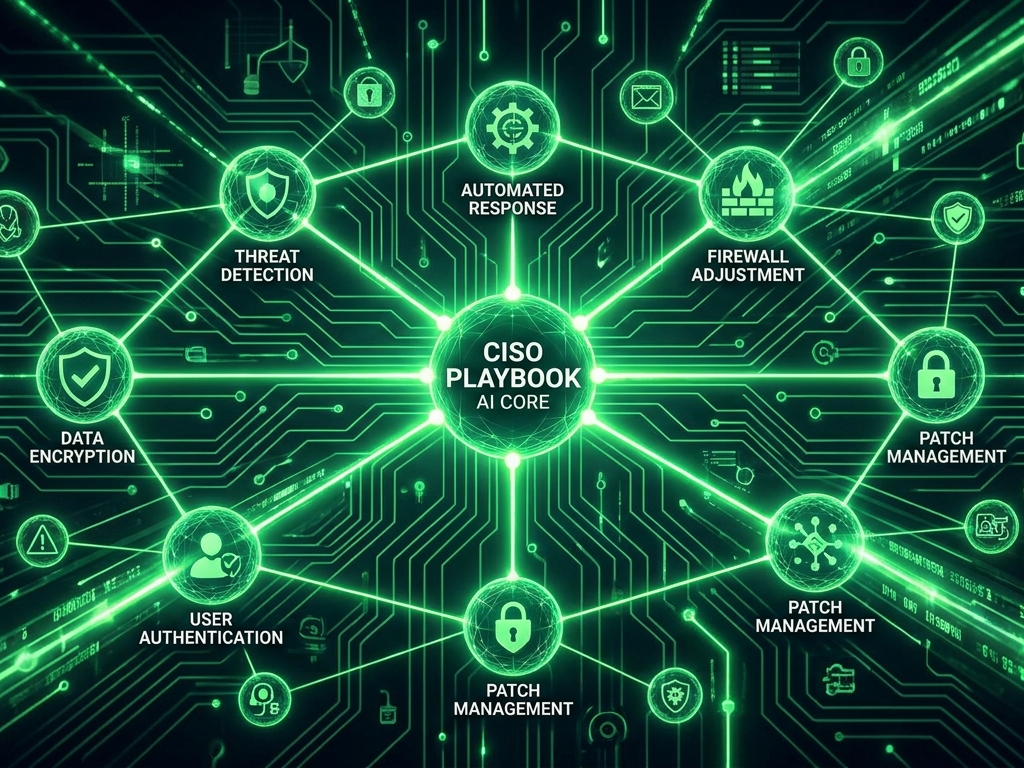
**Cyberhaven’s Journey to Autonomous, Agent-Driven Security**
In today’s fast-paced digital landscape, the cybersecurity world faces an unprecedented challenge: the widening gap between engineering velocity and security capacity. At Cyberhaven, the leadership of the Office of the CISO has pioneered a transformative approach to address this challenge head-on. Embracing a new paradigm, they have shifted from traditional, human-in-the-loop processes to an autonomous, agent-driven security model. This innovative strategy leverages specialized AI agents as force multipliers, fundamentally redefining how security integrates with and accelerates digital transformation.
—
### The 200:1 Reality: A Breaking Point in Security
Modern enterprises are drowning in a sea of security alerts, vulnerabilities, and infrastructure changes. Compounding this issue is the exponential increase in software development speed, which has stretched the resources of security teams to their limits. According to industry data, the ratio of engineers to AppSec professionals has ballooned to an overwhelming **200:1**.
Legacy security workflows, which operate in a linear fashion—triage, notification, fix, and verification—consume up to **40% of a security engineer’s time** on manual, repetitive tasks. This “triage-tax” leaves little room for proactive threat hunting, strategic planning, or architectural hardening. Cyberhaven recognized that incremental improvements were no longer sufficient; a radical shift was necessary to prevent security from becoming a bottleneck.
—
### The Autonomous Agent Solution: From Bottleneck to Orchestrator
Cyberhaven’s response was to move from “AI-assisted” tools to fully **Autonomous Security Agents**. These are not mere chatbots or simple assistants; they are specialized digital teammates capable of reasoning, collaborating, and executing complex security workflows in real time. By deploying these agents, Cyberhaven has transformed security from a reactive bottleneck into a proactive, scalable, and resilient orchestration layer.
Here’s how they’ve implemented this change:
#### 1. **Cerberus: The Vulnerability Intelligence Ensemble**
* **Role:** Automates the entire vulnerability triaging pipeline.
* **Function:** Fetches findings from scanners, performs deep reachability analysis on the actual codebase, and uses an ensemble of Large Language Models (LLMs) to “cross-examine” findings for accuracy.
* **Outcome:** Security engineers only see verified, exploitable vulnerabilities specific to their environment, eliminating hours of manual “noise” dismissal and reducing false positives by **85%**.
#### 2. **Vektr: The Threat Modeling Agent**
* **Role:** Integrates into the RFC (Request for Comments) process to provide architectural security reviews at scale.
* **Function:** Analyzes architectural documents using the STRIDE methodology (Spoofing, Tampering, Repudiation, Information Disclosure, DoS, Elevation of Privilege), applying this framework consistently and rapidly.
* **Outcome:** Ensures **100% coverage** of architectural designs, delivering consistent threat analysis in minutes rather than days, keeping pace with engineering innovation.
#### 3. **Jarvis: The IT Support Frontline**
* **Role:** A Slack-native agent that acts as an always-on IT and security helpdesk.
* **Function:** Handles access requests, analyzes phishing screenshots, answers policy questions using internal history, and autonomously creates tickets for unresolved issues.
* **Outcome:** Delivers **instant resolutions** for teams in different time zones and resolves **over 70% of routine IT tickets** without human intervention.
—
### Technical Deep Dive: Building Trustworthy Agents
Cyberhaven’s success stems from a deliberate focus on trust and accuracy. Their architecture incorporates:
* **Adversarial Collaboration:** Using multiple LLMs from different vendors (Anthropic, OpenAI, Google) to counter individual model hallucinations.
* **Context-Aware Design:** Breaking down large documents into specialized workflows to avoid “context thinning” and ensure deep, accurate analysis.
* **Action-Oriented Integration:** Connecting agents directly to APIs in tools like GitHub, Okta, and Slack, enabling them not just to advise but to execute tasks.
—
### The Path Forward: Collaboration and Measurable Impact
The results at Cyberhaven speak to the power of this approach:
* **Arithmos (Vulnerability Intelligence):** 70% reduction in manual triage time.
* **Threat Modeling (Vektr):** 100% coverage of architectural designs.
* **CyberBot (IT Support):** Over 70% of routine tickets resolved autonomously.
This is more than an internal success story; it’s an open invitation to the cybersecurity community. Cyberhaven is actively exploring how shared agentic patterns can redefine industry standards.
—
### Frequently Asked Questions (FAQ)
**Q: What are “Autonomous Security Agents”?**
A: Autonomous Security Agents are specialized AI programs designed to operate without constant human supervision. At Cyberhaven, they act as digital teammates that can reason about security data, collaborate with other agents, and execute tasks such as triaging vulnerabilities, performing threat modeling, and handling IT support requests.
**Q: How does the “200:1 Engineer-to-AppSec Ratio” impact security?**
A: This ratio highlights a critical resource imbalance. With 200 engineers for every 1 AppSec professional, traditional manual security processes are unsustainable. They create bottlenecks that slow down development and leave organizations exposed. Autonomous agents are designed to bridge this gap by handling high-volume, repetitive tasks at scale.
**Q: What problem does “Cerberus” solve?**
A: Cerberus solves the problem of alert and vulnerability fatigue. It automates the entire triage process, using an ensemble of LLMs to filter out false positives. This ensures security teams only investigate findings that are truly exploitable in their specific environment, saving time and reducing burnout.
**Q: How does “Vektr” integrate into the development process?**
A: Vektr is integrated into Notion and automatically analyzes an RFC as soon as it’s ready for review. It uses a multi-phase pipeline to dissect the document, map data flows, and apply the STRIDE threat modeling framework, providing actionable security feedback to architects in minutes.
**Q: What can “Jarvis” do for an organization?**
A: Jarvis acts as a 24/7 IT and security helpdesk via Slack. It can grant software access, investigate suspicious emails by analyzing screenshots, answer policy questions, and create tickets for complex issues. This provides immediate support and frees up human staff for more strategic work.
**Q: Why is there a focus on multiple LLM vendors?**
A: Cyberhaven uses an ensemble of models from different providers (Anthropic, OpenAI, Google) to leverage their unique strengths and mitigate individual weaknesses. This “adversarial collaboration” approach significantly reduces hallucinations and increases the accuracy and trustworthiness of the agents’ decisions.
—
### Conclusion
Cyberhaven’s journey into autonomous, agent-driven security represents a fundamental shift in how organizations can manage cyber risk. By building specialized AI agents like Cerberus, Vektr, and Jarvis, they have successfully transformed security from a reactive bottleneck into a proactive, enabler of rapid innovation. The measurable results—a 70% reduction in triage time, 100% architectural coverage, and over 70% autonomous ticket resolution—demonstrate the tangible value of this paradigm. As the cyber threat landscape continues to evolve, the ability to scale security intelligence and action through autonomous agents will move from a competitive advantage to an industry necessity.
