



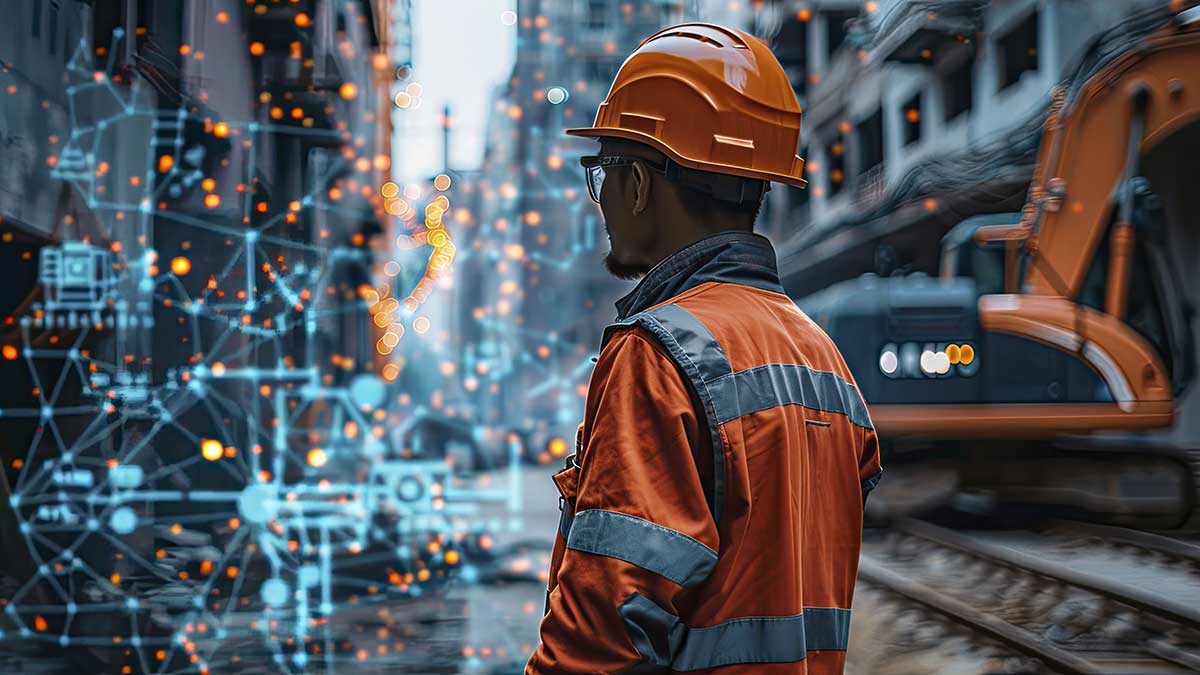
**How IoT Is Transforming Construction Compliance From a Paperwork Task into a Life-Saving System**
The construction industry in the UK is at a crossroads. In 2024 and 2025, it recorded the highest number of work-related fatalities of any sector, with 124 lives lost. This statistic highlights a stubborn truth: despite increased regulation and awareness, construction remains one of the most dangerous fields to work in. For many firms, compliance with health and safety rules still feels like a chore—a way to satisfy auditors rather than a critical safeguard for workers. However, a major shift is underway, driven by the Internet of Things (IoT), which is moving compliance from reactive paperwork to proactive, life-saving action.
### When Paperwork Becomes a Safety Risk
Most construction companies still depend on manual and paper-based systems to monitor everything from incident reports to environmental conditions. These methods are fundamentally slow, requiring data to be recorded, compiled, and reviewed before any action can be taken. By then, a hazard may have already caused harm. In addition, auditors rely on the accuracy of this data; when records are incomplete or outdated, compliance failures go unnoticed until it is too late.
The same delay applies to real-world dangers such as noise, air pollution, and vibration levels. If these hazards exceed safe limits, they can go undetected for days using traditional methods. IoT sensors change this equation by flagging violations the moment they occur, giving site teams the opportunity to intervene before a near miss becomes a tragedy.
### Site Security Is Now a Safety Issue
Construction theft has risen sharply in recent years, fueled by rising copper prices and the attention of organized crime groups targeting sites for cables, machinery, and plant equipment. While this is often seen as a financial problem, the security risks are also safety issues. Unauthorized access to an active site—especially after hours—can lead to encounters with exposed trenches, unsecured machinery, or other dangers that put lives at risk.
Modern remote CCTV monitoring and connected security services allow firms to detect intrusions in real time, rather than discovering the damage the next morning. As project stages evolve, security risks change constantly, and regulators and clients now view real-time visibility as a basic duty of care rather than an optional add-on.
### The Danger of Missed Detection
Perhaps the most overlooked issue is the failure to adopt smart detection as a whole. Construction is one of the most accident-prone industries, and regulators expect clear evidence of what happened, who responded, and how quickly when something goes wrong. Companies that rely on someone physically discovering a hazard—such as a blocked fire exit or an intruder on site—are accepting a level of risk that no longer needs to exist.
Smart detection systems powered by IoT sensors and AI-driven analysis can flag these anomalies as they occur, often before humans can see them. When combined with safety processes that turn alerts into clear, auditable responses, this technology reduces life-threatening risks in a measurable way.
### From Reactive to Proactive
None of these technologies work in isolation. The real transformation across the industry is the move toward a single cloud-based view of site activity that combines environmental monitoring, detection, security footage, and incident logs. This gives site managers and compliance teams the same real-time understanding of site conditions, removing the dangerous lag between an incident and the response.
This shift from reactive to proactive is exactly what current compliance pressures are pushing companies toward. Auditors and clients no longer accept “we didn’t know” as an excuse when technology capable of providing that knowledge already exists and is increasingly affordable.
### The Bottom Line
The financial case for this shift is already strong. Injuries and health issues linked to current working conditions cost an estimated £21.6 billion in 2023–24 alone. This figure includes lost productivity, legal costs, reputational damage, and human suffering. Firms still relying on manual compliance checks are effectively paying this price twice—once in risk to their workforce and again in financial fallout when incidents occur.
Protecting workers and protecting profits are not opposing goals in construction; they are two sides of the same coin. As scrutiny on the industry grows, firms that treat IoT-enabled monitoring as a safety tool first—as well as a compliance tool—will be best positioned to keep their teams safe and their projects on track.
—
**Original Article Source:**
Hastry, Mark. (2026). *This is where IoT technology is starting to change the picture, shifting site compliance from firms’ document records into technology that actively protects the people working on site.* WCCTV. Retrieved from https://www.iotinsider.com/2026/01/06/how-iot-is-improving-construction-site-compliance/
