



# Nvidia’s Jetson Orin Nano 2 Brings 78 TOPS of AI Compute to Compact Edge Robotics
## A New Era of Compact AI Hardware for Real-Time Edge Workloads
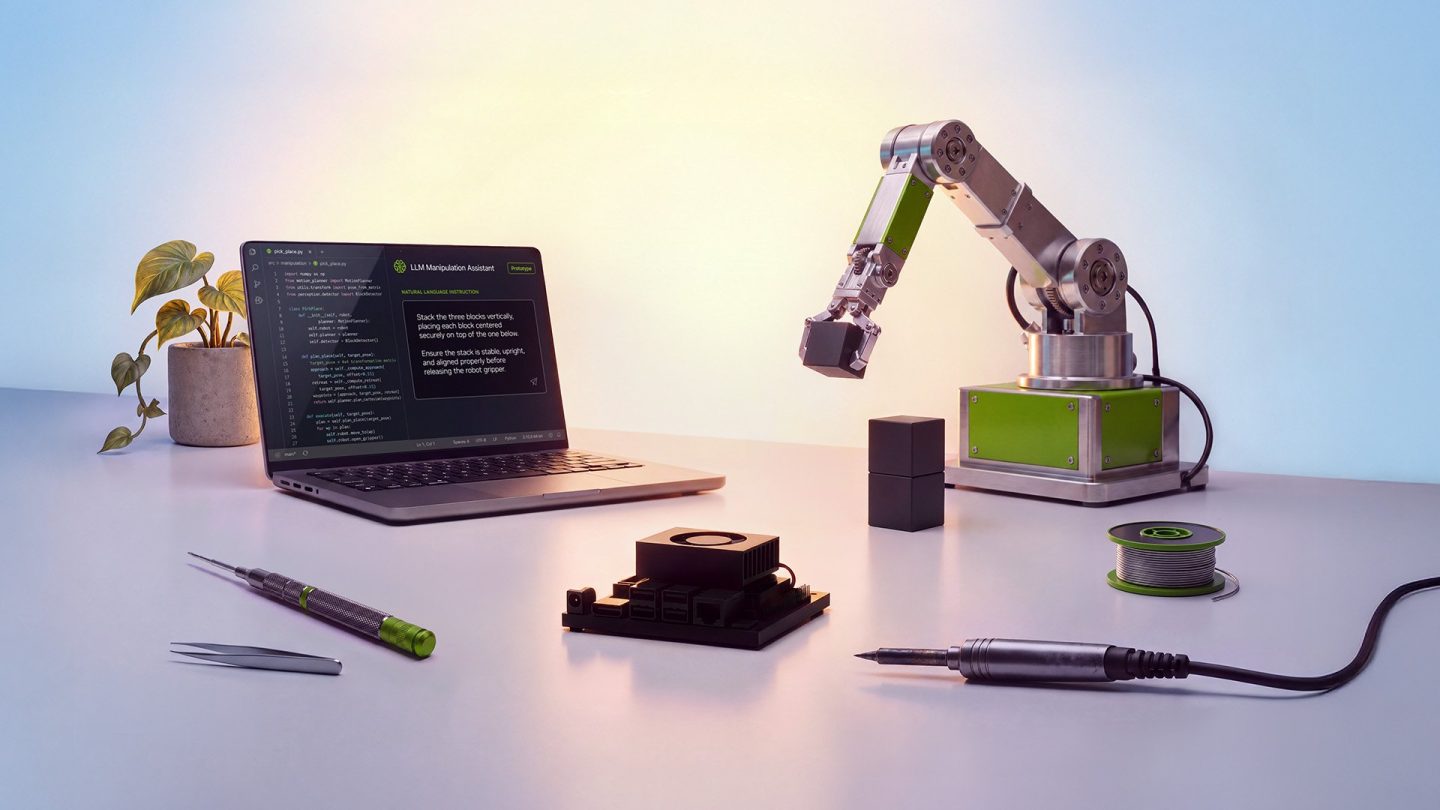
Nvidia has unveiled its latest edge computing platform, the Jetson Orin Nano 2, a small-form-factor robotics computer engineered to handle artificial intelligence workloads directly at the point of deployment. The module is being positioned as a foundational component for a wide range of applications, including autonomous robots, delivery and inspection drones, and vision-based AI systems that require instant processing and response.
The shift toward smaller, more power-efficient AI models has opened the door for sophisticated language, vision, and reasoning tasks to run on compact hardware that was previously incapable of handling such workloads. Nvidia’s new platform capitalises on this trend, offering a solution that can process both natural language and visual data simultaneously while maintaining real-time responsiveness — a critical requirement for industrial and robotics applications.
### Performance and Architecture
At the heart of the Jetson Orin Nano 2 sits an eight-core Arm central processing unit paired with 8GB of unified memory and upgraded Tensor Cores that deliver a peak of 78 trillion operations per second (TOPS). According to Nvidia, the module achieves double the inference performance of its predecessor, the Jetson Orin Nano Super, while operating within the same compact physical footprint.
A key innovation lies in the improved power efficiency. In a 15-watt operating mode, the Jetson Orin Nano 2 reportedly consumes 40% less energy than the previous generation while delivering equivalent performance metrics. This improvement is attributed to enhancements in Tensor Core architecture and increased memory bandwidth, making the module suitable for thermally constrained environments where cooling options are limited.
### Supporting Edge-Optimised AI Models
The platform supports a growing ecosystem of large language models and vision-language models that have been specifically optimised for memory-efficient edge inference. Nvidia has highlighted compatibility with its own Cosmos and Nemotron model families, as well as popular open-source models such as Google’s Gemma 4 and Alibaba’s Qwen 3. This support for diverse model architectures gives developers flexibility in selecting the right AI tool for their specific edge deployment needs.
Nvidia also reports that more than three million developers are actively building applications on its robotics software stack, signalling strong adoption across the developer community and reinforcing the company’s position in the edge AI ecosystem.
### Industrial Machine Vision Applications
Machine vision represents one of the most mature and impactful use cases for edge AI in industrial settings. The technology enables visual data to be processed directly on the factory floor, supporting tasks such as automated quality control, product sorting, and defect detection without relying on cloud connectivity.
Cognex, a leading machine-vision supplier, launched its In-Sight 6900 Vision Controller in April 2026, incorporating Nvidia Jetson technology to execute neural networks at the edge without requiring an external PC or distributed computing architecture. The controller delivers up to 157 TOPS of AI performance and can run multiple high-resolution AI models concurrently. Cognex’s integration of Nvidia TensorRT is designed to keep AI inference aligned with the microsecond-level timing demands of high-speed production lines.
The In-Sight 6900 is built for complex inspection scenarios where part sizes vary and defects present differently across product lines. It supports AI functions including classification and pixel-level segmentation, while cameras, optics, and lighting can be tailored to meet specific inspection requirements.
Industry research supports the growing importance of edge-based machine vision. A Cognex survey of over 500 manufacturers, original equipment manufacturers, and system integrators across North America, Europe, and Asia revealed that 57% of respondents were already using AI in their machine-vision operations, with an additional 30% planning to deploy it in the near term. The survey also highlighted latency, bandwidth limitations, cost constraints, security concerns, and data privacy as key factors that push industrial inference toward on-device processing rather than cloud-based alternatives.
### Broader Industry Adoption
Beyond Cognex, several other industrial technology companies have announced plans to integrate the Jetson Orin Nano 2 into their product lines. Industrial computing supplier JWIPC is developing a JEA Series industrial vision edge computer built around the module’s 78 TOPS of compute, targeting a fanless, fully enclosed design that operates at 15 watts and supports feeds from two to four industrial cameras for real-time defect detection. This configuration is intended as a streamlined alternative to traditional industrial vision setups that require a larger PC paired with a separate GPU.
Advantech has also announced plans to expand its industrial edge system portfolio with Orin Nano 2 support, targeting intelligent machines, robotics, and other industrial applications. AAEON, ADLINK, Aetina, Antmicro, Aptiv, Connect Tech, Seeed Studio, and numerous other Jetson ecosystem partners are developing carrier boards, complete hardware systems, customised AI software, and reference designs based on the new module.
### Edge AI in Robotics and Autonomous Systems
The application of edge AI in robotics extends beyond machine vision. JWIPC is planning an Orin Nano 2-based controller for autonomous mobile robots and automated guided vehicles. The controller is designed to use an on-device architecture that combines perception, decision-making, and control functions, with native support for Nvidia Isaac and the Robot Operating System ecosystem.
The International Federation of Robotics has noted that AI-based mobile robots can fuse data from cameras, LiDAR, and other sensors to perform simultaneous localisation and mapping — commonly known as SLAM — in warehouses and manufacturing environments. The federation has also identified computer vision applications such as object recognition, barcode reading, sorting, defect detection, quality inspection, and real-time production-line monitoring as key areas where edge AI is driving automation forward.
### Challenges and Considerations for Industrial AI
Despite the rapid progress, deploying AI in industrial environments presents several challenges. The National Institute of Standards and Technology’s 2026 Roadmap on Artificial Intelligence and Machine Learning for Smart Manufacturing highlights the importance of industrial data management, integration with heterogeneous sensing and control systems, and the development of trustworthy, explainable, and reliable AI operation. The roadmap also identifies research priorities including advanced sensing technologies, autonomous systems, robotics, digital twins, industrial data analytics, reliability, and safety.
These considerations are particularly relevant for edge deployments, where hardware constraints must be balanced against the need for robust, dependable, and interpretable AI performance in mission-critical industrial settings.
### Availability
The Jetson Orin Nano 2 is not yet commercially available. Nvidia expects the production module and associated developer kit to reach the market during the first half of 2027, giving developers and system integrators time to prepare applications and reference designs ahead of the launch.
—
## Frequently Asked Questions (FAQ)
**What is the Jetson Orin Nano 2?**
The Jetson Orin Nano 2 is Nvidia’s latest compact edge computing module designed to run AI workloads on small robotics and vision systems. It features an eight-core Arm CPU, 8GB of memory, and upgraded Tensor Cores delivering 78 TOPS of AI compute.
**How does it compare to the previous generation?**
The Jetson Orin Nano 2 doubles the inference performance of the Jetson Orin Nano Super while maintaining the same compact form factor. It also uses 40% less power in 15-watt mode when delivering equivalent performance.
**What types of AI models can it run?**
The platform supports large language models, vision-language models, and other edge-optimised AI models. Compatible models include Nvidia Cosmos and Nemotron, Google’s Gemma 4, and Alibaba’s Qwen 3.
**What industries will benefit from the Jetson Orin Nano 2?**
Key industries include robotics, autonomous logistics, manufacturing, industrial inspection, drone systems, and any field requiring real-time AI processing at the edge with minimal power consumption.
**Is the Jetson Orin Nano 2 available for purchase now?**
No. The production module and developer kit are expected to become commercially available in the first half of 2027.
**Why is edge AI important for industrial applications?**
Edge AI reduces latency, lowers bandwidth requirements, improves data security and privacy, and cuts costs compared to cloud-based inference — all critical factors in industrial environments where real-time decision-making is essential.
—
## Conclusion
The Jetson Orin Nano 2 represents a significant step forward in making powerful AI compute accessible on compact, power-efficient hardware. By doubling inference performance while cutting power consumption and maintaining a small form factor, Nvidia has created a platform that is well-suited to the growing demand for real-time AI at the edge. With strong support from a wide range of industrial partners and a thriving developer community, the module is positioned to accelerate adoption of AI-driven robotics and machine vision across manufacturing, logistics, and beyond. As the industry continues to navigate challenges around reliability, data management, and explainability, platforms like the Jetson Orin Nano 2 will play an increasingly vital role in bridging the gap between sophisticated AI models and practical, deployable edge systems.
Thank you for reading
