



Follow ZDNET: Add us as a preferred source on Google.
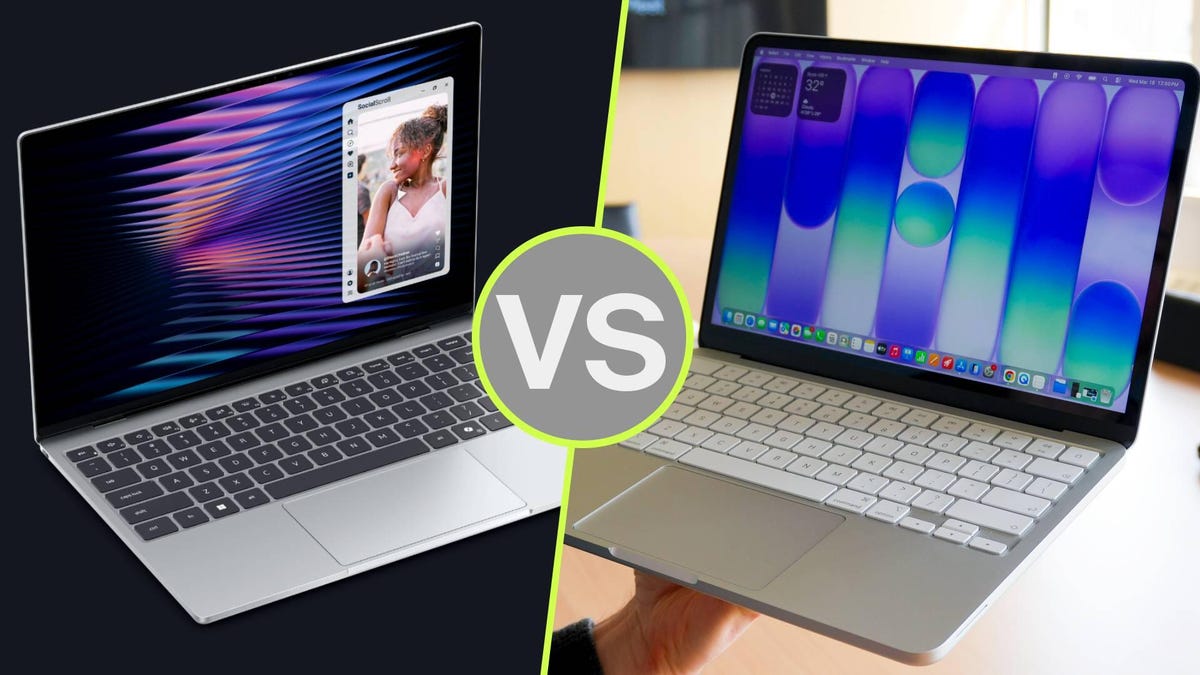
The MacBook Neo significantly shook up the consumer laptop market by delivering high-end features at an accessible $599 price. However, its position at the top is now being threatened. PC manufacturers are fighting back with models designed to directly take on the Neo by surpassing its shortcomings.
Take the latest Dell XPS 13 — priced from $599 for students and $699 for everyone else — which thins the line considerably. It is lighter than the Neo and boasts a broader display, superior port selection, and includes a backlit keyboard.
Also: Watch out, Neo: Dell’s new XPS 13 hits $599 and keeps its high-end charm
How did Dell manage this? It relies on a mix of optimized hardware (ranging from 8GB to 32GB of RAM) and Intel’s latest “Wildcat Lake” Core Series 3 processors—energy-efficient CPUs built for affordable devices that sacrifice peak speed for accessibility.
Let’s take a look at how the MacBook Neo stacks up against Dell’s newest XPS 13. Keep in mind these comparisons are purely based on technical specifications, as I haven’t had the chance to use the XPS 13 firsthand yet.
Specifications
Apple MacBook Neo | Dell XPS 13 (2026) | |
Display | 13-inch non-touch, 60Hz refresh, 2408 x 1506 resolution, 500 nits | 13.4-inch touch, 30-120Hz variable refresh, 2560 x 1600 (2.5K) resolution, 500 nits |
Weight | 2.2 pounds | 2.7 pounds |
Processor | Apple A18 Pro | Intel Core 5 or 7 |
| RAM/Storage | 8GB / 256GB-512GB | 8GB-32GB / 256GB-1TB |
| Battery | 52Whr | 36.5Whr |
| Camera | 2MP/1080p HD +IR webcam | 1080p FaceTime HD camera |
| Connectivity | Wi-Fi 7, Bluetooth 6 | Wi-Fi 6E, Bluetooth 6 |
| Price | Starting at $599 for students, $699 general | Starting at $599 for students, $699 general |
Ports and I/O
Winner: XPS 13
The MacBook Neo includes two USB-C ports for charging, but they are both positioned on the same side. Additionally, they operate at different speeds, supporting USB 3 and USB 2 standards, with transfer speeds maxing out at 10Gb/s and 480Mb/s respectively. This is perfectly adequate for typical use, but will feel limiting for anything more intensive.
Also: Apple’s $599 MacBook Neo hands-on: This affordable laptop spells trouble for Windows
The XPS 13 also provides two USB-C (3.2 Gen 2) ports yet improves the design by placing one on each side of the device for more convenient charging. Furthermore, both ports offer the same high speed and support Display Port 2.1. That port on the right side is a significant perk for travelers, which is exactly who these laptops are built for.
It is worth noting that the Neo also features a 3.5mm headphone jack, whereas the XPS does not. However, upcoming versions of the XPS 13 will include support for Kensington lock slots, a feature many users would value over the headphone port.
Integrations
Winner: MacBook Neo
MacBooks naturally benefit from pairing with iPhones, and the Neo is no exception. It runs the same operating system as the latest flagship MacBook Pro (MacOS 26 Tahoe), granting users access to features like Phone Mirroring, FaceTime, Messaging, and easy sharing via AirDrop or iCloud. If you are already in the Apple ecosystem, the Neo is a budget-friendly choice that feels remarkably complete.
Cool factor
Winner: MacBook Neo
The Neo made such a huge impact largely because it brought vibrancy and personality to a market flooded with generic hardware. Available in four eye-catching colors (when is the last time you spotted a yellow laptop?), it stands out against the XPS 13, which comes in grey and… a darker grey. Honestly, the “Sky” and “Storm” shades look so similar that it is hard to differentiate them.
Customizability
Winner: XPS 13
The XPS range has always been known for its flexibility, and the latest model continues that tradition. It comes in 8GB, 16GB, or 32GB of RAM paired with storage options from 256GB up to 1TB. Conversely, the Neo is surprisingly locked down, providing only 8GB of unified memory along with 256GB or 512GB storage. Be aware, though, neither laptop allows for post-purchase upgrades.
The XPS 13 isn’t restricted to basic internals; future models launching later this year will carry powerful Intel Core Ultra “Panther Lake” processors, potentially unlocking enhanced configurations, larger storage, or other upgrades such as OLED displays or haptic touchpads.
Portability
Winner: XPS 13
Dell appears to have viewed the MacBook Neo’s measurements as a direct challenge, as it outperformed it in nearly every aspect. The XPS 13 is more compact in length and width while still offering a more expansive screen (13.4 inches vs. 13 inches). It is also notably lighter, underscoring the XPS line’s outstanding build engineering. However, both sit at the same slim 0.50-inch thickness.
Also: Dell XPS 14 (2026) review: A Windows laptop that rivals my Mac for daily use
While these differences are strictly numerical, in reality, both of these devices are remarkably portable and feel almost identical in day-to-day handling.
ZDNET’s buying advice
Dell’s 2026 XPS 13 was just recently unveiled, so I have not had the opportunity to test it out. Nonetheless, judging from the provided specs and extensive experience with the XPS series, it is confident to say it will offer a polished and premium experience despite the budget pricing. That said, the version competing with the Neo is just one specific build among a wider range.
It isn’t off-base to describe “the most cost-effective” XPS 13 as a Neo rival, while other models featuring advanced processors could run significantly higher in price. While the MacBook Neo has fewer configuration choices, that is intentional: its focus is clear and easy to understand. For that reason, the Neo is the more authentic budget option, and the primary recommendation for shoppers specifically targeting that segment.
