



# How a Secret Cyber Network Targeted America’s Critical Infrastructure
A sophisticated cyber espionage operation linked to Chinese state-sponsored hackers has been dismantled after experts uncovered the hidden infrastructure it used to sneak into some of the most important networks in the United States.
## The Network Behind the Attacks
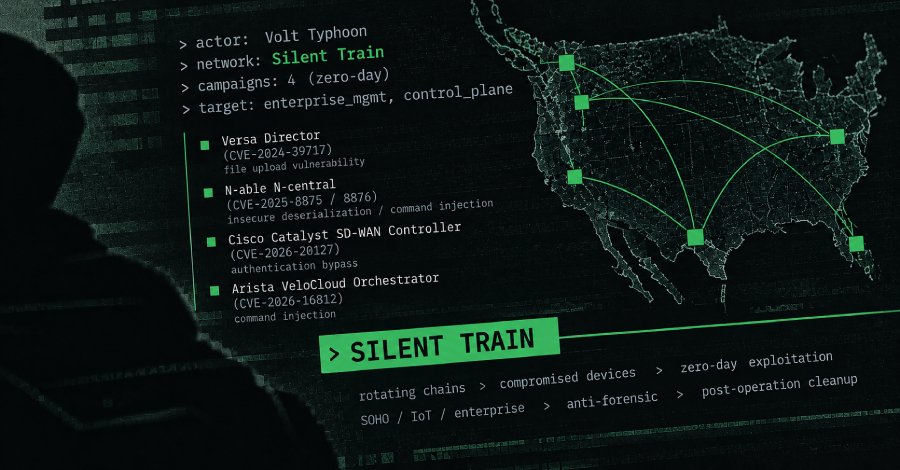
Security researchers have revealed that the group, widely known for going after telecommunications companies, energy providers, water systems, transportation networks, and military contractors, relied on a covert relay system called **Silent Train**. This hidden network allowed the hackers to carry out highly targeted attacks while staying well under the radar of security teams.
What made Silent Train so effective was its design. Instead of using one permanent server or device to launch attacks, the operators built short-lived chains of compromised gadgets spread across multiple countries. Each chain would be used once, abandoned, and then rebuilt from scratch for the next operation — making it incredibly difficult for defenders to trace anything back to the attackers.
## Who Was Hit?
The scope of the targets was broad and alarming. Victims included:
– Telecommunications providers
– Government agencies and defense contractors
– Satellite and mission-critical communication services
– Universities and IT companies
– Critical infrastructure operators in water, energy, transportation, maritime, rail, aviation, and emergency services
Hundreds of organizations across these sectors were identified as having been compromised through this network.
## How Silent Train Worked
The system was built like a multi-layered relay race. Each layer served a specific purpose:
1. **Starting Point — Servers Abroad**: The chain began with temporary virtual servers located outside the United States. These were set up just long enough to get the attack underway and then tossed away.
2. **Middle Layer — Compromised Consumer and Small Business Devices**: Routers, modems, and other internet-connected devices in countries around the world acted as middle stops, hiding where the real attack was coming from.
3. **Exit Point — U.S.-Based Devices**: Finally, infected devices located inside the United States served as the last relay before reaching the actual target. This clever setup helped the attackers bypass geographic restrictions and reputation-based security filters.
Researchers counted at least **27 different types of devices** that were hijacked for this purpose, ranging from consumer-grade routers and smart home gadgets to enterprise firewalls and network management platforms. Some brands appeared in very specific roles — for example, certain modems were only ever used as relay nodes, while others were designated as the final step before striking the target.
## Zero-Day Exploits at the Core
One of the most striking aspects of this operation was the attackers’ reliance on **zero-day vulnerabilities** — flaws that are unknown to the vendor and therefore have no available fix at the time of exploitation. In total, researchers confirmed that Silent Train was used to carry out **at least four separate zero-day campaigns** against widely used management and networking platforms.
These included vulnerabilities in:
– A file upload flaw in a management tool (patched after being exploited to plant a custom data-harvesting script)
– Security weaknesses in endpoint management software that allowed remote code execution
– Authentication bypass flaws in enterprise SD-WAN controllers
– Command injection vulnerabilities in network orchestration platforms
In addition, the group was also believed to have taken advantage of a likely zero-day flaw in another management platform that was only patched after significant damage had already been done.
## Discipline and Stealth
What really set this operation apart was the level of care the attackers put into staying hidden. Each attack session was designed to be brief, lasting only about four hours on average — with some wrapping up in just minutes. After each session, the attackers removed every trace of their presence: temporary files, SSH keys, configuration changes, and all other artifacts.
This “live off the land” approach meant they used only the tools already present on the compromised systems, avoiding the installation of anything that could raise suspicion. The entire infrastructure was deliberately compartmentalized, with different types of devices locked into specific roles, further complicating any attempts to piece together the full picture.
## Where the Focus Was
Geographically, the attacks concentrated heavily on three U.S. states — **Hawaii, California, and Texas**. These regions are home to major military bases, key telecommunications hubs, defense manufacturing centers, satellite communication facilities, and vital logistics networks. Researchers noted that the targeting aligned with strategic interests, particularly during periods of heightened geopolitical tension in the Asia-Pacific region.
## The Bigger Picture
By 2025, the network had evolved from a fully disposable model into something more permanent. Some enterprise-grade devices were kept on standby for one to three months at a time, and new techniques using open-source proxy tools were introduced to further mask the attackers’ movements.
This shift shows a group that is not only patient but also continuously adapting — building a resilient framework designed to acquire and maintain access to the networks that matter most.
—
## Frequently Asked Questions (FAQ)
**Q: What is Silent Train?**
A: Silent Train is the name given to a covert relay network used by a Chinese state-sponsored cyber espionage group. It consisted of chains of compromised devices across multiple countries, used temporarily and then discarded to avoid detection.
**Q: Who is behind these attacks?**
A: The attacks have been attributed to Volt Typhoon, a China-linked state-sponsored threat actor known for targeting critical infrastructure sectors including communications, energy, transportation, and water systems.
**Q: What kind of devices were compromised?**
A: At least 27 different device classes were exploited, including SOHO routers, IoT gadgets, enterprise firewalls, network management appliances, and SD-WAN controllers from vendors like TP-Link, Netgear, Fortinet, Cisco, and others.
**Q: How did the attackers stay hidden?**
A: They used short-lived attack sessions averaging about four hours, removed all traces after each operation, relied on already-installed system tools, and routed traffic through multiple layers of compromised devices across different countries.
**Q: Why were Hawaii, California, and Texas targeted?**
A: These states host significant military installations, telecommunications infrastructure, defense contractors, satellite communication providers, and critical logistics networks — all of which are of strategic interest.
**Q: What are zero-day vulnerabilities?**
A: Zero-day vulnerabilities are security flaws that are unknown to the software vendor and have no available patch at the time they are exploited, giving attackers a window of opportunity before defenders can respond.
**Q: Is the threat fully neutralized?**
A: The Silent Train network has been disrupted, but the underlying group remains active and has demonstrated the ability to rebuild and adapt its infrastructure. Organizations are urged to apply patches promptly and monitor for signs of compromise.
—
## Conclusion
The exposure of Silent Train highlights the growing sophistication of state-sponsored cyber operations aimed at the backbone of American infrastructure. By using disposable, multi-layered relay chains and zero-day exploits, the attackers were able to maintain persistent access to high-value targets for extended periods with minimal risk of discovery.
This case underscores the urgent need for organizations — especially those operating in critical sectors — to adopt proactive security measures, including rapid patching, network segmentation, intrusion detection, and continuous monitoring. The threat may have been disrupted, but the lessons learned from Silent Train will shape how defenders prepare for the next generation of covert cyber operations.
Thank you for reading
