



# New Research Highlights Serious Security Risk in Popular Mesh VPN Tool’s SSH Feature
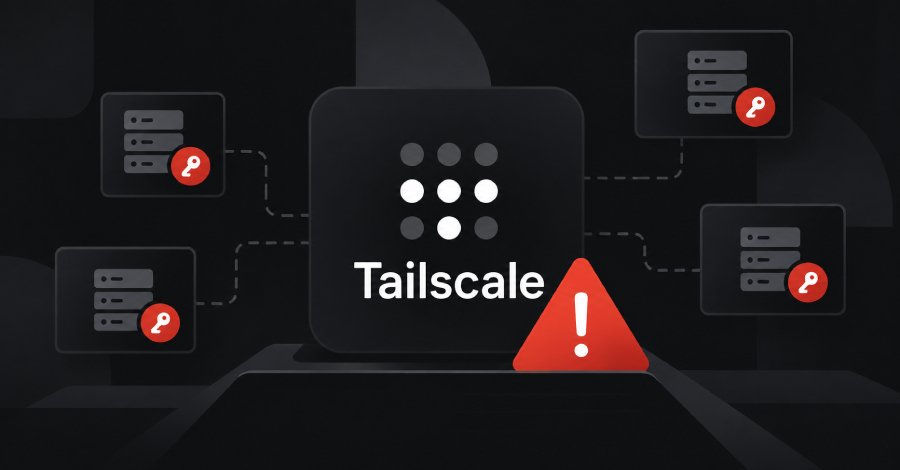
A recently published security study has revealed that a single compromised device on a widely-used mesh VPN network could potentially be exploited to take full control of every other server that device has permission to reach. The findings raise important questions about how organizations configure their private networks.
## How the Vulnerability Works
The issue centers on the way certain mesh VPN tools handle SSH connections between devices. Unlike traditional SSH servers that verify a user’s password or cryptographic key, these tools identify each device by its own credentials and rely on a single access rule to decide whether that device can open an SSH session on a target machine.
This means an attacker doesn’t need to steal a password or a private key. They only need to gain a foothold on one device — through methods like a vulnerable web application, a malicious software package, a phishing attack, or compromised login credentials. The mesh VPN itself doesn’t create that initial breach.
Once inside, the attacker can exploit the SSH forwarding mechanism to escalate privileges and run commands at the highest level on other machines. In a controlled lab environment, the spread from one compromised device to others took less than a second per step.
## What Makes This Particularly Concerning
The researcher demonstrated three distinct methods of exploitation during testing:
– **Socket-level privilege escalation:** An ordinary SSH session was used to make the privileged VPN process connect to a system resource that should only be accessible to the highest-level administrator, granting full control without any administrator rights.
– **Socket replacement attacks:** An attacker replaced a trusted system file with their own version, enabling direct root-level command execution on specific services.
– **Race condition exploitation:** A timing flaw in the system’s file path validation was manipulated to bypass a safety check, ultimately allowing the attacker to capture an enrollment key and join their own machine to the network as a trusted server.
This final technique only worked fully when a specific hardware-binding security feature was disabled. On networks where that feature was active, the secrets were intercepted during transmission but the final connection step was blocked.
## Impact on Different Deployment Types
The severity of the risk depends significantly on how the network is managed:
– **Cloud-hosted mesh VPN services** allow administrators to disable SSH port forwarding on a per-rule basis, giving them some control over the exposure.
– **Self-hosted alternatives** running older versions lack this option entirely, meaning every SSH connection grant effectively provides full administrative access to the target machine.
## What Organizations Can Do Right Now
Since no official patch has been released yet, administrators are advised to take the following protective steps immediately:
1. **Audit SSH access rules.** Restrict rules to single source-to-destination pairings, naming one specific device for one specific target. Remove any broad rules that grant access based on group membership or identity tags.
2. **Disable SSH port forwarding** wherever possible. On self-hosted versions, assume every SSH grant provides root access to the target.
3. **Remove app connector permissions** from devices that don’t require them.
4. **Eliminate any VPN-based service forwards** that point to system-level Unix sockets.
5. **Enable device key expiration**, so a stolen key doesn’t remain valid indefinitely.
6. **Delete compromised devices from the management console** rather than simply reinstalling the system. Reimaging a machine does not remove keys that an attacker may have already copied.
The vendor has acknowledged the report and confirmed it is actively investigating the findings. They have not recommended disabling the SSH feature entirely but are working to determine which configurations are affected.
—
## Frequently Asked Questions
**Q: What is a mesh VPN?**
A: A mesh VPN creates a private, encrypted network between devices anywhere in the world, allowing them to communicate directly as if they were on the same local network. Unlike traditional VPNs that connect a user to a central network, mesh VPNs connect devices to each other.
**Q: How does an attacker first get onto the network?**
A: The vulnerability does not provide a way for an attacker to get in initially. They need an existing foothold on one device, which they obtain through common attack methods such as exploiting a web application vulnerability, delivering malicious software, phishing, or using stolen login credentials.
**Q: Is this vulnerability being actively exploited in the wild?**
A: There is no public evidence of this being exploited outside of the controlled lab environment where it was demonstrated. The research was conducted in an isolated testing setup over a three-day period.
**Q: Has the vendor released a fix?**
A: As of now, no patch, CVE identifier, or fixed version has been issued by the vendor. They have confirmed they received the research and are actively working on a response.
**Q: Should I disable the SSH feature entirely?**
A: The vendor has not recommended disabling the SSH feature. However, administrators should review their SSH access rules, disable port forwarding where possible, and consider enabling additional login checkpoints until a fix is available.
**Q: What is the difference between the hosted service and self-hosted alternatives?**
A: The hosted service is managed by the VPN company and offers more granular control over individual settings. Self-hosted alternatives give organizations full control but may lack certain configuration options, such as the ability to disable SSH forwarding per rule.
**Q: Can simply reinstalling a compromised machine fix the problem?**
A: No. Reimaging or reinstalling the operating system does not remove cryptographic keys that may have already been copied by an attacker. The device must be deleted from the network’s management console and re-added with fresh credentials.
—
## Conclusion
This research highlights a significant concern for organizations that rely on mesh VPN tools to manage their infrastructure. The ability to move from a single compromised device to full control of an entire network in seconds underscores the importance of careful access rule configuration and network segmentation. While the vendor is actively working on a response, administrators should take immediate steps to tighten their SSH and forwarding settings. Security researchers and vendors working together to identify and address these kinds of issues ultimately helps make the broader digital ecosystem safer for everyone.
Thank you for reading
