



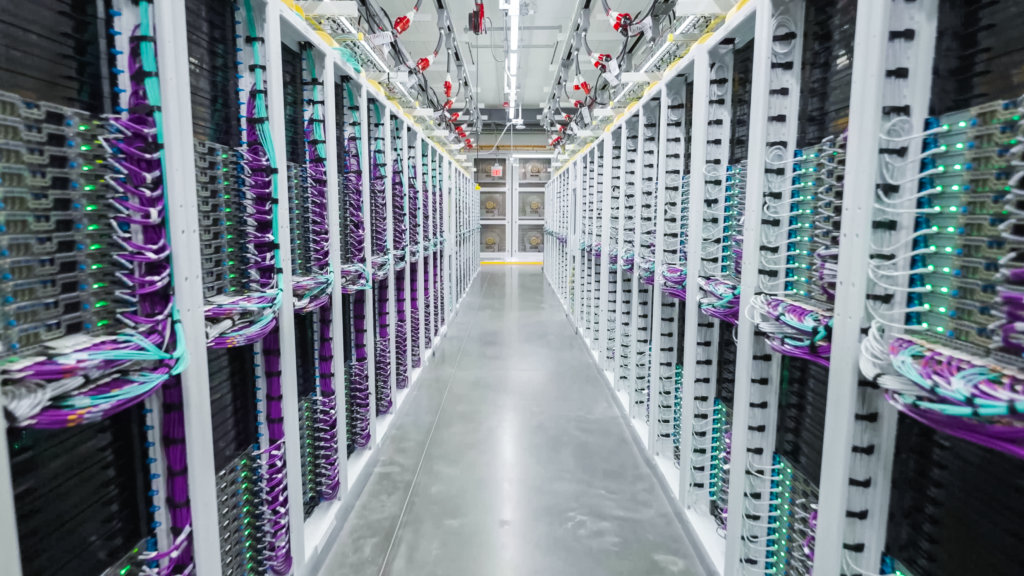
# The Future of AI Infrastructure: How Next-Generation Hardware Is Shaping Intelligent Computing
## Introduction
The world is entering a new era of computing where artificial intelligence becomes deeply woven into everyday work. From creative projects to complex problem-solving, the promise is enormous: technology that extends human capability and helps tackle some of society’s biggest challenges. But unlocking this potential requires something more than software alone — it demands a complete overhaul of the hardware foundation that powers modern computing.
This article explores the breakthroughs happening across chips, networking, power systems, cooling, and security that are collectively building the next generation of AI-ready infrastructure.
—
## Next-Generation Chips Designed for AI Workloads
### AI Accelerators Built for Reasoning and Conversations
The most significant shift in AI workloads today is the move toward **inference** — the process of using trained models to generate answers, make decisions, and carry out tasks in real time. This is where speed, efficiency, and cost matter most.
The latest wave of AI accelerator chips is being designed from the ground up for these modern workloads. They excel at long-form reasoning, low-latency conversational experiences, and multi-step autonomous tasks. Compared to older graphics processor-based systems, these new chips deliver substantially more output per unit of energy — in some configurations, nearly doubling the amount of work done per watt of power consumed.
### Custom Processors for Autonomous AI Agents
As AI systems take on more autonomous behavior — managing workflows, retrieving data, and coordinating services — traditional processors are being reimagined. New agent-focused central processing units are delivering major performance gains, with significant improvements in handling the orchestration tasks that autonomous agents require. These chips reduce response delays and increase the volume of agent-driven operations that can run simultaneously.
### Purpose-Built Chips for Security and Data Handling
Not all AI infrastructure work is about computation. A growing share involves compressing data, securing communications, and managing network traffic. Dedicated hardware modules now handle these tasks, freeing up primary processors to focus on their core work. These specialized chips deliver dramatically higher performance while consuming far less energy than relying on general-purpose processors for the same functions.
### Hardware-Level Security
Security is also moving closer to the hardware itself. In-house security chips are now being integrated directly into server equipment, keeping sensitive cryptographic keys protected within a hardware boundary rather than exposed in software memory. This approach brings encryption and security operations closer to the workloads that need them, reducing risk at the foundational level.
—
## Networking and Connectivity at Scale
### Rethinking Networks for AI
AI systems at scale demand networks that can handle massive volumes of data between thousands or even hundreds of thousands of processors. Traditional networking approaches are being rethought to meet these demands. New architectures use multiple communication paths simultaneously, intelligently distributing traffic to avoid bottlenecks and maintain consistent performance even as systems grow enormous.
### Optical Interconnects for Speed and Efficiency
Optical networking is emerging as a game-changer for connecting racks of AI hardware within a single facility. The first open specifications for optical scale-up connectivity are enabling high-bandwidth, energy-efficient connections that work across multiple vendors. This openness encourages competition and innovation while making large-scale AI systems more flexible and cost-effective.
### Industry Collaboration on Networking Standards
Hundreds of organizations are now working together to define requirements for Ethernet-based networking tailored to AI workloads at scale. These collaborative efforts have already produced published specifications, with new versions in development, ensuring that the networking layer keeps pace with the rapid evolution of AI hardware.
—
## Power and Energy Innovation
### Higher-Voltage Infrastructure
AI data centers are consuming unprecedented amounts of power, driving a fundamental rethinking of how electricity is delivered. The industry is transitioning toward higher-voltage direct current systems, which reduce energy losses during conversion and simplify power distribution.
### Disaggregated Power Architecture
A new approach separates power conversion hardware from the computing racks themselves. This modular design allows power systems and compute systems to scale independently, supporting everything from tens of kilowatts to over a megawatt per rack. Built-in redundancy, real-time monitoring, and optional energy storage make these systems both resilient and efficient.
### Efficient Power Conversion
New semiconductor-based power conversion technologies are making it possible to convert and deliver electricity more efficiently and responsively. These advancements are critical for supporting the next generation of high-density AI hardware.
### Reducing Reliance on Diesel Backup
The industry is also moving away from diesel generators for backup power, developing open specifications for cleaner, more reliable alternatives. Standardized interfaces between data centers and electrical utilities are also being created to ensure smooth coordination as power demands evolve.
—
## Cooling Innovations
### Advanced Liquid Cooling at the Rack Level
Modern AI hardware generates tremendous heat, making cooling a first-class design priority. Third-generation cooling units can now handle nearly double the thermal load of previous versions while fitting within the same physical footprint. Public reference designs are being shared to help the broader industry adopt these approaches.
### Zonal Cooling Strategies
Next-generation AI data centers are adopting zonal cooling strategies that tailor temperature management to the specific needs of each area. By using multiple independent water loops — each delivering coolant at different temperatures — facilities can optimize energy use, improve performance, and reduce water consumption.
—
## Security Through Openness
### Open-Source Hardware Security
Strong cloud security is built on transparency and collaboration. Industry leaders are championing open-source hardware security initiatives that make root-of-trust technology accessible to everyone. These projects open-source architecture designs, specifications, drivers, firmware, and silicon blueprints, enabling the broader community to build on a shared foundation of trust.
### Preparing for Quantum-Era Security
As quantum computing advances, the cryptographic systems that protect digital trust today will need to evolve. Hardware-level security innovations are being designed with these future threats in mind, ensuring that keys and credentials remain protected at the deepest levels of the technology stack.
—
## Reliability at Scale
### AI-Powered Fleet Management
Running massive fleets of hardware reliably is essential for protecting customer workloads. Organizations are applying years of operational data and AI-driven analytics to predict failures, identify issues early, and automate recovery processes. Common specifications for diagnostics, telemetry, and fault management are being shared openly so that the entire industry can benefit.
—
## Sustainability Across the Full Lifecycle
Responsible AI growth means considering the entire lifecycle of data center infrastructure — from construction materials to retirement and recycling. Major commitments are in place to achieve carbon negativity, water positivity, and zero waste goals.
Key sustainability efforts include:
– **Low-carbon construction materials** with pathways to significantly reduce emissions in concrete and steel production.
– **Waste-heat reuse programs** that capture excess heat and repurpose it.
– **Circular economy practices** inside data centers, where over 90% of servers and components are reused or recycled.
– **Renewable energy agreements** and intelligent power management systems.
– **Community investment** in skills, partnerships, and local infrastructure so that the regions hosting data centers benefit alongside the technology.
—
## The Power of Open Collaboration
None of these innovations happen in isolation. The driving force behind this transformation is open, industry-wide collaboration. By sharing designs, standards, and lessons learned, the ecosystem avoids duplicating effort and accelerates progress for everyone.
The goal is to build a future where every organization — from startups to global enterprises — can access intelligent, reliable, and affordable infrastructure. When silicon, software, networking, power, cooling, and applications all work together as a unified platform, the possibilities become truly transformative.
—
## Frequently Asked Questions (FAQ)
**Q: Why is inference becoming more important than training in AI infrastructure?**
A: While training builds AI models, inference is what makes them useful in everyday applications — powering chatbots, search engines, recommendation systems, and autonomous agents. As AI adoption grows, inference workloads dominate data center operations, making their efficiency a top priority.
**Q: What does “tokens per watt” mean, and why does it matter?**
A: A token is a unit of output generated by an AI model — essentially a piece of text or a data element. Tokens per watt measures how much useful work an AI system produces for each unit of energy consumed. Higher tokens per watt means more efficient, less expensive, and more environmentally friendly AI operations.
**Q: What are AI agents, and why do they need special processors?**
A: AI agents are systems that can autonomously plan, retrieve information, manage memory, and coordinate multiple services to complete complex tasks. These activities require rapid orchestration and data management that traditional processors were not optimized for, which is why agent-focused CPUs are being developed.
**Q: How does higher-voltage power infrastructure save energy?**
A: Higher-voltage direct current systems reduce the number of energy conversion steps between the power grid and the hardware. Each conversion step loses some energy as heat. By minimizing these conversions, higher-voltage systems waste less energy and run more efficiently.
**Q: What is liquid cooling, and why is it needed for modern AI hardware?**
A: Liquid cooling uses coolant — rather than air — to absorb and carry away heat from computing components. Modern AI chips are so densely packed and power-hungry that air cooling alone cannot keep them at safe operating temperatures. Liquid cooling is more efficient and enables higher-performance hardware.
**Q: What does “open-source hardware” mean in the context of AI infrastructure?**
A: Open-source hardware means that the physical design specifications — including architecture blueprints, schematics, and software drivers — are made publicly available. This allows anyone to study, modify, and build upon the designs, fostering innovation, competition, and collaboration across the industry.
**Q: How do data centers reduce their environmental impact?**
A: Data centers reduce their footprint through renewable energy sourcing, energy-efficient hardware designs, water-efficient cooling systems, waste recycling programs, use of low-carbon building materials, and by sharing best practices openly through industry groups.
**Q: Why is fleet reliability important for AI infrastructure?**
A: AI workloads run continuously at massive scale. A hardware failure in a large fleet can affect thousands of users. Reliable fleet management — powered by predictive analytics and automated recovery — ensures that services stay available and customer workloads are protected.
—
## Conclusion
The infrastructure behind artificial intelligence is undergoing one of the most dramatic transformations in computing history. From custom silicon designed for AI workloads to open networking standards, high-efficiency power systems, advanced cooling solutions, and hardware-rooted security, every layer of the technology stack is being reimagined.
What makes this moment particularly exciting is the collaborative spirit driving it forward. By building on open standards and sharing knowledge across organizations, the industry is ensuring that these breakthroughs benefit everyone — not just a single company or region.
The result will be AI infrastructure that is more powerful, more efficient, more secure, and more sustainable. And as this infrastructure matures, it will make intelligent technology accessible to organizations of all sizes, unlocking new possibilities in science, education, healthcare, and beyond.
The path forward is one of shared innovation — building the frontier together, one breakthrough at a time.
Thank you for reading
