




Trending
- Revolutionary AI Breakthrough Promises to Change the Way We Live and Work
- Breakthrough AI Tech Set to Revolutionize Everyday Life: Discover What’s Coming Next
- Revolutionary AI Breakthrough Promises to Change Your Everyday Life Forever
- Revolutionary AI Breakthrough: How This New Technology is Changing the Future of Work
- Revolutionary Tech Breakthrough Promises to Change Our Lives Forever
- Apple’s Game-Changing iPhone Update Brings Groundbreaking Features You Won’t Want to Miss
- AI-Powered Innovations: The Game-Changing Technologies Set to Transform Our Future!
- Revolutionary New Technology Set to Transform Our Daily Lives: Here’s What You Need to Know!

Author: Carter

Carter
Hi, I'm Carter, a Wisconsin-based tech writer and creator. I launched this blog as a comprehensive resource to help people navigate the fast-moving tech landscape. Covering multiple facets of the industry—from software insights to digital tools—my goal is to break down complex concepts into actionable, easy-to-understand guides. When I'm not tracking the latest tech trends, I'm focused on developing my skills in business administration and digital management.
# Introduction There’s a satisfying feeling that comes from watching your machine learning model’s loss drop steadily during training—until suddenly, your validation accuracy stalls or the loss shoots up, and you have no idea why. When this happens, most people throw more logging into the mix or start fiddling with hyperparameters, crossing their fingers that something improves. What many practitioners overlook at this stage is getting genuine insight into the internal mechanics of the model as it trains. Visual debugging tools are incredibly valuable at exactly this moment. This article explores three key areas: what specific aspects of training to…

Federal agencies are being urged to adopt a more risk-driven strategy when recording cybersecurity data. Under updated guidance, agency chief information security officers must now submit revised logging plans to the Cybersecurity and Infrastructure Security Agency (CISA) and the Office of Management and Budget (OMB), with emphasis on two key areas: continuous event monitoring (CEM) and threat hunting, investigation, response, and forensics (THIRF). The updated directive, issued by OMB Director Russ Vought, overturns prior logging mandates and introduces streamlined expectations designed to reduce bureaucratic overhead and control costs. “In 2021, OMB released Memorandum M-21-31—aimed at strengthening the federal government’s ability…

By Marc Kavinsky, Lead Editor at IoT Business News.GlobalPlatform has unveiled Pavona, an open-source chip technology package designed to help hardware engineers incorporate security foundations and next-generation encryption capabilities into both simple and complex connected systems.For internet-connected devices expected to function reliably for many years, their security features are typically determined during the initial chip design phase—long before manufacturers begin addressing device activation or ongoing management.Recognizing this reality, GlobalPlatform introduced Pavona, a collaboratively managed open-source chip technology framework that bundles verified security components, a system assembly toolkit, and sample complete system designs. The solution targets diverse hardware applications ranging from…
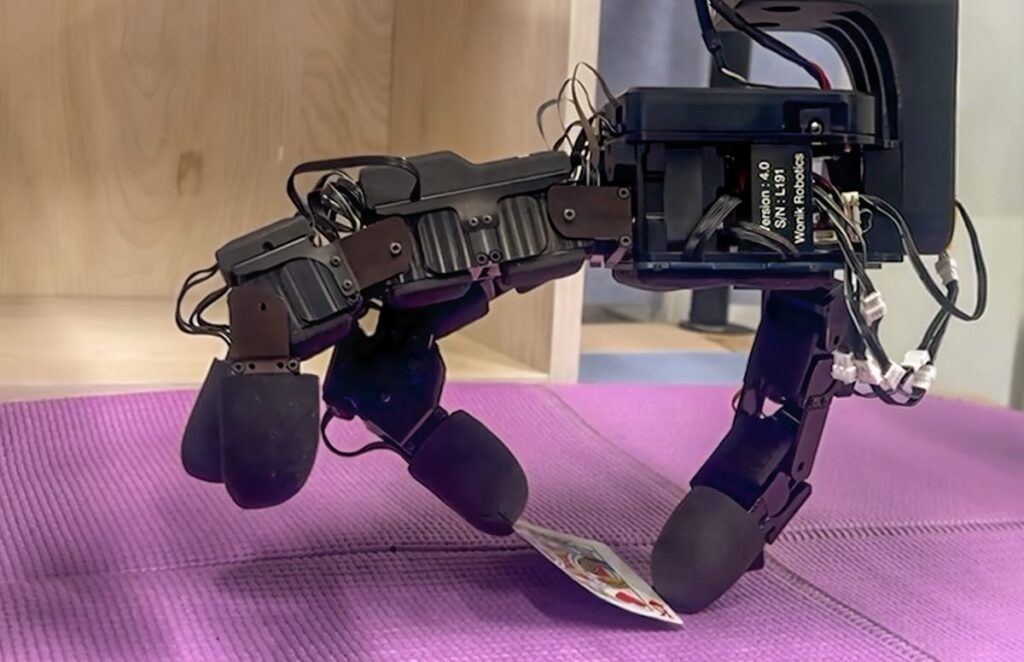
A joint demonstration with Waseda University illustrates how a highly responsive robotic fingernail autonomously lifts a playing card—a skill acquired by observing and learning from a human operator. Source: XELA Robotics XELA Robotics Co. is set to showcase its newest tactile sensing advancements at three upcoming events in May and June 2026, beginning with the Robotics Summit & Expo in Boston this week. The company will present a range of updates and hands-on demos covering new sensor hardware, enhanced software, and broader compatibility with top robotic platforms. Key Technologies on Display at the Robotics Summit Robotic fingertip with integrated nail:…
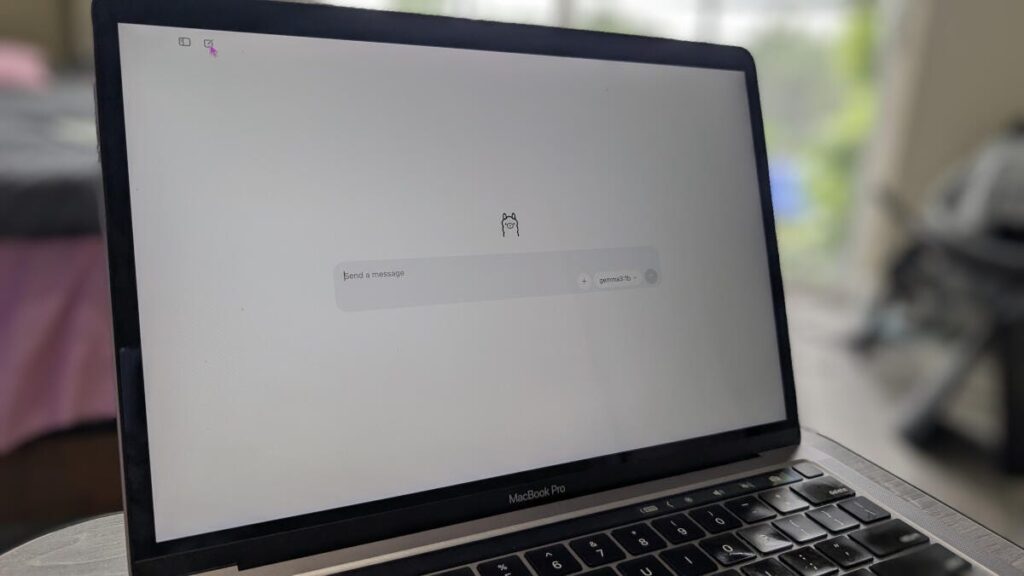
Jack Wallen/ZDNETFollow ZDNET: Add us as a preferred source on Google.ZDNET’s key takeawaysOllama is a simple, locally-run AI tool that’s surprisingly powerful.This app offers advantages you might not expect.On top of being free and private, it’s open-source as well.Ollama may not be a major name in the AI world, but it deserves far more attention than it gets. This downloadable AI solution provides several perks that services like ChatGPT simply can’t match, and those perks are precisely why I’ve abandoned traditional platforms for good.I’ve written about Ollama many times over the past year, so I figured it was the right…

HONG KONG, May 26, 2026 — Luffa AI, a pioneering company blending Web3 and artificial intelligence, has secured a strategic equity investment from GoFintech Quantum Innovation Limited, a publicly traded firm in Hong Kong (Stock Code: 00290.HK). The deal sets Luffa AI’s valuation at US$220 million. The partners will pursue extensive collaboration in artificial intelligence, quantum security, blockchain, and compliance-driven fintech to co-develop cutting-edge solutions at the intersection of AI and quantum blockchain finance.Today’s internet suffers from major fragmentation: user identities are isolated and platform-controlled, AI agents lack self-sovereign identities and execution tools, value and payments are trapped in walled…

Protecting software-as-a-service (SaaS) applications is challenging because traditional security measures aren’t built for this environment. The core problem is that users don’t own the software, which typically runs on external infrastructure. Conventional security tools are designed for software the user owns and operates on their own systems. While SaaS providers try to enforce security within their platforms, they cannot dictate how customers use their applications. Usage patterns differ across users and are primarily shaped by how each app is set up. This setup configuration is the sole built-in security option for SaaS users, and incorrect configurations remain the leading and…

Published on May 26, 2026 by Jonah Kowall, Jaeger Project Maintainer Featured CNCF projects in this article Modern software systems are becoming increasingly complex, and the tools we use to monitor them must evolve alongside them. When microservices became mainstream, distributed tracing emerged as an essential practice. Jaeger quickly became a go-to solution for engineers trying to make sense of these dispersed architectures. Today, as companies begin deploying generative AI applications and autonomous agents into live environments, the demands on tracing are transforming once more. Tracing an AI agent’s journey now involves following processes like prompt assembly, pulling data from…

pros and cons Pros Remarkably slim and lightweightCharges two devices at the same timeStays cool even under heavy use Cons Aluminum and glass build isn’t very durable Follow ZDNET: Add us as a preferred source on Google.A wide range of “MagSafe” magnetic wireless battery packs are available today. Some perform well, while others fall short in various ways. Occasionally, certain products clearly outshine the competition. These standout packs are carefully constructed with quality materials and assembled with attention to detail.Also: I plug in a $4 router reboot timer, and it’s made my internet reliably fasterThe Momax Q.Mag X is one…

AI systems that can act on their own are starting to leave the digital world and enter real-world settings like warehouses, delivery routes, and public areas. This shift is raising questions about whether today’s AI regulations are equipped to handle systems that function in physical spaces.So far, most AI governance efforts have centered on digital risks, such as biased outputs, false information, and harmful online content. But AI systems that interact with the physical world introduce new dangers, where malfunctions could damage property, disrupt infrastructure, or put people’s safety at risk.On May 20, Singapore’s Infocomm Media Development Authority released version…