




Trending
- Revolutionary AI Breakthrough Promises to Change the Way We Live and Work
- Breakthrough AI Tech Set to Revolutionize Everyday Life: Discover What’s Coming Next
- Revolutionary AI Breakthrough Promises to Change Your Everyday Life Forever
- Revolutionary AI Breakthrough: How This New Technology is Changing the Future of Work
- Revolutionary Tech Breakthrough Promises to Change Our Lives Forever
- Apple’s Game-Changing iPhone Update Brings Groundbreaking Features You Won’t Want to Miss
- AI-Powered Innovations: The Game-Changing Technologies Set to Transform Our Future!
- Revolutionary New Technology Set to Transform Our Daily Lives: Here’s What You Need to Know!

Author: Carter

Carter
Hi, I'm Carter, a Wisconsin-based tech writer and creator. I launched this blog as a comprehensive resource to help people navigate the fast-moving tech landscape. Covering multiple facets of the industry—from software insights to digital tools—my goal is to break down complex concepts into actionable, easy-to-understand guides. When I'm not tracking the latest tech trends, I'm focused on developing my skills in business administration and digital management.

Kyrgyzstan has introduced a government-issued stablecoin supported by actual gold, constructed its own dedicated gold storage facility, and enlisted Binance founder Changpeng Zhao as an adviser on cryptocurrency policy. Zhao, commonly referred to as CZ, currently holds Kyrgyz citizenship and provides guidance to the nation’s president on crypto matters, according to Arsen Edilbek uulu, co-founder of KYTLABS and head of fintech consulting in Kyrgyzstan. The $USDKG listing on @OSL_HK expands access to regulated digital asset infrastructure in one of Asia’s most important financial regions.The move connects a gold-backed stablecoin issued under Kyrgyzstan’s digital asset framework with licensed market infrastructure designed…
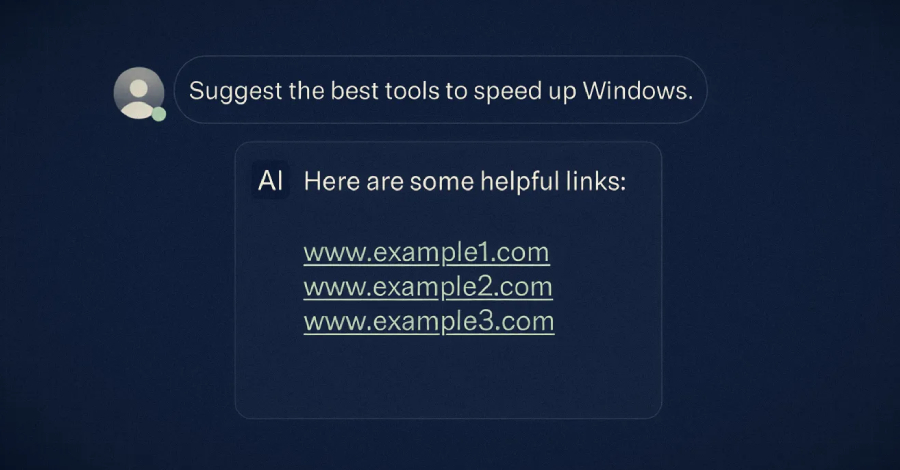
Microsoft has warned of an active cryptojacking campaign that makes use of artificial intelligence (AI) chatbot interactions as a mechanism for surfacing malicious download sites. “This emerging delivery technique extends social engineering beyond conventional search results and increases the visibility of malicious software recommendations,” Microsoft Defender Experts and the Microsoft Defender Security Research Team said in a report published Tuesday. The activity, per the tech giant, impersonates legitimate system utilities like CrystalDiskInfo, HWMonitor, Display Driver Uninstaller, FurMark, K-Lite Codec Pack, and PDFgear, likely in an attempt to target users who own high-performance GPUs. The idea is to focus on compromising…

Washington is focused on the wrong aspects of artificial intelligence. Discussions in federal government circles center almost entirely on safety measures, purchasing regulations, and oversight structures. While these issues are legitimate—and I certainly don’t dismiss them—they overlook a more subtle danger that merits serious consideration: What occurs when AI gradually teaches government workers to arrive at the same conclusions? This phenomenon is already underway. Evidence of it is visible in the way work products are beginning to look and sound alike across federal departments. As generative AI becomes deeply woven into everyday agency workflows—composing memos, summarizing policy alternatives, and assembling…

Rene Ramos/ZDNETFollow ZDNET: Add us as a preferred source on Google. ZDNET’s principal highlights Google Omni’s ambition is to revolutionize video creation, mirroring Nano Banana’s impact on image generation.Users can craft videos from diverse inputs: text, stills, sound, or existing footage.AI avatars offer creators powerful tools, yet trigger concerns regarding trust.In its recent announcement, Google unveiled an AI-driven video enhancement poised to streamline high-quality content production for creatives while potentially flooding YouTube with AI-generated material. The outcome will likely be a blend of both scenarios.Gemini Omni, a novel AI-powered video creation tool, promises a significant leap in video generation capabilities…
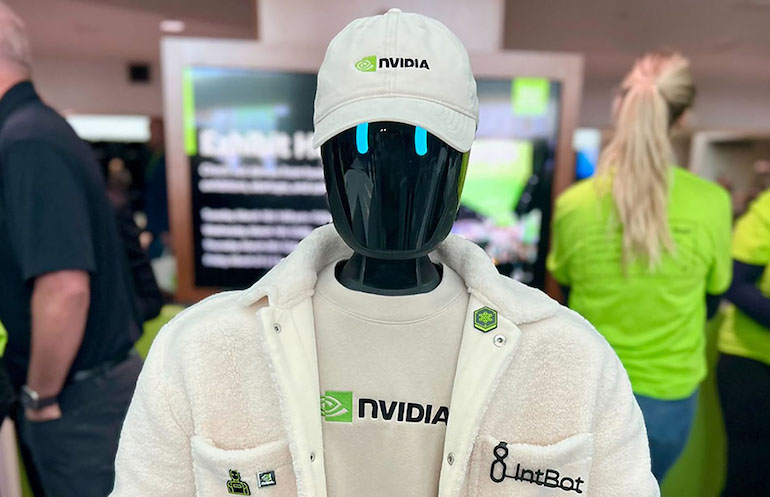
Nylo, IntBot’s service humanoid on display at CES 2026. Source: IntBot The fusion of robotics and artificial intelligence is sparking new international collaborations. IntBot and Certis have announced a strategic alliance aimed at developing “socially intelligent” robotic solutions for enterprise and public settings in Singapore. The duo stated: “This partnership reflects growing industry acceptance of physical AI, as socially aware robots transition from experimental demonstrations to fully functional real-world implementations.” According to both companies, they will merge IntBot’s General Social Intelligence platform with Certis’s expertise in managing large-scale, mission-critical operations. Together, they will develop humanoid concierge and assistance solutions capable…

Sam Liang is utterly baffled when I reveal the primitive way I record interviews: firing up the Voice Memos app on my iPhone, then painstakingly copying the transcript into a Google Doc by hand. The CEO of Otter, a transcription platform designed for dissecting meetings, watches me with the same bewilderment you’d show someone trying to join a video call with a rotary dialer. Deep down, he’s convinced I’d be far better off using Otter—and he’s almost certainly correct.This mindset reflects an emerging persona both in professional settings and personal life: the AI native. A wave of time-saving productivity solutions—from…

After pretraining, large language models stop updating. Their stored knowledge stays frozen while the real world keeps changing. Completely retraining a modern LLM costs far too much. Fine-tuning introduces new information but often erases what the model already knew. Retrieval-augmented generation (RAG) falls short when a question demands connecting insights scattered across many different documents. Researchers from the National University of Singapore, MIT CSAIL, A*STAR, and the Singapore-MIT Alliance for Research and Technology (SMART) have come up with a fresh solution called MEMO (Memory as a Model). What Problem Does MEMO Solve? Current strategies for adding fresh knowledge to LLMs…

Under a new governmentwide plan from the Trump administration, federal workers could soon be required to sign stringent non-disclosure agreements. The Office of Personnel Management on Tuesday unveiled its strategy to develop a uniform NDA for all federal staff, aiming to prevent internal government documents from being leaked to the media or otherwise released publicly. The NDA covers federal information such as, but not limited to, “internal agency operations, personnel issues, procurement procedures or any sensitive, pre-decisional or deliberative material that is not already publicly accessible and is legally protected from disclosure,” according to the OPM. “A standard NDA form…

Educators don’t need tech that adds extra classroom headaches. What they really need are tools that guide students to the correct materials fast, without wasting the opening minutes of class on tech problems. In today’s increasingly connected classrooms—where tablets, smart boards, digital platforms, and even basic sensors are becoming everyday parts of the learning space—that kind of seamless access is essential.This is exactly where QR codes have proven their worth in schools. They eliminate the need for students to type out lengthy web addresses, hunt for the correct page, or ask the teacher to repeat directions over and over. A…
Presented by Analog Devices Inc. (Image courtesy of Analog Devices Inc.) Not long ago, simply getting a robot to travel from point A to point B was enough for most site owners. Those days are gone. Modern robots must now move faster, handle ever‑changing surroundings, and navigate around an increasing number of obstacles. Under these tougher requirements, vision systems have become essential for navigation and spatial awareness. “The biggest challenge is no longer just the image quality itself,” notes Stephen Liu, robotics lead at embedded‑systems specialist Advantech. “It’s system‑level orchestration. As sensor counts grow, robotic OEMs must juggle bandwidth, latency,…