



# How AI Is Reshaping Industrial Operations: From Advisory Tools to Autonomous Systems
## The Current State of AI in Industry
Artificial intelligence is transforming the way factories, refineries, and critical infrastructure operate. However, the journey toward fully autonomous systems is still underway. Industry experts emphasize that significant work remains in terms of testing, validation, and refinement before AI can operate completely on its own across broad settings.
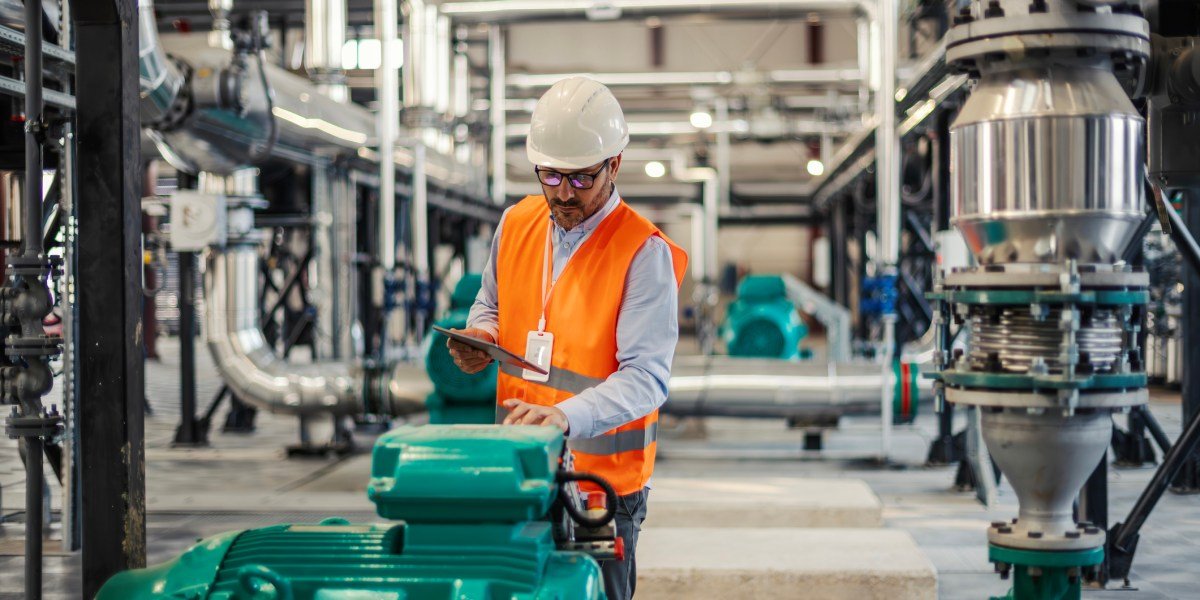
In the near term, AI is functioning much like the “S” in SCADA systems — supervisory. This means a human operator remains in the loop, with AI serving as a powerful advisor. Full autonomy, for now, is limited to narrow, repetitive tasks where the stakes are lower and the parameters are well-defined.
## How Human Roles Are Evolving
As AI takes over more routine decision-making, the role of human workers is shifting in meaningful ways. Operators who once focused on a single process or maintenance task are now expected to work across multiple disciplines. Rather than approving individual actions one by one, they spend more time setting acceptable operating limits and defining the boundaries within which AI can function.
One of the most important responsibilities for human operators is catching errors early. Because AI learns from the data it receives, it can sometimes reinforce incorrect patterns. Human experience and judgment are essential for interpreting what the AI is detecting and deciding whether its recommendations are sound.
## Building the Right Guardrails
On a broader scale, organizations and entire industries need to establish clear rules about which decisions AI is allowed to make independently and how those decisions are monitored and reviewed. Despite this need, many companies have been slow to implement comprehensive safeguards.
Studies show that a significant portion of organizations have yet to see major changes in how AI affects decision-making and accountability across their partnerships and ecosystems. Sharing data with external partners remains limited in many cases, highlighting a gap between ambition and action.
Regulators are beginning to step in. For example, the European Union’s AI Act classifies certain AI components used in critical infrastructure as high-risk and mandates human oversight. Companies are also taking internal steps — some have established dedicated AI governance boards and published clear principles for how their AI systems are developed and deployed.
## Real-World Examples in Action
Several companies are already putting semi-autonomous systems to work in fascinating ways:
**Refining and Optimization:** One major oil company uses optimization algorithms in a closed-loop system at one of its refineries, where AI adjusts production automatically while operators monitor from a distance. At another facility, the same company uses AI to recommend changes, leaving the final decision to human operators.
**Food and Beverage:** A global food company deployed AI to fine-tune the industrial dryers used in producing powdered beverage ingredients. In a notable trial, this optimization cut energy consumption by 16% while simultaneously improving product quality and output.
**Chemical Manufacturing:** A chemical company in Southeast Asia built an AI-powered digital twin that spans engineering, operations, and maintenance. It monitors the health of assets and flags potential failures before they become problems. The company achieved 99% plant reliability and saw a ninefold return on investment within just six months.
**Energy and Grid Management:** A U.S. national laboratory developed a generative AI model for grid control rooms. The system supports operators by forecasting renewable energy output and estimating real-time grid conditions across a wide scale.
## Looking Ahead: What’s Next?
The path forward involves connecting systems that have traditionally operated in isolation. For decades, manufacturing plants and critical infrastructure have functioned as separate, siloed environments. New technologies are creating opportunities to coordinate these systems in a more holistic way.
On a company-wide level, this means integrating physical AI — systems that combine robotics and sensor technology with intelligent decision-making. Drones, for instance, can inspect pipelines and power lines and feed visual data to algorithms that detect gas leaks and other hazards. This approach not only creates a more connected flow of information but also keeps humans out of potentially dangerous environments.
On an even larger scale, the concept of a “living digital twin” is emerging. These digital models represent entire industrial value chains, allowing companies to respond quickly to supply chain disruptions, shifts in demand, changing tariffs, and fluctuations in material availability. In a world of geopolitical uncertainty and shifting regulations, this kind of resilience is becoming essential for staying competitive.
—
## Frequently Asked Questions (FAQ)
**Q: What does “agentic AI” mean in an industrial context?**
A: Agentic AI refers to AI systems that can take independent actions to achieve specific goals. In industrial settings, this currently means AI that can recommend or even execute adjustments to processes, but usually under the supervision of a human operator. Full autonomy is limited to well-defined, repetitive tasks.
**Q: Will AI replace human workers in industrial operations?**
A: Rather than replacing workers, AI is reshaping their roles. Operators are moving from single-task specializations to multi-disciplinary responsibilities. Their focus is shifting toward setting boundaries, interpreting AI insights, and catching errors early — work that requires human judgment and experience.
**Q: What are digital twins and how are they used in industry?**
A: Digital twins are virtual models that mirror physical systems or entire value chains. They allow companies to simulate, monitor, and optimize operations in real time. For example, a digital twin can track equipment health, predict failures, and suggest maintenance schedules — all before a problem occurs.
**Q: How are governments regulating AI in critical infrastructure?**
A: Governments are introducing rules to ensure safety and accountability. The EU AI Act, for example, classifies AI components used in critical infrastructure as high-risk and requires human oversight. Companies are also developing their own internal governance structures to complement these regulations.
**Q: What benefits have companies seen from using AI in their operations?**
A: Reported benefits include significant energy savings (up to 16% in some cases), dramatically improved plant reliability (up to 99%), faster return on investment (ninefold within six months in one example), and reduced need for humans to enter hazardous environments.
**Q: How far are we from fully autonomous industrial operations?**
A: Full autonomy across broad industrial settings is still a ways off. Experts compare the current state to the early days of other industrial technologies. For now, AI works best in a supervisory role, handling narrow and repetitive tasks autonomously while humans oversee broader operations and decision-making.
—
## Conclusion
The integration of AI into industrial operations represents a significant shift in how factories, refineries, and infrastructure systems are managed. While full autonomy remains a goal still in progress, the current advisory and semi-autonomous capabilities are already delivering measurable improvements in efficiency, safety, and decision-making. The human element remains indispensable — not as a bottleneck, but as a critical interpreter and guardian of AI-driven processes.
As companies continue to build digital twins, deploy physical AI, and develop stronger governance frameworks, the industrial landscape is poised to become more connected, resilient, and sustainable. The organizations that invest thoughtfully in both the technology and the people who oversee it will be best positioned to thrive in an increasingly complex world.
Thank you for reading
