



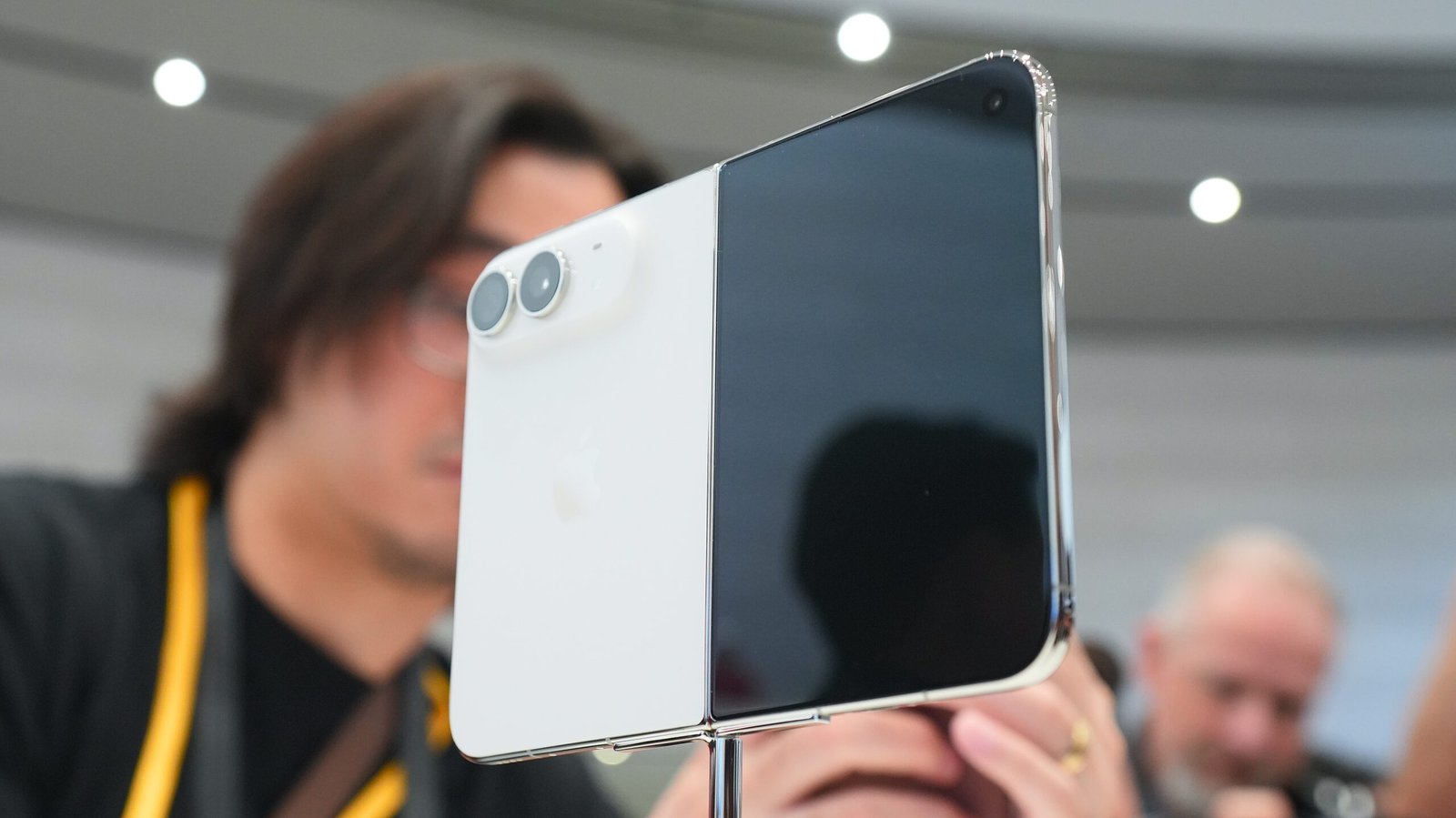
# iPhone Folding Screen Issue: What You Need to Know
## The Problem
Some owners of Apple’s latest folding iPhone are discovering a serious defect shortly after unboxing their new device. Bright white lines are appearing across the inner display, rendering parts of the screen unusable. In every reported case, the lines follow the same pattern — running along the right side of the display roughly a third of the way up, with an additional line through the center.
The alarming part? These screens are breaking within hours of use, not months or years of wear.
## What’s Causing the Damage?
Experts who have taken apart the device say the hinge mechanism itself may be to blame. The folding screen is a complex piece of engineering made up of more than a hundred moving parts, and early evidence suggests a flaw in how certain components interact under repeated folding and unfolding.
Possible culprits include:
– A support bar that fails to retract properly, pressing against the flexible display
– A sliding rail that brushes against the screen and creates pressure points over time
– A concentrated stress zone where multiple edges, components, and moving parts meet
Reports also suggest that affected phones initially opened and closed smoothly, but then began to feel stiff or resistant. Shortly after that resistance appeared, the screen would crack — often within just a few more open-and-close cycles.
The speed at which these issues emerged strongly points to a manufacturing or assembly defect rather than normal user damage.
## What to Do If Your Screen Breaks
If you experience this issue, here are the steps that can help you get the best outcome:
1. **Document everything.** Take clear photos of the damage and note when you first noticed the problem. This will strengthen your case.
2. **Contact your retailer first.** If you bought the phone from Apple, go to Apple; if you purchased it from another store or carrier, reach out to them first.
3. **Don’t accept blame.** Some customers have been told they must have dropped or damaged the device themselves. Stand firm — a device costing nearly $2,000 or more should not fail this quickly, and you are not the only one experiencing this.
4. **Know your options.** You will likely be offered either a refund or a replacement. Choose whichever works best for your situation.
## Replacement vs. Refund: Which Is Better?
Because supplies of the folding iPhone are limited, getting an immediate replacement at the point of sale is rare. Most affected owners are told they will need to wait weeks or even months for a new unit. In some cases, the wait could be well into the new year.
If you can afford to wait, holding out for a replacement may be the best choice. However, if you were relying on the device for daily use or were planning to trade in or sell an older phone, taking the refund and waiting for the situation to stabilize before purchasing another one may be the smarter move.
## What If Your Phone Is Still Fine?
If your folding iPhone is currently working without any issues, there are still steps you can take to protect yourself:
– **Check your return policy.** If you bought directly from Apple, you typically have 14 days to return the device for a full refund. Third-party retailers and carriers will have their own policies, so check the fine print.
– **Make sure you have insurance.** Whether through AppleCare or a third-party plan, having coverage gives you peace of mind in case a defect emerges later.
## How Common Is This Issue?
Relatively uncommon. Out of the many thousands of units sold during launch, only a small number of firsthand reports have been documented. The fact that all damage appears identical suggests it is likely a defective batch of hinges rather than a universal design flaw. Apple has yet to issue an official statement, but given the volume of reporting, a resolution seems likely in the near future.
—
## Frequently Asked Questions (FAQ)
**Q: Is the screen damage caused by dropping or mishandling the phone?**
A: Based on all available evidence, no. The consistent pattern of damage across multiple reports points to a manufacturing defect in the hinge assembly, not user damage.
**Q: How soon after unboxing does the screen fail?**
A: Some users have reported bright white lines appearing within just a few hours of first use.
**Q: Can the damage be repaired instead of replacing the phone?**
A: Given that the issue stems from the hinge mechanism, a simple screen repair may not solve the problem if the hinge continues to put stress on the display. A full replacement is the most likely solution.
**Q: Will Apple replace affected devices?**
A: Apple has not yet made an official statement, but replacement and refund options are reportedly being offered through Apple Stores and authorized retailers.
**Q: Should I avoid buying the folding iPhone altogether?**
A: If you are still in your return window, it may be worth waiting until more information is available. However, it does appear that only a small batch of units is affected, and the issue is likely to be resolved with future production runs.
**Q: Is there a way to prevent the screen from cracking?**
A: There is no proven method to prevent the issue if the hinge defect is present. Using a protective case may help reduce stress on the display, but it cannot stop a manufacturing flaw.
**Q: How widespread is the problem?**
A: It is considered relatively rare, with fewer than a dozen confirmed firsthand reports as of the latest information available.
—
## Conclusion
The iPhone folding screen issue, while unsettling, appears to be limited to a defective batch of hinges rather than a fundamental design failure. If you are an affected owner, take action quickly — document the damage, contact your retailer, and don’t accept blame. If your phone is still working, stay informed, check your return window, and make sure your insurance is in place. Apple will likely address this in the coming weeks, and replacements should become more readily available as the company identifies and corrects the faulty components.
Thank you for reading
