



# The Road from Prototype to Mass Production: How Humanoid Robots Are Finding Their Place in Industry
## A Manufacturing Partner’s View of the Humanoid Revolution
The humanoid robotics industry has long been captivated by flashy demo reels and headline-grabbing funding rounds. But behind the scenes, a more pragmatic effort is underway — turning bipedal machines from lab curiosities into reliable, cost-effective tools for real-world environments.
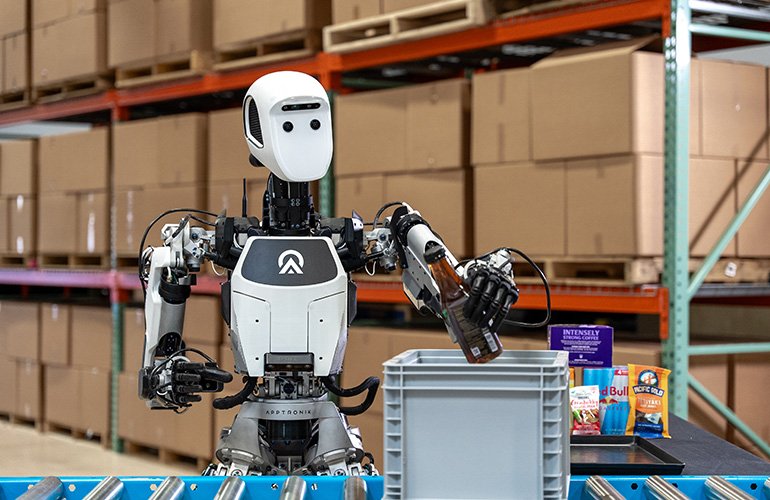
St. Petersburg-based Jabil Inc., a global leader in design, supply chain management, and manufacturing services, has positioned itself at the center of this transformation. The company has partnered with robotics developers to shepherd humanoid platforms from early prototypes toward full-scale production. Among its collaborations is work with Apptronik on the Apollo humanoid robot, which is being tested and deployed in active manufacturing environments.
Several major companies are now preparing to scale humanoid production, including Tesla, 1X Technologies, XPeng, and UBTECH. Jabil’s role involves helping these firms navigate the complex jump from low-volume handcrafted units to the kind of high-throughput manufacturing processes that make commercial viability possible.
## From Hand Assembly to Scalable Production
Thomas Brown, senior director for engineering and technology at Jabil, notes that the industry is crossing a critical threshold. “A lot of customers have gotten humanoids out in low volumes, but we are entering a phase of tens of thousands,” he explains. “It’s no longer something that’s assembled by hand on site.”
That transition demands a fundamental shift in how humanoid robots are designed and built. Cost structure becomes paramount. Manufacturability has to be engineered into every component from the start. And quality assurance must meet standards that hand-built prototypes never faced.
Brown says that when a single robot carries a high price tag, manufacturers face a narrow window for gathering AI training data and validating real-world use cases. “We provide that ability to cost down their designs to actually hit those scales,” he adds.
## Compute, AI, and the Edge
The current surge in computing power is unlocking new capabilities for physical AI systems. Brown points to the NVIDIA Jetson series as a popular platform among humanoid developers. More compute and memory are now available than ever before, though price remains a persistent obstacle at scale.
Foundation model companies are creating AI intelligence that outpaces the hardware available at the edge. Closing that gap — packing more processing power into compact, energy-efficient modules that can operate on a robot’s body rather than in a cloud data center — is a critical priority for the industry.
## Automotive Expertise Meets Robotic Design
Major automakers including Hyundai, Tesla, and BMW have invested in and tested humanoid robots. Their involvement brings engineering expertise that translates surprisingly well to bipedal machines.
Consider something as seemingly simple as a wiring harness. In a humanoid, it needs the ruggedness of automotive-grade components but compressed into a form factor closer to high-end consumer electronics. This hybrid requirement is exactly the kind of challenge that automotive engineers are experienced in solving.
Developers also benefit from automotive-style approaches to rapid iteration. Beyond sensing and compute, there is a wide range of power supply architectures to consider, including modular systems that allow components to be swapped quickly during testing and deployment.
## The Challenges of Going to Market
Brown draws a historical parallel to frame the difficulties ahead. “Prior to the smartphone, things were much more simplistic — you could just build up capabilities to the cost point and scale,” he says. Today, humanoid developers are grappling with complex global supply chains that are being restructured and diversified in real time.
Security and confidentiality constraints also play a role. Brown notes that he works with major humanoid developers across the United States and internationally but is unable to name all of them publicly at this stage.
## Where Humanoids Make Economic Sense
In industrial settings, Brown sees a strong case for humanoids. Traditional factory automation is typically built for specific, narrow tasks — a single machine tending operation or one welding station. Humanoid robots, by contrast, offer a broad set of capabilities that could change the economics of an entire production line.
“Instead of building a purpose-built line for every single task, a humanoid could handle multiple operations across the same floor,” Brown explains. Many humanoid companies have already begun partnering directly with end customers to gather clear, well-defined requirements — a pragmatic approach that moves beyond vague consumer fantasies.
The consumer space, meanwhile, still largely operates in the realm of aspirational use cases. “I just want a robot to fold laundry” captures the imagination, but translating that desire into a reliable, affordable product remains a long-term challenge.
## Mobile Manipulators: Complementary or Competitive?
One recurring question is whether mobile manipulators — essentially a robotic arm mounted on a wheeled or tracked base — represent a stepping stone toward full humanoids or a viable standalone format. Brown sees room for both.
Traditional automation systems, such as machine tenders operating at 1.5 meters per second (roughly 3.3 mph), already move at speeds that would challenge a humanoid carrying a payload. For facilities with existing high-speed lines, a traditional robotic arm may remain the better fit.
“The humanoid is going to be a supremely flexible device, but it’s not always the right device,” Brown says. Different facilities have different needs, and the existing production line layout often dictates which form factor makes sense.
## The Timeline for Consumer Humanoids
When asked about consumer humanoid robots, Brown offered a cautious but optimistic timeline. “Maybe in five-ish years,” he said. “It could be 20 years, but progress is going very rapidly.”
The key variables are AI model development and computing hardware. If both continue advancing at their current pace, the software and electronics side of the equation could reach consumer readiness well before the cost side does.
Brown also emphasized that the market will likely sustain multiple humanoid companies, given the diversity of potential applications — manufacturing, consumer households, hospitality, food preparation, and more. Policy developments in one area won’t automatically determine success across all of them.
## Redesigning Factories Around Robot Fleets
As humanoid robotic fleets become more common, their influence will extend beyond the machines themselves. Factory and warehouse layouts may need to be reimagined entirely.
“Instead of the production line being the key limiting factor, it becomes about your creativity, the robot fleet, almost like a programmable substrate for manufacturing,” Brown describes. In this vision, humanoids could be dispatched to different workstations, swap end effectors on their arms mid-task, and pull supplies from storage autonomously — all orchestrated through software.
Along the way, hybrid solutions combining traditional automation with humanoid flexibility will become increasingly common.
## Safety, Insurance, and Regulation
Humanoid robots operating alongside people raise significant safety questions that the industry is still working to address. Traditional robotic arms operate within well-established safety frameworks — certifications, standoff distances, protective cages, and clearly defined failure modes.
Humanoids, with their greater mobility and ability to operate in unstructured environments, challenge those frameworks. Insurance requirements, safety certifications, and regulatory norms designed for stationary robotic arms don’t yet fully apply to machines that walk, reach, and manipulate objects in shared spaces.
“What are their failure modes? How do we certify these things in new environments? How do we understand what the model is going to do in certain conditions?” Brown asks. These are open questions that the industry must answer before humanoids can operate with the same level of trust as current automation solutions.
Companies are beginning to track legislation and develop safety standards, but existing regulations will need to be expanded to govern how these devices operate in commercial spaces, consumer environments, and public areas.
## Frequently Asked Questions About Humanoid Robot Production
**Q: Why are companies like Jabil important to humanoid robot development?**
A: Companies like Jabil bring manufacturing expertise, supply chain management, and scale infrastructure that humanoid startups typically lack. They help bridge the gap between building a working prototype and producing thousands of reliable units at an economically viable cost.
**Q: What are the biggest obstacles to mass-producing humanoid robots?**
A: The primary challenges include reducing unit cost to commercially sustainable levels, designing components that can be manufactured at scale, managing complex and diversified global supply chains, and ensuring quality and reliability across large production volumes. Safety certification and regulatory frameworks are still catching up to the technology as well.
**Q: How do automotive companies contribute to humanoid robot development?**
A: Automakers bring decades of experience with robust wiring harnesses, modular power systems, rapid iteration processes, and high-tolerance manufacturing. These skills translate well to humanoid robots, which need automotive-grade durability packaged into much smaller form factors.
**Q: Will mobile manipulators replace humanoid robots?**
A: Mobile manipulators serve a different purpose and will likely coexist alongside humanoids. Traditional high-speed automation remains well-suited for many factory tasks, while humanoids offer unmatched flexibility for multi-purpose environments.
**Q: When can consumers expect to buy a humanoid robot for home use?**
A: Estimates range from approximately five years to potentially two decades, depending on advances in AI, computing costs, and actuator affordability. Rapid progress is being made, but cost reduction remains the most significant barrier to consumer adoption.
**Q: What role does edge computing play in humanoid robotics?**
A: Edge computing allows humanoid robots to process data and make decisions locally rather than relying on cloud connectivity. This is essential for real-time responsiveness and reliability, especially in environments where network access may be limited or inconsistent.
**Q: How will factories change to accommodate humanoid robots?**
A: Factories will likely move toward software-defined layouts where humanoid fleets can be dynamically reassigned to different tasks and workstations. End effectors and tools can be swapped autonomously, making production lines more adaptable than traditional fixed automation setups.
## Conclusion
The journey of humanoid robots from laboratory prototypes to everyday industrial tools is well underway, driven by a combination of advancing AI, improving computing hardware, and growing manufacturing expertise. Companies like Jabil are playing a vital role in making that transition practical, helping developers solve the hard problems of cost, scalability, and reliability.
The path forward is not about building a single humanoid that can do everything — it is about creating platforms flexible enough to be adapted across manufacturing, logistics, hospitality, and eventually consumer households. Safety standards, regulatory frameworks, and insurance structures will need to evolve alongside the technology, but the foundations are being laid.
As Brown reflects, there is reason for optimism. The industry is making measurable progress on price points, functionality, and real-world deployment. The humanoid robotics sector is entering a phase where engineering discipline and commercial pragmatism are just as important as innovation and ambition.
Thank you for reading
