



# Arm Launches Comprehensive Initiative to Unite Physical AI and Robotics Ecosystem
**A new collaborative platform and capability classification system aim to streamline how robots are built, described, and deployed across industries.**
—
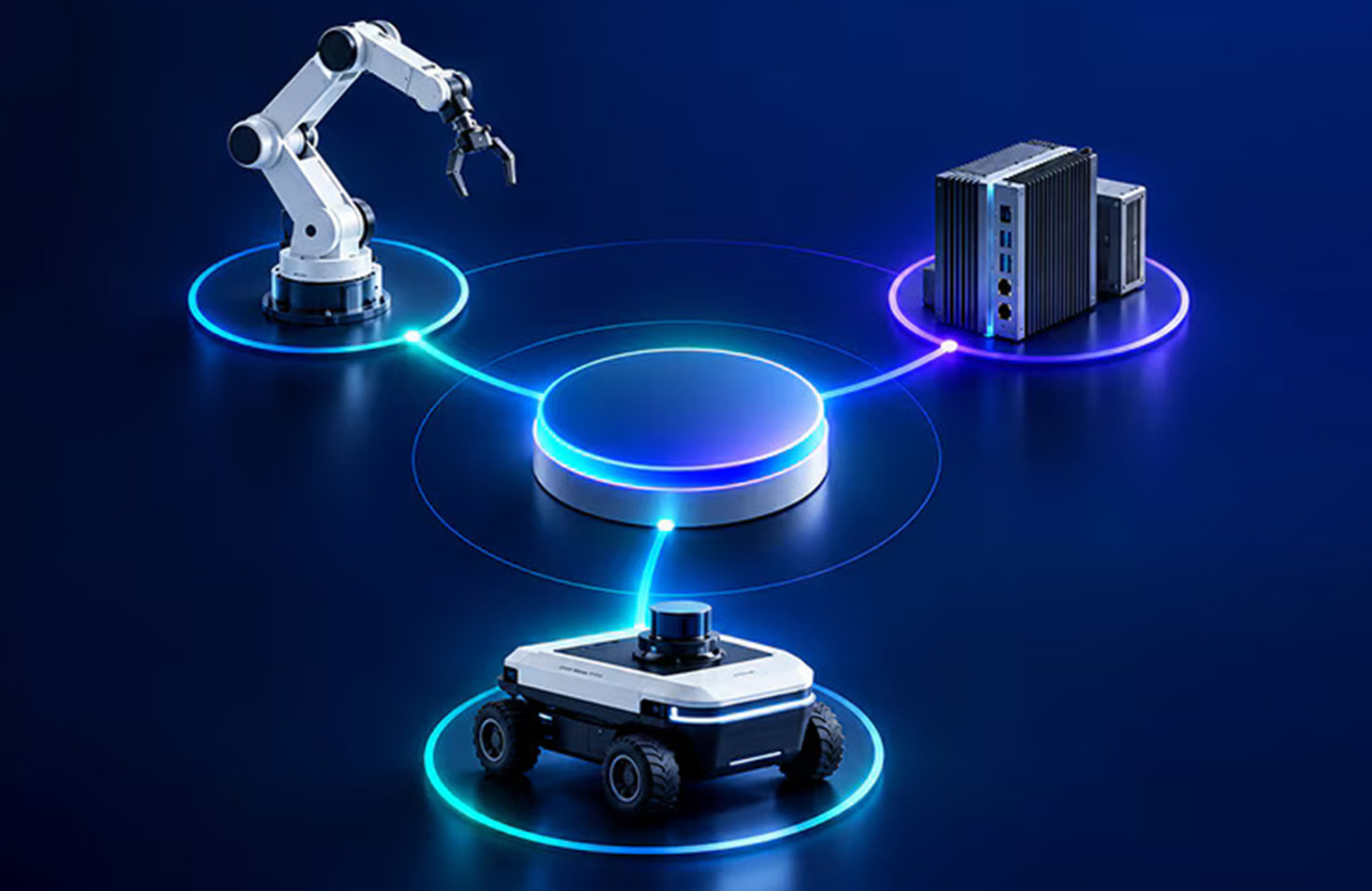
Arm Holdings PLC has introduced a sweeping new initiative designed to unite more than 80 organizations across the physical artificial intelligence technology stack under a single collaborative umbrella. Called **Arm Total Design for Physical AI**, the program draws on Arm’s years of experience cultivating ecosystem partnerships in cloud computing and applies that same playbook to the world of robotics and embodied intelligence.
Alongside this ecosystem effort, Arm unveiled the **Robotics Capability Framework**, a structured classification system intended to create a shared vocabulary for describing robotic systems — a language that engineers, executives, and even outsiders can use to understand where a given robot sits on the spectrum of sophistication.
## Why This Matters Now
Robotics remains a highly fragmented field. A single end-to-end system might integrate compute hardware from one vendor, AI models from another, sensors from a third, and software frameworks from yet another. This patchwork of components creates real challenges when companies try to ensure interoperability, validate designs, and bring products to market efficiently.
Arm acknowledged these struggles from direct experience. Executives within the company noted that many firms working on Arm-based architectures were finding it difficult to form the partnerships or collaborations needed to build complete, cohesive solutions.
“There’s a real need for a point of coherence — a place where everyone from silicon designers and cloud providers to actuator manufacturers, safety experts, and robotics companies can come together and share ideas,” said Dermot O’Driscoll, vice president of go-to-market and customer solutions for physical AI at Arm. “We want to seed an ecosystem where people can combine their technologies more effectively.”
## Members and Scope
The initial roster of participants reflects the breadth of the physical AI landscape. Notable members include AWS, NXP, Siemens, Hugging Face, QNX, Qwen, Unitree Robotics, ECARX, Liquid AI, PlusAI, and Psyonic — spanning cloud infrastructure, chip design, AI model development, safety-critical systems, and robot manufacturing.
Arm Total Design for Physical AI aims to bring together expertise across software stacks, AI models, sensors, compute hardware, virtual platforms, and digital twins so that companies can develop and validate interoperable systems much earlier in the design cycle. This, in turn, could reduce costly late-stage integration problems and accelerate time-to-market for robotic products.
## The Robotics Capability Framework: Six Levels of Intelligence
Perhaps the more intriguing announcement is the **Robotics Capability Framework**, which maps robotic systems across six levels of increasing sophistication — from zero to five.
– **Level 0** represents robots that can react to basic stimuli and execute simple commands but operate under rigid, fixed rules with no adaptability.
– **Level 5** represents the most advanced tier: systems with evolving behavior that can learn, adapt, and continuously self-optimize in dynamic environments.
The framework was inspired in part by SAE International’s well-known classification system for autonomous driving, but Arm emphasizes that robotics is inherently more complex. A robot might need to navigate unstructured environments, manipulate diverse objects, and interact safely with humans — challenges that demand a multi-dimensional approach rather than a single-axis scale.
“We wanted to give people — both inside and outside the robotics industry — a clear and intuitive way to understand what a robot can and can’t do,” O’Driscoll explained. “The framework is a starting point, and we’re actively inviting the industry to contribute and refine it.”
## Lessons from the Automotive World
Arm’s deep roots in the automotive sector have given the company valuable insight into the overlap between vehicle and robot design. Today, virtually every vehicle on the road relies on Arm-based chips for at least some of its computing needs. Both automotive and robotics applications demand real-time processing, computer vision capabilities, functional safety, and rigorous validation — requirements that Arm has helped the automotive industry address for decades.
This overlap has already proven useful in connecting with automotive partners who are now exploring how their existing technologies and expertise can translate into the robotics space. The company sees this cross-pollination as a key accelerator for innovation.
## Looking Ahead
Arm plans to begin hosting collaborative sessions with its members in the coming months, focusing on delivering tangible technical and commercial benefits quickly. The ultimate goal is to create a self-sustaining community that continues to grow, attract new participants, and shape the future of how physical AI systems are developed and deployed.
Companies interested in participating can request membership in Arm Total Design for Physical AI.
—
## Frequently Asked Questions (FAQ)
**What is Arm Total Design for Physical AI?**
It is a collaborative program launched by Arm Holdings PLC that brings together over 80 companies spanning the physical AI technology stack — including cloud providers, chip makers, AI model developers, sensor companies, and robotics firms — to improve interoperability and accelerate the development of robotic and embodied AI systems.
**Who are the members?**
The initiative’s participants include AWS, NXP, Siemens, Hugging Face, QNX, Qwen, Unitree Robotics, ECARX, Liquid AI, PlusAI, Psyonic, and others. Arm has indicated the community is open and growing.
**What is the Robotics Capability Framework?**
It is a classification system that defines six levels of robotic capability — from basic reactive systems (Level 0) to self-optimizing, learning machines (Level 5). It was inspired by SAE International’s autonomous driving levels but is designed to be multi-dimensional, reflecting the greater complexity of robotics applications.
**How is this different from existing robotics standards?**
While existing standards often focus on specific technical specifications, the Robotics Capability Framework aims to provide a common language for describing what robots can do at a higher level of abstraction. This is intended to help both technical teams and non-experts understand robotic systems more clearly.
**Why did Arm create this initiative?**
Arm identified a gap in the physical AI ecosystem similar to one it had previously addressed in cloud computing — a lack of a central place where companies could collaborate, share technology, and work toward interoperable solutions.
**How can companies get involved?**
Companies interested in joining Arm Total Design for Physical AI can submit a request through Arm’s official channels to become part of the ecosystem.
—
## Conclusion
Arm Holdings PLC’s dual announcements — the Arm Total Design for Physical AI ecosystem and the Robotics Capability Framework — represent a significant effort to bring order and collaboration to an industry that has long been defined by fragmentation. By creating a shared vocabulary for robotic capabilities and a structured platform for cross-sector collaboration, Arm is positioning itself as a facilitator of the next generation of physical AI systems. The success of this initiative will likely depend on how actively the broader robotics community engages with and contributes to both the platform and the framework. If these tools gain widespread adoption, they could meaningfully shorten development timelines, reduce integration challenges, and ultimately accelerate the deployment of robots across manufacturing, logistics, healthcare, and beyond.
Thank you for reading.
