



# New Testing Partnership Aims to Supercharge Battery-Free IoT Pixel Production at Scale
## Introduction
The rapidly growing demand for battery-free Internet of Things (IoT) sensors is pushing manufacturers to rethink how they validate and quality-check these tiny, energy-harvesting devices at scale. In a significant development, two technology firms have joined forces to deliver a standardized, high-speed testing solution that promises to reshape how IoT Pixel components are manufactured and verified before reaching end users.
## Addressing a Critical Bottleneck in IoT Hardware Production
Producing IoT sensing units at high volume presents a unique challenge: ensuring every single unit works correctly without slowing down the assembly line. Traditionally, suppliers have had to design custom testing setups from scratch whenever they begin manufacturing a new IoT component. This process is time-consuming, expensive, and creates friction when onboarding new production partners.
The newly announced collaboration is specifically designed to eliminate that friction. By developing a pre-validated, off-the-shelf testing platform tailored to the specifications of the IoT Pixel, manufacturers can skip the custom engineering phase entirely and move directly into production.
## The Testing Platform: Speed, Precision, and Full Coverage
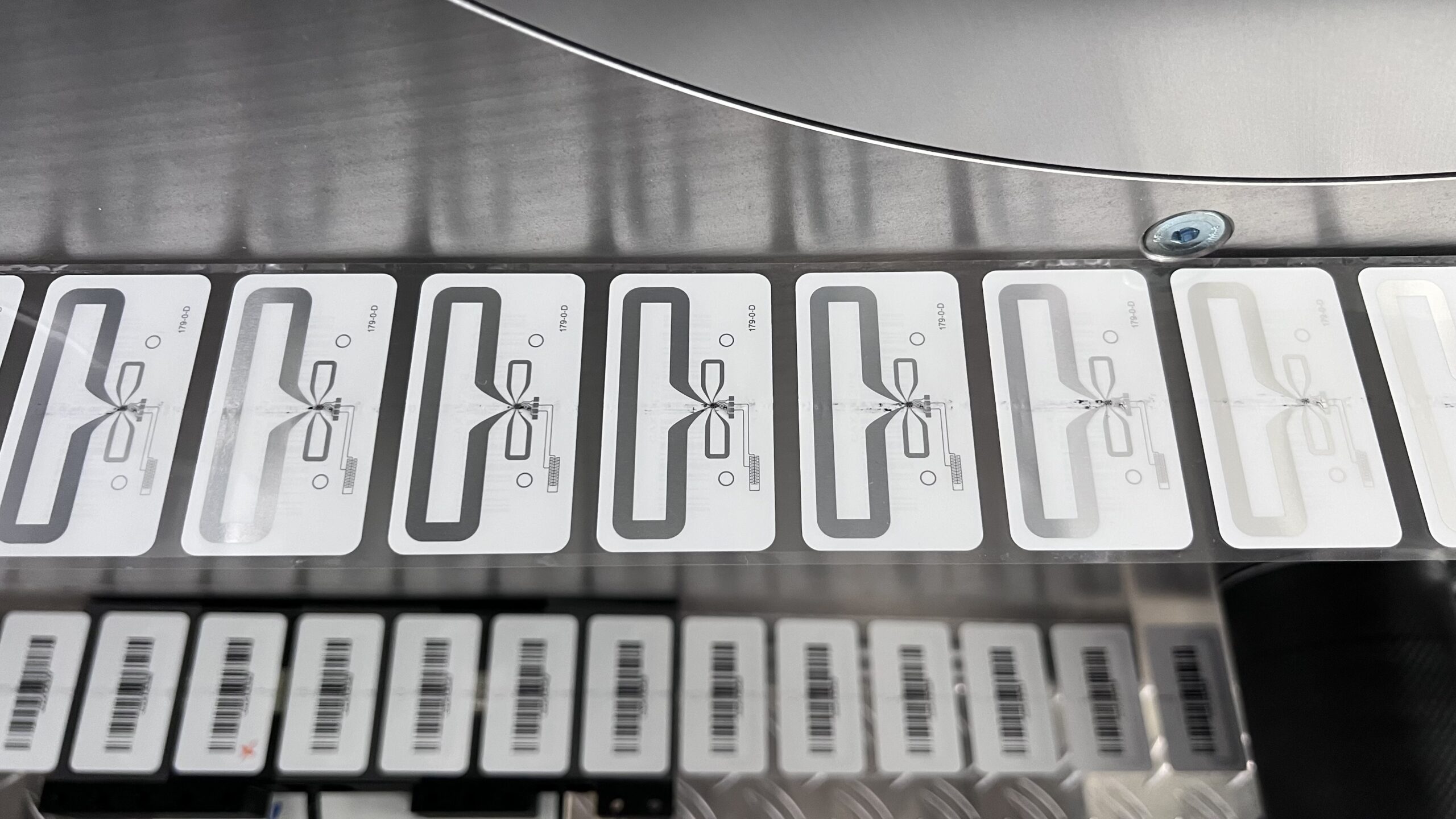
At the heart of this partnership is a dedicated Bluetooth Low Energy (BLE) testing system that operates at remarkable speeds. On a single testing lane, the platform can evaluate up to 6,500 units every hour — more than quadrupling the output of a conventional stop-and-go testing approach that typically manages around 1,500 units per hour.
Every unit that passes through the system receives its own individual pass-or-fail determination. This means manufacturers can achieve 100% inspection of their output rather than relying on statistical sampling. Defective units are caught early, preventing downstream waste and reducing the risk of nonfunctioning sensors reaching customers.
The system is designed to integrate seamlessly with existing reel-to-reel production equipment using standard trigger lines, serial communication interfaces, and general-purpose input/output connections. This flexibility allows it to slot into both new and established manufacturing lines with minimal reconfiguration.
## How It Works in Practice
The testing process involves a near-field functionality check that confirms each IoT Pixel is operational and responds as expected. Specialized antenna arrangements ensure that even in densely packed production environments, each test result is correctly matched to the unit being evaluated.
When the line speed of the production machinery doesn’t perfectly match the throughput of the tester, the platform can also be deployed as a standalone offline testing station. This gives manufacturers additional flexibility to scale their quality assurance process according to their specific production constraints.
Test data is captured at the individual unit level and recorded on a cloud-based physical intelligence platform. This creates a traceable quality record that helps manufacturers spot trends, identify recurring defects, and continuously improve their processes.
## Why This Matters for the Broader IoT Ecosystem
Battery-free IoT Pixels are designed to harvest energy from ambient radio signals in the environment, eliminating the need for batteries or wired power sources. This makes them ideal for a wide range of applications, from tracking inventory in warehouses and monitoring temperature in cold-chain logistics, to verifying shipments and managing reusable shipping containers.
Scaling up production of these sensors is essential to support broader adoption across industries including retail, food and beverage, healthcare, logistics, and transportation. With more reliable and faster manufacturing validation, companies can deploy these smart sensing solutions more confidently, knowing that every unit has been thoroughly tested.
The expansion of production capacity is expected to unlock wider deployment of capabilities such as automated inventory management, intelligent receiving systems, shipment verification, reusable asset monitoring, and environmental condition tracking.
## What’s Next
The testing platform is expected to enter pre-sales later in 2026, giving manufacturing partners early access to begin integrating it into their production workflows ahead of broader availability.
—
## Frequently Asked Questions (FAQ)
**Q: What are IoT Pixels?**
A: IoT Pixels are small, battery-free sensing devices that harvest energy from ambient radio waves. They can measure and transmit data about conditions such as temperature, humidity, movement, location, and dwell time, enabling real-time visibility across supply chains.
**Q: Why is testing IoT Pixels at scale so challenging?**
A: Because IoT Pixels are tiny, battery-free, and communicate via low-power wireless protocols, testing each unit for functionality requires specialized equipment. Traditional stop-and-go testing methods are slow, and many manufacturers have had to build custom test setups, which adds cost and delays production ramp-up.
**Q: How does the new testing solution improve on existing methods?**
A: The solution offers testing speeds of up to 6,500 units per hour per lane and provides a standardized, repeatable testing process. It supports full 100% output inspection and integrates directly with reel-to-reel production lines, reducing the need for custom engineering.
**Q: Can the testing system be used with existing production equipment?**
A: Yes. It connects with both new and existing reel-to-reel machinery through standard trigger lines, serial interfaces, and GPIO connections, making it adaptable to a wide range of manufacturing environments.
**Q: What happens if a unit fails testing?**
A: The system assigns an individual pass-or-fail result to every unit. Failed units can be automatically sorted or marked, ensuring they do not advance further in the production process or reach end users.
**Q: Which industries will benefit from this partnership?**
A: Industries that rely on supply chain visibility, including retail, grocery, food and beverage, logistics, post-and-parcel, transportation, and healthcare, stand to benefit from more reliable and scalable production of battery-free IoT sensors.
—
## Conclusion
The partnership between these two technology companies represents a meaningful step forward for the mass production of battery-free IoT sensing devices. By removing the custom engineering barrier and delivering a fast, standardized testing solution, manufacturers can scale their operations more efficiently and bring reliable IoT products to market faster. As demand for ambient, scan-free sensing continues to grow across industries, investments in production infrastructure like this will be critical to unlocking the full potential of the IoT ecosystem.
Thank you for reading
