



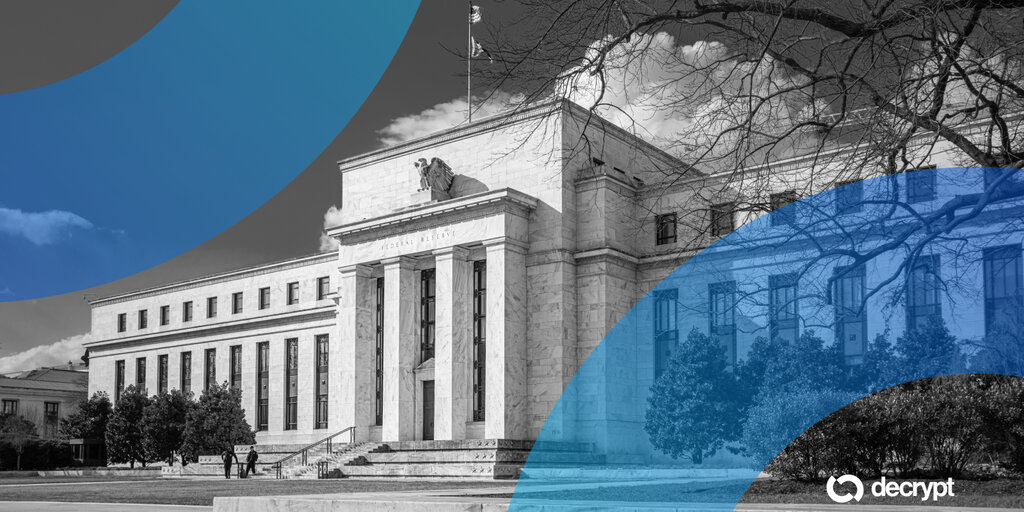
# Federal Reserve Set to Raise Rates for First Time Since 2023: What Investors Need to Know
The financial world is holding its breath as the Federal Reserve prepares to take a significant step that markets haven’t seen in nearly three years — an increase in interest rates. With the Federal Open Market Committee concluding its latest two-day meeting, all eyes are on Wednesday’s announcement and the statements that follow.
## The Odds Are Overwhelming
According to the latest pricing from major derivatives exchanges, there is a near-certain probability — around 94.5% — that the Fed will implement a 25-basis-point increase. This would move the federal funds rate from its current range of 3.50%–3.75% upward to 3.75%–4.00%. What makes this moment particularly striking is how quickly the market’s expectations shifted. Just one month ago, a rate hike was considered unlikely. Now it has become the consensus view across nearly every major financial institution.
A recent survey of Wall Street’s biggest players revealed that almost every major bank anticipates the upcoming increase. Institutions like Barclays, Citigroup, JPMorgan, Morgan Stanley, and UBS are projecting roughly 50 basis points of cumulative tightening by year’s end. More aggressive forecasters — including Bank of America, Deutsche Bank, and Royal Bank of Canada — are calling for a full 75 basis points of additional tightening throughout the year. Only Goldman Sachs leans dovish among the hike supporters, anticipating just the single quarter-point move with no further action. On the opposite end, Jefferies and Oxford Economics stand out as true dissenters, actually forecasting a rate cut in December and another one into 2027.
## Why Is the Fed Taking This Step?
The rationale centers on persistent inflation that continues to resist the central bank’s efforts to bring it back to target. Consumer price index readings have stubbornly remained above the Fed’s 2% goal. Headline inflation has been running at roughly 3.4% annually, while core measures sit at approximately 2.5% — both comfortably outside the desired range.
Complicating matters further, geopolitical tensions involving the Middle East have driven oil prices higher, adding another layer of cost pressure that monetary policy alone cannot easily address. The Fed opted to hold rates steady in its previous meeting, but that decision passed by only a narrow 9-to-3 margin, with three policymakers already advocating for an increase at that time. A stronger-than-expected jobs report from the most recent month has only reinforced the committee’s inclination toward tightening.
## A Political Flashpoint
The rate decision arrives at an extraordinarily sensitive political moment. The Fed Chair in office was personally selected by the current President, who installed him in January and swore him in May with the public expectation that he would pursue lower borrowing costs. Instead, rates are heading in the opposite direction.
Over the past two weeks, the President, the Vice President, and the Treasury Secretary have all made public appeals for rate cuts. The President even went as far as threatening to restrict trade with nations that maintain surpluses against the United States if rates fail to decline. The Fed Chair, for his part, has maintained that the executive branch has had no influence over the committee’s decisions.
Adding fuel to the fire, the rate increase lands just two months before the midterm elections, where voters are already expressing deep frustration over elevated prices and the cost of borrowing — conditions that the very tariff and foreign policy decisions championed by the administration have partly contributed to.
## The Bond Market Is Already Acting
Fixed-income traders have refused to wait for the official announcement. The yield on the 10-year Treasury note has climbed to 5.04%, marking its highest level since mid-2007, as investors price in both the immediate hike and a prolonged period of elevated rates. The two-year yield, which tends to be more responsive to Federal Reserve policy, has reached its highest point since mid-2024.
Rising yields make government bonds comparatively more attractive versus riskier assets and tend to bolster the U.S. dollar. Both dynamics create headwinds for markets that depend on inexpensive capital — a category that includes equities and digital assets alike.
## Implications for Cryptocurrency Markets
The digital asset space enters the Fed’s decision with considerable momentum already damaged. Bitcoin has dropped roughly 3.2% in a single session following the collapse of long-awaited legislative market structure legislation in the Senate. The flagship cryptocurrency is trading well below its recent September peak near $82,000, now hovering closer to the $75,000 range.
Technical analysts have identified key support levels that, if broken, could trigger further declines. A daily closing price below certain thresholds could open the path toward lower price targets, effectively reversing much of the recent rally and the bullish technical patterns that have developed over the past months.
However, not all analysts view the rate hike as uniformly negative. Some argue that a modest quarter-point increase designed primarily to anchor long-term Treasury yields — rather than a genuine tightening of financial conditions — may leave the medium-term outlook for digital assets relatively unchanged. The critical variable, in this perspective, is whether the Fed’s actual tone and guidance surprise markets beyond what has already been anticipated.
Altcoins and higher-beta tokens are widely expected to experience more pronounced percentage swings in either direction compared to the largest cryptocurrency, owing to thinner trading volumes and heavier use of leverage in those markets.
## What to Watch
The Federal Reserve’s formal statement and revised economic projections are scheduled for the afternoon of the decision day, followed by a press conference from the Fed Chair approximately 30 minutes later. Market participants will be scrutinizing the language around future rate decisions, specifically whether officials still envision only one additional increase this year or something closer to the two or three additional moves that the most hawkish banks are now projecting.
—
## Frequently Asked Questions (FAQ)
**Q: What is the federal funds rate, and why does it matter?**
A: The federal funds rate is the interest rate at which banks lend money to each other overnight. It serves as the foundation for nearly all other borrowing costs in the economy, including mortgage rates, credit card APRs, and business loans. When the Fed raises it, borrowing becomes more expensive across the board, which generally slows economic activity and can weigh on asset prices.
**Q: Why haven’t rates been raised since 2023?**
A: After a series of aggressive increases throughout 2022 and 2023, the Fed paused its tightening campaign as inflation showed signs of moderating. The economy has since remained more resilient than many expected, with inflation proving sticky and labor markets staying robust — prompting the reversal in stance.
**Q: How does a rate hike affect Bitcoin specifically?**
A: Bitcoin and other risk assets tend to underperform when rates rise because higher yields on safe instruments like Treasuries make them more appealing relative to speculative assets. Additionally, stronger rates tend to strengthen the U.S. dollar, which historically correlates with lower Bitcoin prices. However, if markets view the hike as a one-off move rather than the start of a sustained tightening cycle, the impact may be short-lived.
**Q: What is the dot plot, and why is it important?**
A: The dot plot is a chart published alongside the Fed’s policy statement that shows each individual policymaker’s projection for future interest rates. It provides investors with insight into the committee’s collective expectations for the path of rates going forward and is one of the most closely watched tools for gauging future monetary policy direction.
**Q: Could the Fed’s decision trigger a broader market sell-off?**
A: It’s possible, particularly if the Fed’s language suggests more hikes are coming than markets have currently priced in. Uncertainty is often the biggest driver of volatility — markets tend to react negatively when they cannot clearly forecast the path of future policy. However, if the hike is fully anticipated and the tone is measured, the reaction could be muted or even positive if it signals confidence in the economy’s strength.
**Q: What role do geopolitical events play in the Fed’s decision-making?**
A: While the Fed is formally independent, geopolitical events — such as conflicts that drive up energy prices or disrupt global trade — can influence inflation expectations and economic growth outlooks. These factors feed into the committee’s deliberations and can contribute to a more hawkish or dovish stance depending on their economic impact.
—
## Conclusion
The Federal Reserve stands at a pivotal crossroads. After an extended period of keeping rates steady, the institution is poised to resume its tightening cycle — a move that carries significant consequences for every corner of the financial world. From the bond market’s repricing of long-term expectations to the cryptocurrency space navigating its own structural challenges, the ripple effects of Wednesday’s decision will unfold over weeks and months. Investors across all asset classes would be wise to prepare for increased volatility and to pay close attention not just to the decision itself, but to the forward-looking guidance that will shape expectations for the remainder of the year and beyond.
Thank you for reading
