



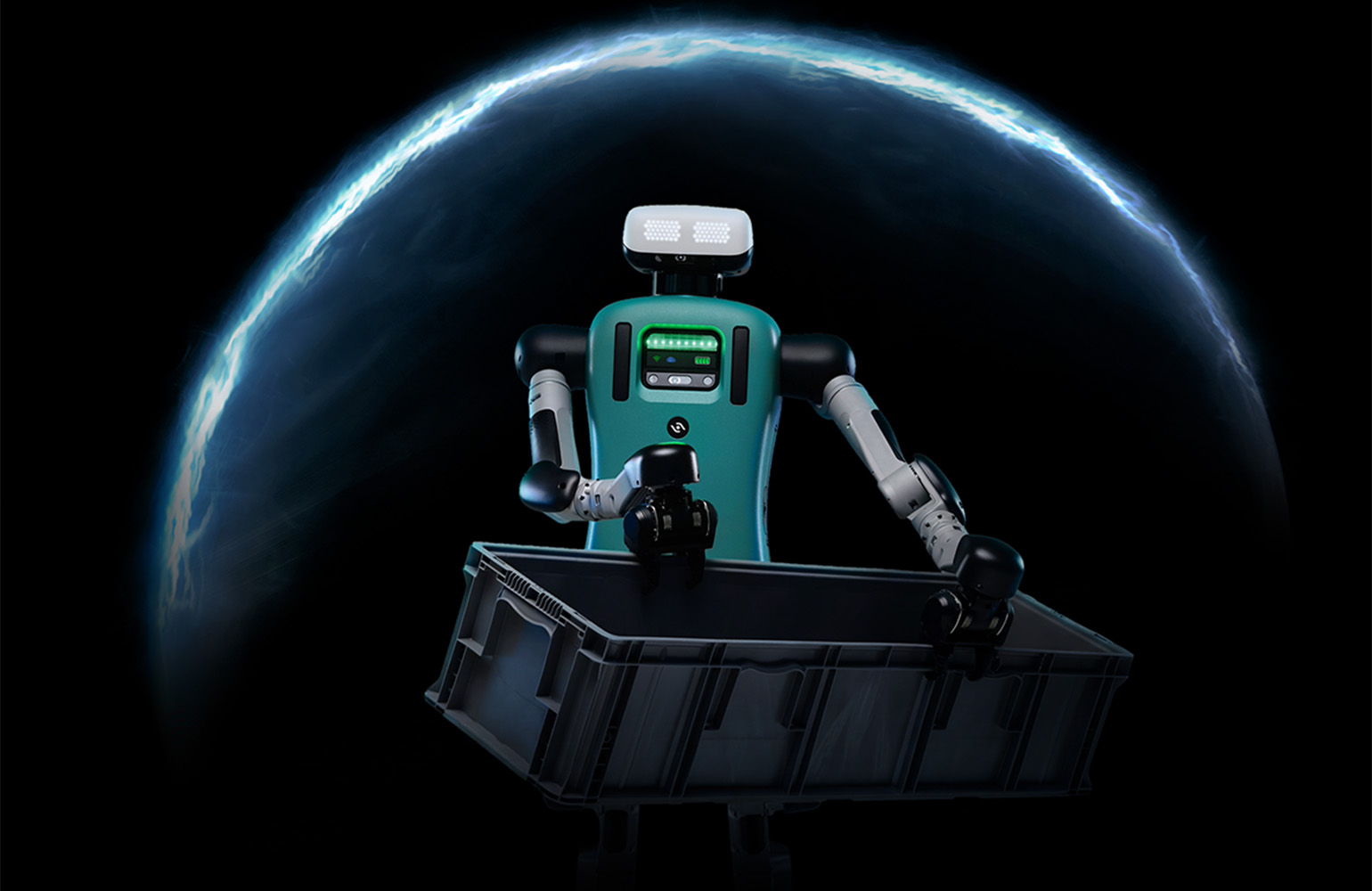
Agility Robotics is the first to use NVIDIA Halos for Robotics to build safety into its humanoids working in factories, warehouses, and logistics operations for customers including Amazon, GXO, Schaeffler, and Toyota Motor Manufacturing Canada. | Source: NVIDIA
NVIDIA has officially introduced NVIDIA Halos for Robotics, a comprehensive, full-stack safety platform designed for robotics and physical AI. This system integrates AI computing power with robust safety protocols into a single unified framework.
According to NVIDIA, autonomous robots require AI foundation models, high-performance computing, and distributed sensors to function effectively in dynamic environments shared with humans. Expanding these systems demands a complete safety architecture that covers every layer.
NVIDIA explained that Halos allows companies to adopt a standardized, cohesive safety framework that links AI computation, system software, sensor data, safety applications, and inspection processes for robotic systems.
“Physical AI is revolutionizing operations in factories, warehouses, and logistics, and robotics teams need a unified safety architecture to scale autonomous systems into these spaces,” said Deepu Talla, vice president of robotics and edge AI at NVIDIA. “With NVIDIA Halos for Robotics, developers and system builders can leverage NVIDIA’s established autonomous vehicle safety expertise to create safer robots more quickly and deploy them in industrial settings alongside human workers with greater confidence.”
NVIDIA Halos Core for NVIDIA IGX is currently available in early access for registered developers in both Linux and Linux plus QNX configurations. The open-source NVIDIA Halos Outside-In Safety Blueprint, which is part of the Halos Applications layer within Halos OS, is now accessible in early access on GitHub.
NVIDIA extends safety across the entire software stack
In developing Halos, NVIDIA applied more than 18,600 engineering years of experience from autonomous vehicle safety development. Halos for Robotics equips developers with a shared safety architecture for building, testing, and deploying physical AI systems.
The platform covers the essential layers required for robot safety. NVIDIA IGX Thor and NVIDIA Holoscan Sensor Bridge deliver industrial-grade AI computing with integrated safety features and sensor connectivity for real-time robotics and safety workloads.
NVIDIA Halos OS provides the software foundation for robotics safety. This includes Halos Core, which supports safety-critical operating functions, and safety applications developed using the NVIDIA Halos Outside-In Safety Blueprint. NVIDIA noted that this program enhances robot perception through external cameras and AI agents, enabling dynamic control of robot behavior in industrial environments.
The NVIDIA Halos AI Systems Inspection Lab is an ANSI National Accreditation Board (ANAB)-accredited program focused on physical AI functional safety and AI safety. It assists partners in preparing Halos integrations for third-party certification from leading certification organizations, including TÜV Rheinland, UL Solutions, TÜV SÜD, exida, SGS, and CertX.
NVIDIA designs Halos with scalability as a priority
The NVIDIA Halos for Robotics ecosystem unites partners spanning software, systems, sensors, and silicon, as well as industrial applications and certification bodies, to support safety from initial development through final deployment:
- Software: Acontis, Amazon FreeRTOS, and QNX provide the real-time operating environment, safety communications, and embedded software layers essential for functional safety development.
- Embedded systems: Advantech and NexCobot offer safety-focused IGX-based systems tailored for robotics deployments.
- Sensors and silicon: Infineon, NXP, SICK, STMicroelectronics, and Texas Instruments contribute sensor technologies, safety microcontrollers, and semiconductor solutions.
- Industrial applications: FORT Robotics, Inventec, KION Group, and Neurealm are building functional safety agents using the NVIDIA Halos Outside-In Safety Blueprint.
- Certification Bodies: TÜV Rheinland is evaluating NVIDIA IGX Thor, Halos OS, and Holoscan Sensor Bridge for functional safety certification readiness, building on TÜV SÜD’s prior inspection of the Thor SoC and certification of Halos Core for ISO 26262.
The NVIDIA Halos AI Systems Inspection Lab includes more than 40 companies representing manufacturers, certification bodies, and safety vendors, all working to advance safe physical AI systems from concept to real-world deployment.
TÜV Rheinland, TÜV SÜD, UL Solutions, exida, SGS, and CertX all acknowledge the NVIDIA Halos AI Systems Inspection Lab as a recognized component of their certification processes.
Agility integrates Halos into its humanoid robots
Humanoid robots are built to function in dynamic environments alongside workers, machinery, and other robots that are continuously moving. This demands safety engineering embedded at every layer of the technology stack.
Agility is collaborating with NVIDIA to incorporate NVIDIA IGX Thor and Halos Core into its proprietary safe human detection system for its humanoid robot Digit, which is purpose-built for industrial tasks in logistics, manufacturing, and warehouse settings.
For Digit, NVIDIA IGX Thor provides industrial-grade AI computing with built-in safety capabilities, while Halos Core supports the software layer responsible for safety-critical operating functions.
Agility will also take part in the NVIDIA Halos AI Systems Inspection Lab. Together, Agility and NVIDIA will use the lab to verify that Digit’s safety-related software, AI components, and cybersecurity protections comply with standards such as IEC 61508, ISO 13849, and ISO/IEC TR 5469 before undergoing final third-party certification.
“For humanoids to deliver value at scale, safety must be engineered into the robot and validated across the entire system,” said Peggy Johnson, CEO of Agility. “Partnering with NVIDIA to implement and optimize the Halos for Robotics platform strengthens our leadership in responsible automation, which is an absolute requirement for safely introducing humanoids into industrial workflows. This collaboration enables genuine human-robot collaboration, driving the long-term returns that will fuel next-generation manufacturing and logistics operations.”
 Submit your session idea for the 2026 RoboBusiness