



**How Generalist Uses Human Demonstration Data for Robot Learning**
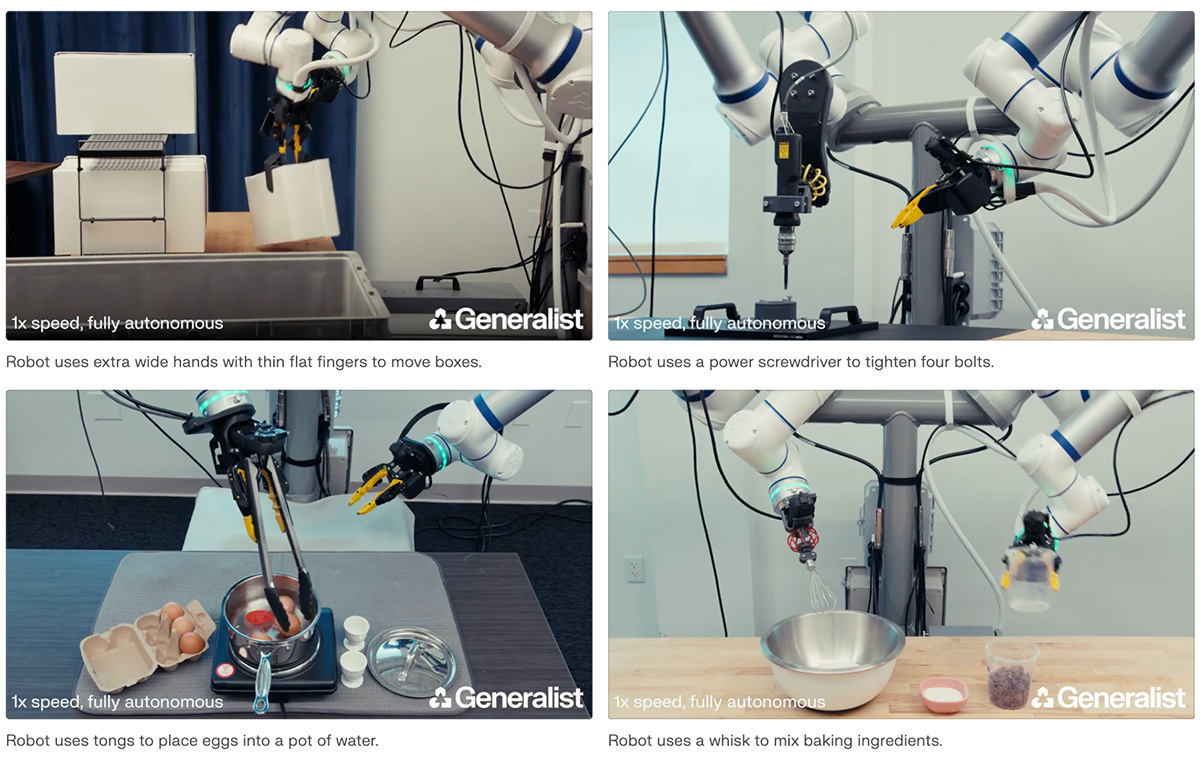
The article explores how the robotics startup Generalist is leveraging human demonstration data to train robot manipulation models. The approach, rooted in research presented in the paper “Universal Manipulation Interface: In-the-Wild Robot Teaching Without in-the-Wild Robots” (UMI), involves capturing real-world human tasks using specialized end effectors and GoPro cameras. This data becomes the foundation for training robot models, enabling collaborative robots (cobots) to learn and perform tasks more rapidly.
Generalist has made significant strides in this field, demonstrating its models’ capabilities live at industry events like Automate. The models can quickly adapt to different robotic arms and grippers, including recovering from unexpected errors in real time. The company’s philosophy centers on building the “best model in the world” by utilizing diverse data collection methods and continuously refining its systems.
Data collection plays a crucial role in Generalist’s approach. The models are trained using both human-demonstrated data and subsequent robot-generated data, which accelerates learning and improves robustness. This process has shown impressive results, with tasks as complex as screwdriver handling or tape dispenser use being learned in just minutes.
Looking forward, Generalist aims to deploy its models in real-world industrial settings. Potential applications range from all-in-one solutions for customers to integrations with existing robotic systems. The technology also shows promise for future advancements in mobile manipulation and humanoid robotics, with the company already exploring collaborations and further innovation in these areas.
—
### FAQ
**1. What is Generalist’s approach to robot learning?**
Generalist uses human demonstration data collected through specialized end effectors and cameras to train robot manipulation models. This data enables collaborative robots to learn tasks quickly and recover from errors in real time.
**2. What is the UMI paper about?**
The UMI paper introduces a data-collection platform for robot learning in real-world environments without requiring actual robots in the wild. It serves as the foundation for Generalist’s technology.
**3. How does Generalist handle data collection?**
Generalist collects task-specific data both through human demonstrations and subsequent robot interactions. This combination of human and robot data helps refine and improve the models.
**4. What makes Generalist’s models unique?**
Generalist emphasizes simplicity and robustness in its hardware design, enabling quick recalibration and recovery from errors. Its models also demonstrate ambidextrous behavior and adaptability to unexpected situations.
**5. What industries can benefit from Generalist’s technology?**
The technology is applicable to industries where collaborative robots are used for tasks such as assembly, manipulation, and error recovery, especially in dynamic or unpredictable environments.
**6. Are humanoids part of Generalist’s roadmap?**
While Generalist has not yet deployed its models on humanoids, the company sees potential for mobile manipulation and humanoid robotics as an extension of its current technology.
—
### Conclusion
Generalist is redefining robot learning by leveraging human demonstration data to create adaptable and robust manipulation models. With its focus on simplicity, real-time recovery, and scalability, the startup is positioned to make significant strides in industrial robotics. As the technology continues to evolve, its applications could expand into mobile manipulation and humanoid robotics, unlocking new possibilities for automation in real-world environments.
