



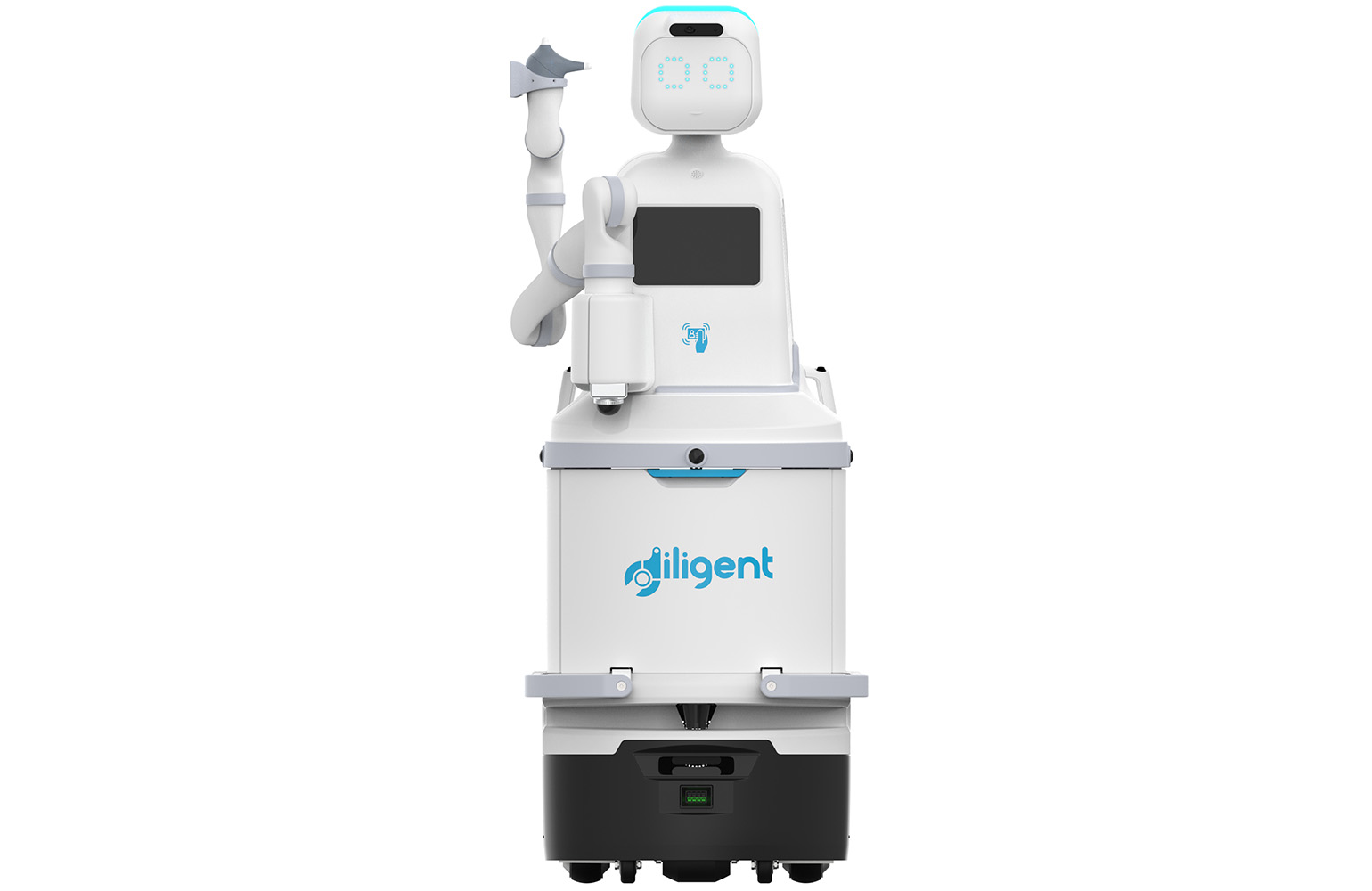
**Diligent Robotics Unveils Moxi 2.0: A New Era for Hospital Automation**
The landscape of healthcare robotics is shifting significantly with the recent rollout of Moxi 2.0 by Diligent Robotics. Following five years of operational experience across more than 25 hospitals in the United States, Diligent has launched its next-generation platform. This latest iteration is not merely an upgrade but a comprehensive reimagining of how autonomous robots function within the complex ecosystem of a modern hospital. The rollout marks a pivotal moment for the company, which was acquired by Serve Robotics in early 2026, positioning it to leverage shared research and investment in physical AI to accelerate innovation.
At the heart of Moxi 2.0 is a powerful new “Robotic World Model,” a proprietary physical AI architecture built on foundations like NVIDIA’s Cosmos and Isaac Sim. This model allows the robot to perceive, reason, and adapt to the chaotic and dynamic environment of a hospital hallway in real time. Unlike its predecessor, which often had to move conservatively due to safety constraints, Moxi 2.0 can navigate tight spaces, bustling foot traffic, and frequent door openings with significantly increased confidence and speed.
A key enabler of this capability is a tenfold increase in onboard compute power, providing 10 to 15 times faster perception than the previous generation. This is powered by upgraded NVIDIA A2000 compute modules, allowing the robot to process its surroundings almost instantaneously. This surge in cognitive ability translates directly into operational efficiency, with Moxi 2.0 boasting up to 18 hours of daily runtime and the ability to complete deliveries up to 30% faster.
The platform has been designed with a hospital-first philosophy. It integrates seamlessly with existing infrastructure from day one, eliminating the need for costly facility modifications or lengthy IT overhauls. Furthermore, Diligent has incorporated significant ergonomic and design improvements based on direct feedback from nurses and pharmacy staff. Features such as redesigned handles and intuitive storage drawers make it easier for human colleagues to interact with and load the robot.
One of the most forward-looking aspects of Moxi 2.0 is its “learning flywheel.” The robot captures rich, real-world data during every shift, which is then used to continuously train and refine its AI models in the cloud. This data, processed on infrastructure built in collaboration with Amazon Web Services, compounds over time, creating a virtuous cycle where fleet experience directly translates into smarter, more capable robots.
Modularity is another core tenet of the new design. While currently deployed on a Fetch Robotics base, Moxi 2.0 is engineered to accommodate future transitions to other mobile robot platforms, providing flexibility for long-term adoption. Safety remains paramount; all autonomy and navigation behaviors are processed onboard, ensuring the robot can operate reliably even in areas with poor or nonexistent Wi-Fi, relying on cellular fallback only when necessary.
Early deployments in major health systems like Providence Saint John’s Health Center and Children’s Hospital Los Angeles demonstrate the platform’s immediate value. Children’s Hospital Los Angeles, for instance, reports that its Moxi fleet has already completed more than 40,000 deliveries, reclaiming over 16,000 hours of nursing staff time that would have otherwise been spent on material transport.
As Diligent Robotics moves beyond its initial generation, the focus is clear: to create a truly intelligent partner for healthcare institutions. By prioritizing continuous learning, operational resilience, and human-centric design, Moxi 2.0 represents a significant step toward robots that are not just tools, but integral, adaptive members of the hospital team.
### FAQ
**What is Moxi 2.0?**
Moxi 2.0 is the second-generation mobile manipulator robot developed by Diligent Robotics. It is an autonomous robot designed to assist hospital staff with routine tasks such as transporting supplies and medications, thereby helping to reduce nurse burnout and improve workflow efficiency.
**How is Moxi 2.0 different from the original Moxi?**
The key differences lie in performance and intelligence. Moxi 2.0 features 10 to 15 times faster perception, 10 times more onboard compute, and a new “Robotic World Model” that allows it to better understand and navigate complex hospital environments. It also offers longer operating hours, faster deliveries, and an upgraded sensor suite.
**What technology powers the new Moxi 2.0?**
The robot is powered by upgraded NVIDIA A2000 compute modules and leverages NVIDIA Isaac Sim and NVIDIA Cosmos for simulation and world modeling. Its learning flywheel architecture processes data in the cloud using Amazon SageMaker and Amazon Web Services infrastructure.
**Can Moxi 2.0 work in any hospital?**
Yes, a primary design goal of Moxi 2.0 is to be deployable without changes to existing hospital infrastructure. It is designed to integrate seamlessly with current workflows and layouts from day one.
**How does the “learning flywheel” work?**
The learning flywheel is a continuous improvement loop where the robot collects data from its real-world operations across the fleet. This data is used to train and refine the AI models in the cloud, which are then deployed back to all units. This process allows the robots to constantly learn from collective experience, improving their autonomy and task execution over time.
**Is the robot safe to operate around patients and staff?**
Absolutely. Safety is a core design principle. Moxi 2.0 uses enhanced sensors and onboard processing to perceive and react to its dynamic surroundings, allowing it to navigate crowded hallways, avoid obstacles, and resolve edge cases independently without compromising patient or staff safety.
**Will Moxi still be based on the Fetch Robotics platform?**
While Diligent Robotics has designed Moxi 2.0 with modularity in mind, allowing for future flexibility, the current platform utilizes the Fetch Robotics base. The company has built the new model with the ability to transition to other mobile robot bases in the future if needed.
### Conclusion
The introduction of Moxi 2.0 by Diligent Robotics signifies a major leap forward in the practical application of robotics within healthcare. By combining significantly enhanced computational power, a sophisticated AI world model, and a focus on ergonomic, hospital-friendly design, Diligent has created a platform that promises to be a true partner in clinical operations. As the robot fleet expands and its learning flywheel continues to refine its capabilities, Moxi 2.0 is poised to become a standard-bearer for automation in hospitals, empowering healthcare workers and allowing them to focus on what they do best: patient care.
