



Colin Angle already left a lasting mark on home robotics through the creation of the Roomba under iRobot. That innovation didn’t merely produce a hit gadget—it fundamentally changed how society envisions robotic helpers in domestic spaces. Now, he’s taking on what many consider an even bolder mission.
His latest venture, Familiar Machines & Magic, has stepped out of secrecy with the unveiling of a companion robot. This segment of the market has been littered with disappointing attempts—devices that initially intrigued but ultimately couldn’t forge the kind of enduring emotional bonds needed to survive long-term.
The company’s robots are engineered to fulfill what Angle characterizes as “emotional work,” helping establish daily habits, easing feelings of isolation, and weaving into people’s routines in ways that traditional devices simply cannot. Headquartered in Womburn, Massachusetts, Familiar Machines’ debut offering is named a “familiar”—borrowing from mythology, where a familiar denotes a spirit or creature that serves as an assistant to its owner.
“These are thrilling times for robotics, because our capabilities have never been stronger,” Angle shared. “I feel fortunate to be working in this era, when every ambitious vision I’ve carried for the past thirty-five years is finally achievable.”
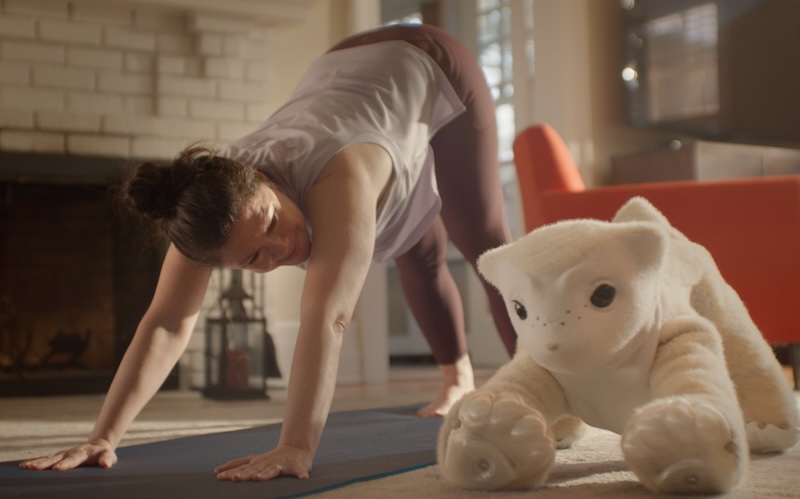
In a conversation with The Robot Report, Angle revealed that his familiar in Dungeons & Dragons took the form of a horse. Familiar Machines’ inaugural creation isn’t equine, but rather a compact, bear-like creature designed to convey expressiveness while avoiding the pitfalls of setting expectations unrealistically high.
This four-legged robot is roughly the size of a small dog and wrapped in a soft, touch-responsive fur covering. Angle noted that this material incorporates breakthroughs inspired by athletic footwear design and cutting-edge 3D knitting methods, which also assist in heat dissipation for the internal components. The familiar boasts 23 degrees of freedom, enabling it to navigate through a home and engage autonomously with people.
Specific technical details like battery longevity weren’t disclosed at the time of publication. The robot conveys emotion through its facial features, eyes, body language, and movement patterns. It runs on edge AI processing and is capable of trailing its owner from one room to another, according to Angle.
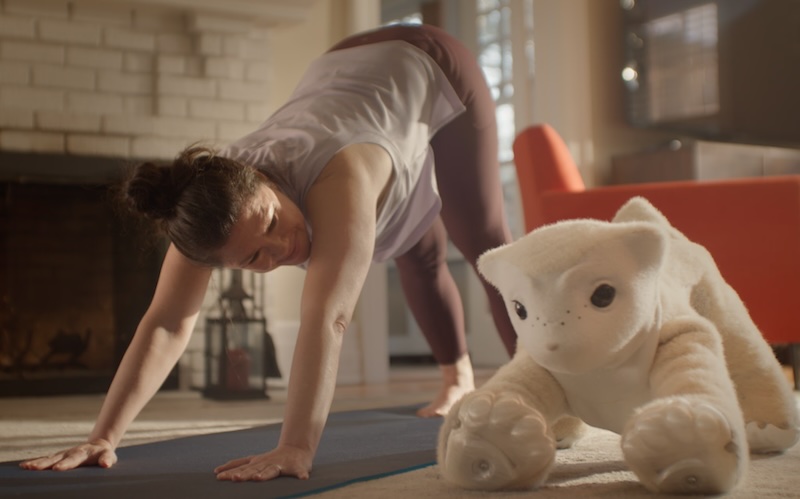
Familiar Machines & Magic came out of stealth mode with this companion robot.
Familiar Machines & Magic designs for daily interaction
Most companion robots that came before have had difficulty progressing past the novelty stage, largely due to their limited capacity for meaningful interaction. Sony’s Aibo robot dog stands as one of the rare success stories, debuting in 1999. The company reportedly moved over 150,000 units before discontinuing the product in 2006. Following its discontinuation, some devoted owners in Japan even organized funeral ceremonies for their Aibo units once they could no longer be repaired.
Sony revived Aibo in 2018 with enhanced capabilities, including more sophisticated emotional responses, and sold upward of 20,000 units in Japan soon after its relaunch.
“If I set out to replicate a robot dog, I’d only set myself up for disappointment,” Angle explained. “My goal isn’t to create a pet. I’m aiming for a familiar—something that carries pet-like qualities without being constrained by those same expectations.”
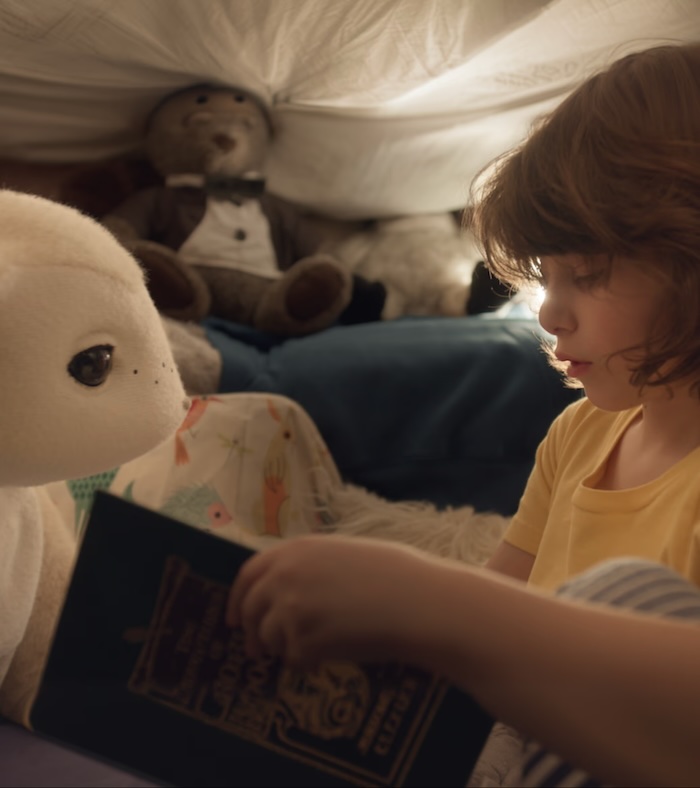
Familiar Machines’ robot is built to be a tangible, physical presence woven into everyday routines. Rather than sitting passively on a shelf, it inhabits your living space, Angle emphasized. The legged robot can trail you into the kitchen or station itself near the door. It might nudge you to go play or step outside, he added. That physical coexistence, Angle contended, is what makes genuine connection achievable.
He pointed to studies indicating that screens fall short when it comes to alleviating loneliness. The familiar deliberately omits any screen. At this point, the robot won’t engage in political debates or field trivia questions—it doesn’t even have speech capabilities. “Screens aren’t particularly effective at fostering human connection. Physical interaction triggers a physiological response that staring at a display simply cannot replicate.”
Instead, the familiar expresses itself through movement, behavior, and situational awareness. Angle described how it might enthusiastically greet you when you return home, give you space when you’re occupied, or gently nudge you away from a late-night screen-scrolling session to encourage a walk.
“Our ambition is to create a small, intensely loyal creature with intelligence surpassing that of an animal—one that watches over you to the best of its ability,” Angle said. “It truly embodies the concept of a familiar in every respect.”
Companion robot prioritizes EQ over IQ
Each familiar’s personality will gradually develop and shift over time based on its interactions with its owner, Angle elaborated. And therein lies the central question for Familiar Machines & Magic: Can artificial intelligence today forge an emotional bond compelling enough to prevent the robot from ending up forgotten in a closet?
The startup is placing emotional intelligence (EQ) ahead of pure cognitive power (IQ). Rather than pursuing a conversational robot capable of discussing any topic, Familiar Machines is zeroing in on one that responds appropriately to the moment. Its architecture fuses visual and auditory inputs with a streamlined multimodal model that reads facial expressions, body language, and vocal tone.
From there, a behavior engine—trained on thousands of brief narrative scenarios—decides how the robot should act, drawing on its personality, stored memories, and contextual signals.
Angle confirmed that all processing happens directly on the device. This enables quicker responses and sidesteps the need for continuous cloud connectivity, which in turn helps mitigate privacy concerns—a particularly critical issue for robots that remain active around the clock in people’s homes.
The underlying premise is that emotional authenticity doesn’t demand flawless intelligence. If the robot can sense the mood of a room, adjust to daily patterns, and cultivate a personality that feels consistent, it may finally crack the code where predecessors have stumbled.
Angle readily admitted this is no simple feat. Even iRobot’s Roomba demanded thoughtful design choices—like scheduling features—to keep users engaged over time. For companion robots, the standard is far higher. They’re not vying with ordinary gadgets; they’re going head-to-head with living pets—creatures that actively seek attention, initiate engagement, and have spent millions of years evolving alongside humans to form deep emotional ties.
“More misses than hits, let’s be real—this is a formidable challenge,” he acknowledged. “But we’ve never had the right tools before, nor the convergence of experience. We now have a toolkit that makes something genuinely possible that was completely out of reach just six months ago.”
There’s still considerable ground to cover. Angle indicated the first familiar will hit the market in 2027. He didn’t reveal a specific price point but suggested it would be in line with the cost of dog ownership. If the concept proves successful, Angle envisions familiars evolving into a broader platform that branches into new roles and physical designs.
“When we reach the next chapter and humanoids start entering homes, you’d want them to feel familiar, not unsettling,” Angle remarked. “I genuinely view what we’re building as a platform. This first familiar alone could surpass the Roomba in terms of economic impact and reach. Selling a million familiars would carry far greater economic value than every Roomba ever sold—by a wide margin. But even at that scale, it’s a starting point, not a finish line. As we develop responsible communication abilities, we can begin crafting familiars where people actually anticipate and expect their presence.”
