



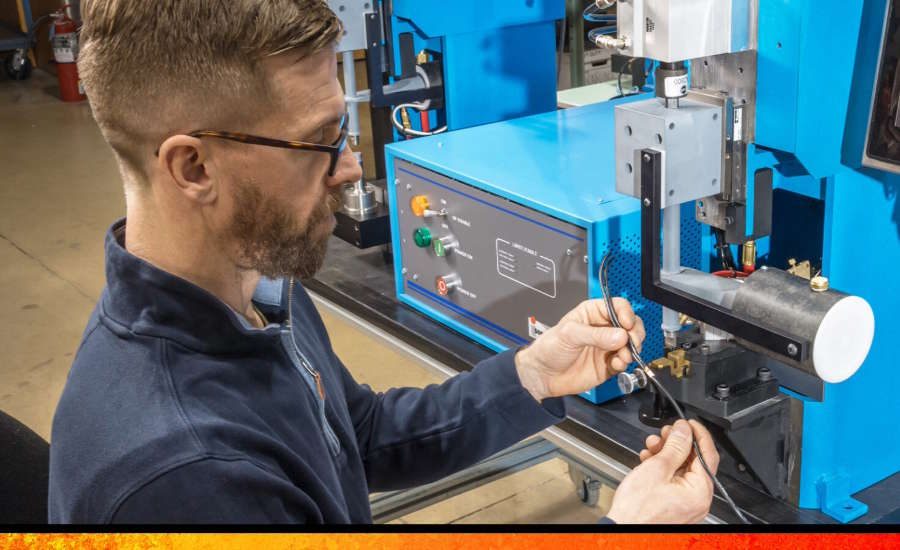
Companies in the automotive, aerospace, medical device, appliance, and electronics industries all grapple with the same core issue: how to boost production output without compromising on quality. As product designs and assemblies grow increasingly intricate—particularly in the realm of wiring and electrical connections—conventional joining techniques often lead to inconsistencies, operational inefficiencies, and potential long-term reliability problems.
Ultrasonic metal welding stands out as a reliable, production-proven answer to these hurdles. By creating accurate, consistent, solid-state bonds, it empowers manufacturers to shorten cycle times, minimize defects, and ensure uniform performance in high-volume assembly settings.
Grasping the Basics of Ultrasonic Welding
Ultrasonic welding is a solid-state joining method that employs high-frequency mechanical vibrations under pressure to fuse metals at a molecular level. Unlike thermal techniques, it avoids melting the material, thereby retaining the base metal’s inherent characteristics. This results in:
- Absence of a heat-affected zone (HAZ): ensuring conductivity and strength remain intact
- No need for filler materials: removing inconsistencies associated with solder or adhesives
- No mechanical deformation: offering greater durability compared to crimp-only connections
Ultrasonic welding yields clean, metallurgical bonds perfect for high-reliability uses, offering clear benefits over thermal processes. Soldering can diminish or lose conductivity. Crimping may loosen due to vibration or thermal fluctuations. Resistance welding can cause distortion.
Boosting Throughput in High-Volume Manufacturing
Accelerated Cycle Times
Ultrasonic welds are generally finished in mere seconds, doing away with heat-up periods, cooling phases, and secondary handling steps. Since the process doesn’t depend on extensive heat transfer or prolonged cooling, cycle times are notably shorter than those of traditional joining methods. For wire harness production and electrical assemblies, this directly translates to more units per hour, more dependable connections, and fewer bottlenecks on assembly lines.
Minimized Downtime and Simplified Tool Changes
Manufacturing efficiency also gets a boost from reduced downtime during setup and changeovers. Ultrasonic welding systems are engineered for swift tooling changes with minimal recalibration. Given that the weld process parameters are precisely controlled and repeatable, operators spend less time fine-tuning equipment and more time producing finished assemblies.
Effortless Integration with Automation
Ultrasonic welding systems are highly compatible with automated manufacturing setups, including robotic cells, inline automation, and custom assembly equipment, thanks to their precise and repeatable outcomes. Microprocessor-controlled ultrasonic welders store preset weld parameters and apply them consistently during operation, thereby reducing the chances of operator error.
Guaranteeing Quality in Critical Electrical and Mechanical Connections
Uniform, High-Integrity Welds
Ultrasonic welding generates robust, dependable welds that uphold excellent mechanical integrity and electrical performance. As these systems create solid-state welds through mechanical vibration and pressure rather than melting, the joint forms from direct metal-to-metal contact. This is particularly advantageous for wire-to-wire splices, wire-to-terminal connections, and busbar and battery tab assemblies.
Negligible Thermal Impact
Being a solid-state process, heat is localized and controlled, preventing bulk material heating. Key benefits include:
- No damage to insulation in wire processing
- No distortion of precision components
- Preservation of metallurgical properties
These advantages are crucial for applications involving medical devices and other sensitive materials, aerospace components with tight tolerances, electronics, and the joining of thin foils and delicate structures.
Decreased Rework and Defects
Dependable first-pass welds result in higher yield rates, fewer rejected assemblies, and less rework and scrap. For assemblers, this means fewer rejects, reduced rework, and enhanced overall product quality, leading to fewer disruptions in production.
Advancing Lean Manufacturing and Cost Savings
Removal of Consumables
The ultrasonic welding process eliminates the need for adhesives, fluxes, solder, or other joining materials to create a bond. This absence of additional materials cuts material costs and streamlines supply chain management.
Reduced Energy Consumption
Since energy is applied directly at the joint rather than across the entire part, overall energy usage is comparatively low, thereby lowering operating costs.
Enhanced Labor Efficiency
With rapid cycles and minimal manual intervention, operators can oversee higher output, fewer process steps are needed, and labor cost per unit decreases.
Safer and More Sustainable Production
Ultrasonic welding aligns with contemporary manufacturing objectives by eliminating fumes and emissions from thermal processes, reducing chemical waste (no flux or adhesives), and supporting cleaner production environments. This is especially significant for regulated industries like medical and aerospace, and facilities prioritizing ESG and sustainability goals.
Applications Spanning Key Manufacturing Sectors
Wire Harness Manufacturing
In wire harness assembly, ultrasonic welding facilitates high-speed splicing of stranded wires, dependable terminal connections, and consistent conductivity throughout production.
Battery Assembly
Ultrasonic metal welding is ideal for joining foils, tabs, and terminal connections in lithium-ion and other rechargeable battery types. Dual-head ultrasonic metal spot welders, for instance, can weld multiple layers of thin foils to battery tabs in a single pulse, supporting high electrical performance and structural integrity in energy storage applications.
Automotive, Aerospace, and Electronics
Ultrasonic welding supports the production of high-volume, high-reliability assemblies that must meet exacting quality standards. These include bus bars, sensor connectors, ignition modules, and other electromechanical components.
Conclusion
For manufacturers focused on wire processing and complex assemblies, ultrasonic welding offers distinct advantages, including:
- Increased throughput
- Enhanced product reliability
- Reduced operating costs
- Superior process consistency
As industries continue to demand lighter, more efficient, and more reliable electrical systems, ultrasonic welding is increasingly becoming the standard for high-performance assembly environments—replacing traditional joining methods that can no longer satisfy modern production and quality demands.
