



Stay updated with ZDNET: Add us as a preferred source on Google.
While the Android smartphone space may not be as fiercely competitive as it once was, buyers still enjoy a wide variety of choices. Options range from traditional slab-style phones and book-style foldables to flip phones and even devices with physical keyboards. Although iPhones hold a commanding 69% market share in the U.S., Android continues to offer greater feature depth and more flexibility in hardware design.
Related: Why I suggest this $450 Samsung phone over similar models from Google and OnePlus
When shopping for a new Android device, your decision often comes down to two leading brands: Samsung and Google. Samsung boasts a wider range of connected products, while Google stands out for its advances in artificial intelligence. Each brand has distinct strengths depending on your needs—here’s how to decide which one fits you best.
You should consider a Samsung Galaxy phone if…
1. You own other Samsung devices
Samsung’s ecosystem extends far beyond smartphones. The company produces laptops, TVs, tablets, and even home appliances such as air conditioners, fridges, and microwaves. While the appliances don’t directly integrate with your phone, owning multiple Samsung gadgets—like a Samsung TV, laptop, and smartphone—can streamline daily tasks thanks to seamless cross-device features.
Related: You can still grab a free Samsung Galaxy Watch 8 from T-Mobile—here’s how to qualify
For example, you can adjust your TV’s volume or settings directly from the SmartThings app on your Samsung phone—no remote required. You also get Apple-like continuity perks: Galaxy Buds perform best when used with a Galaxy phone, and App Continuity lets you pick up where you left off on a website when switching between your phone and tablet.
2. You prioritize top-tier hardware
Samsung equips its flagship phones with more powerful and innovative hardware compared to Google’s Pixel lineup. The Galaxy S26 Ultra, for instance, is the only smartphone currently offering a built-in Privacy Display, and its 200MP camera delivers superior photo quality over Pixel devices.
Related: I’ve tested every Samsung Galaxy S26 model—the Ultra is annoyingly the best choice
Both brands deliver smooth software experiences, but One UI remains my personal favorite Android interface due to its flexibility and user-friendly design. Last year, I customized my Galaxy S25 Ultra using Good Lock and its modules, and transparent home-screen widgets are still unmatched in functionality.
3. You’re hunting for strong carrier deals
Carrier promotions for Samsung Galaxy phones tend to be more generous than those for Google Pixel models. Even with the recent price increase on the Galaxy S26 series, carriers responded with significantly stronger promotional offers.
Related: Own a Samsung phone? I tweaked 10 settings to dramatically boost its performance
A Counterpoint Research report notes that “U.S. carriers countered memory-driven price hikes with enhanced promotions,” with all three Galaxy S26 models and carriers seeing notable boosts in high-tier deals. This translates into more attractive discounts and incentives for consumers opting for the latest Samsung devices.
You should consider a Google Pixel phone if…
1. You prefer a clean software experience
If you value a bloatware-free Android experience, Google’s Pixel phones are the ideal choice. They run on Pixel UI, which comes free of third-party pre-installed apps commonly found on Samsung Galaxy devices. There’s no need to uninstall dozens of Microsoft or social media apps right after setup.
Related: T-Mobile offers a free Google Pixel 10a—plus a bonus gift
Pixel UI also brings unique benefits, such as regular Pixel Drop updates that introduce new features to older devices throughout their lifespan. While Samsung provides robust software support, Pixel phones are usually among the first to receive major Android updates—including features similar to Apple’s AirDrop.
2. You appreciate intelligent, AI-powered tools
AI features are rarely the highlight in phone reviews—most feel forgettable. But Google has introduced genuinely useful AI capabilities over the past year.
Related: Google Pixel 10a review: Is there any reason to look elsewhere at this price?
One standout is Magic Cue, which pulls up relevant details during personal conversations. Call Screen effectively blocks spam, and the interface automatically displays contextual info when you recognize a contact. For instance, while on a support call with an airline, my Pixel 10 Pro displayed my booking info directly on the call screen—eliminating the need to search through emails or files.
These quality-of-life features are ones Samsung has started including on recent flagships, though they still need refinement.
3. You care about standout design
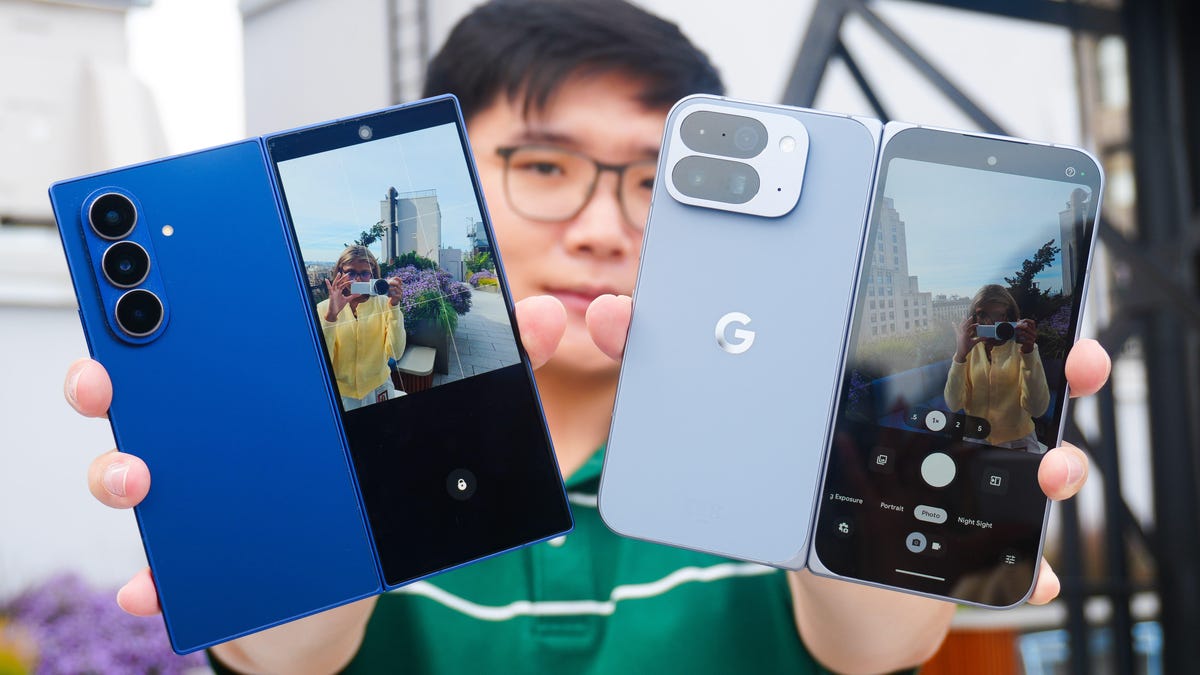
Both Samsung and Google have distinct visual identities, but Pixel phones are often seen as more visually appealing. Their signature camera visor design has matured over time and now pairs with some of the most attractive color options in smartphones—making them more eye-catching than Galaxy devices.
Related: The best Google phones of 2026: How does the Pixel 10 Pro Fold measure up?
Budget-conscious buyers also benefit: the Pixel 10a offers more vibrant color choices than the Galaxy A57 5G.
Author’s verdict
Choosing isn’t easy—I love the Google Pixel Buds Pro 2 as my go-to travel earbuds, and the Pixel 10 Pro Fold is the only foldable that’s truly dust-resistant. However, I prefer One UI over Pixel UI for its deeper personalization, and the Privacy Display remains a standout feature for me.
In the end, I’d pick Samsung for its lighter current-generation designs and superior camera performance.
