



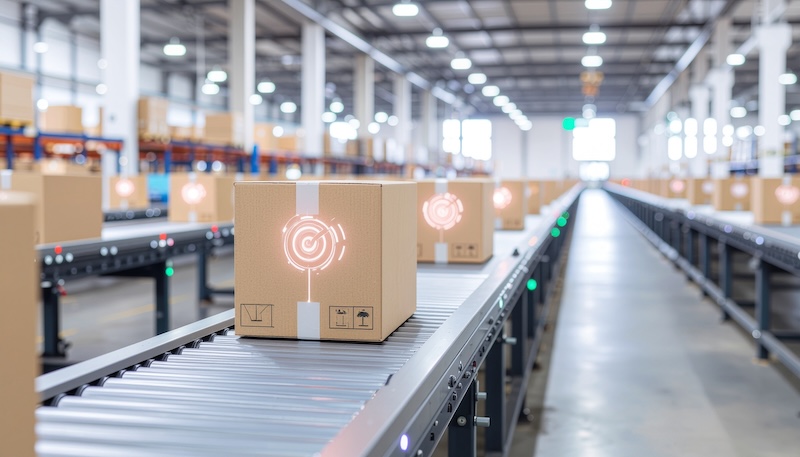
The swift advancement of supply chain technologies is fueling significant gains in operational efficiency, inventory control, and sustainability. Among the most game-changing tools are RFID (Radio-Frequency Identification) and Internet of Things (IoT) technologies, both of which empower real-time visibility and management of assets across a wide range of industries.
From retail to logistics and healthcare, these technologies are merging to build smarter, better-connected supply chains.
RFID has long served as the backbone of item-level tracking, while IoT solutions like Bluetooth Low Energy (BLE) tags are rising as complementary tools that offer additional layers of context. Together, they grant organizations the insight and flexibility that go well beyond simple supply chain visibility.
RFID: The Foundation for Supply Chain Efficiency
For decades, RFID has proven itself as a dependable, scalable solution for tracking inventory and assets throughout supply chains, and its benefits reach far beyond its technical capabilities. Its broad adoption has given rise to established standards and a mature ecosystem of hardware, software, and automation tools.
These innovations allow organizations to roll out RFID systems with minimal disruption while boosting accuracy and efficiency. Retailers, for instance, rely on RFID to maintain precise inventory counts, while logistics providers depend on it to monitor shipments in real time, ensuring deliveries arrive on schedule.
Emerging IoT Technologies: Expanding Possibilities
While RFID has firmly secured its place in the supply chain, emerging IoT technologies are unlocking new possibilities. One particularly exciting development is the rise of battery-free Bluetooth Low Energy (BLE) tags. These tags draw power from ambient energy sources such as radio waves, enabling continuous data transmission without the need for a conventional battery.
BLE tags shine in applications that call for more than simple location tracking. Once powered up, they can track environmental factors such as temperature, humidity, and motion, making them ideal for specialized scenarios like monitoring perishable shipments or protecting sensitive medical supplies. That said, if a temperature-sensitive item—such as medication—is exposed to excessive heat and later returns to the appropriate temperature range, the incident will go unnoticed unless the tag was actively powered at the time.
Moreover, their ability to transmit data over longer distances than passive RFID tags gives them broader coverage in certain operational environments. These strengths are especially valuable in tackling modern supply chain pain points, such as cutting food waste or meeting strict quality compliance standards. By delivering ambient data in real time, BLE tags empower sound decision-making, smarter resource allocation, and enhanced sustainability.
Complementary Roles: RFID and BLE in Harmony
RFID and BLE technologies complement each other within the IoT ecosystem, each bringing distinct strengths suited to different operational demands. RFID remains unmatched for high-speed, large-scale tracking of individual items—particularly in environments like warehouses and retail stores. Meanwhile, BLE tags contribute extra layers of contextual data and are well-suited for applications requiring long-range communication or environmental sensing.
Bringing these technologies together gives organizations a well-rounded approach to supply chain management. By pairing the speed and scalability of RFID with the environmental monitoring capabilities of BLE tags, companies can gain a far more comprehensive view of their operations. For example, a distribution center could use RFID to pinpoint package locations while simultaneously leveraging BLE tags to monitor the temperature and humidity of perishable goods throughout transit.
The ongoing creation of tools and solutions that bridge these technologies is essential for smooth integration. For instance, advances in BLE tag printing and encoding are making it seamless to adopt these tags alongside existing RFID systems. These innovations ensure organizations can tap into the full range of IoT capabilities.
Key Considerations for Selection
When assessing these technologies, organizations should match their choice to specific operational objectives and key performance indicators (KPIs). For instance:
- Cost Sensitivity: Passive RFID remains the most budget-friendly option for high-volume applications such as retail inventory tracking.
- Precision Requirements: BLE tags are an excellent fit for situations demanding highly accurate location tracking, such as in healthcare or high-value asset monitoring.
- Environmental Sensing: Ambient IoT tags deliver added value in specialized scenarios—like perishable goods tracking—where conditions such as temperature and humidity must be continuously monitored.
By recognizing the strengths and limitations of each technology, organizations can deploy solutions that best address their needs while striking the right balance between cost, accuracy, and coverage.
The Vision for IoT-Enabled Supply Chains
The convergence of RFID and IoT technologies marks a major leap toward fully digitized and intelligent supply chains. As these technologies continue to advance, they are laying the groundwork for a future where every aspect of supply chain operations is seamlessly connected, automated, and optimized.
The broader vision for IoT-enabled supply chains involves weaving together diverse technologies to deliver real-time insights and predictive capabilities. With advanced analytics and machine learning, the data generated by RFID and BLE systems can be converted into actionable intelligence. For instance, predictive maintenance algorithms could analyze RFID data to flag potential equipment failures before they happen, while BLE-generated environmental data could help fine-tune storage conditions to minimize spoilage.
These advancements not only drive efficiency but also bolster sustainability and resilience. By offering deeper visibility into supply chain operations, RFID and IoT technologies enable organizations to reduce waste, lower energy consumption, and respond more swiftly to disruptions.
Looking Ahead: Preparing for the Future
As the IoT ecosystem keeps growing, the integration of RFID and BLE technologies will play an ever-more-critical role in shaping the future of supply chains. Organizations that adopt these tools will be well-equipped to navigate the complexities of modern logistics and seize emerging opportunities.
The secret to success lies in understanding how these complementary technologies work together and harnessing their individual strengths to tackle specific operational challenges. By taking this approach, organizations can build supply chains that are more efficient, adaptable, and sustainable.
This convergence also highlights the importance of cross-industry collaboration. Stakeholders—including technology providers, standards bodies, and end users—must join forces to develop solutions that maximize the value of RFID and IoT systems. Such partnerships will be key to unlocking the full potential of IoT-enabled supply chains.
