




Most enterprise work now occurs within the browser. SaaS functions, id suppliers, admin consoles, and AI instruments have made it the first interface for accessing information and getting work accomplished.
But the browser stays peripheral to most safety architectures. Detection and investigation nonetheless deal with endpoints, networks, and e-mail, layers that sit across the browser, not inside it.
The result’s a rising disconnect. When employee-facing threats happen, safety groups typically wrestle to reply a fundamental query: what truly occurs within the browser?
That hole defines a whole class of contemporary assaults.
At Preserve Conscious, we’ve referred to as this a “safe haven” drawback for attackers, the place the goal has now turn into this central level of failure
Browser Assaults Seen in 2026 Leaving Little Conventional Proof
What makes browser-only assaults laborious to cope with isn’t a single approach. It’s that a number of assault sorts all collapse into the identical visibility hole. We proceed to see these assaults into 2026:
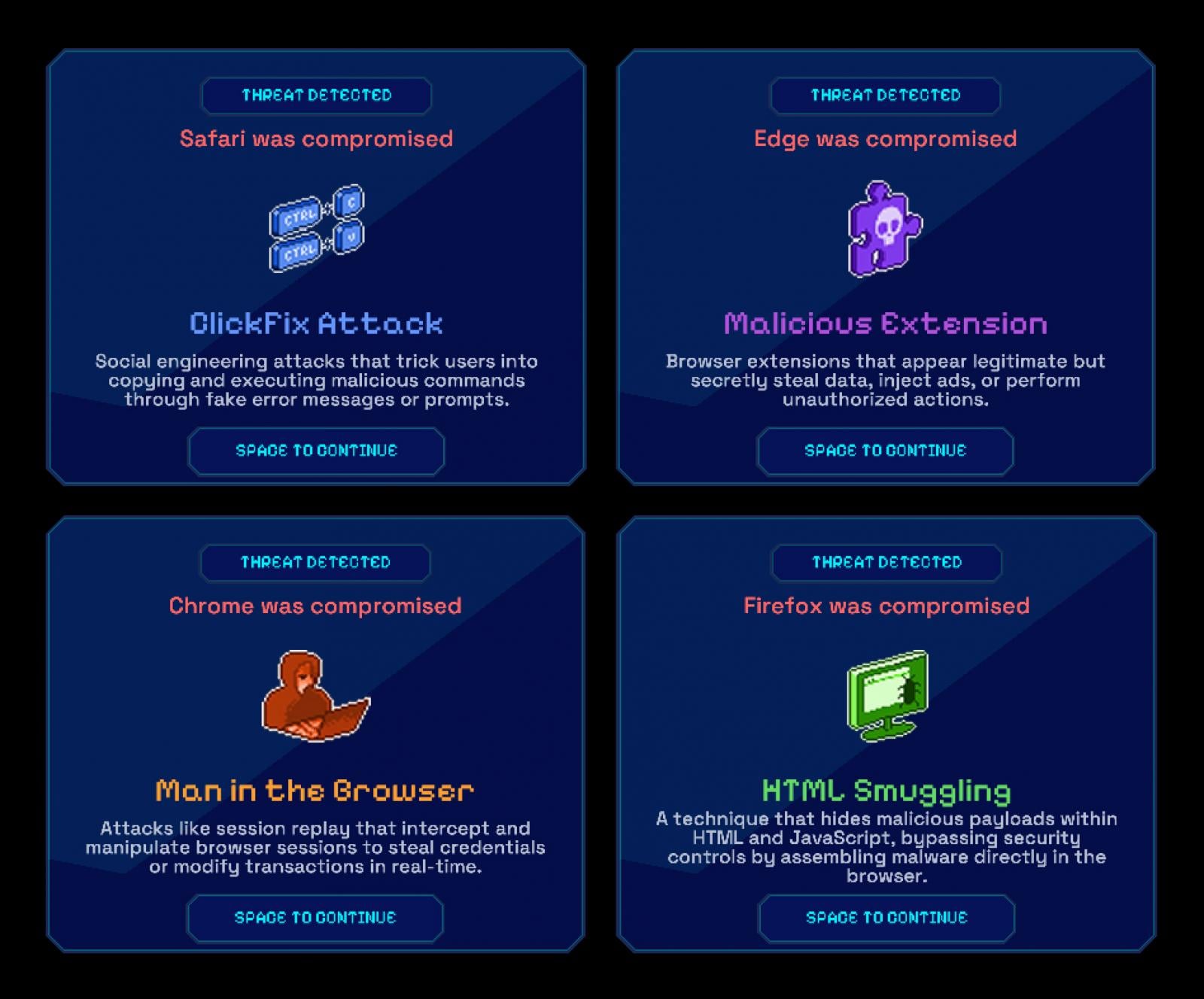
ClickFix and UI-Pushed Social Engineering
Probably the most important browser-driven assault vector in 2025, customers are guided by faux browser messages or prompts to repeat, paste, or submit delicate data themselves. No payload is delivered, no exploit fires, simply regular person actions that go away nearly no investigation path.
Malicious Extensions
Seemingly authentic extensions are put in deliberately after which quietly observe web page content material, intercept kind enter, or exfiltrate information. From an endpoint or community perspective, the whole lot seems to be regular browser habits. When questions come up later, there’s little file of what the extension truly did.
Man-in-the-Browser (and AitB, BitB, …) Assaults
These assaults abuse legitimate browser periods relatively than exploiting methods. Credentials are entered appropriately, MFA is accepted, and exercise seems approved. Logs affirm an actual person and an actual session, however not whether or not the browser interplay was manipulated or replayed.
HTML Smuggling
Malicious content material is assembled immediately contained in the browser utilizing JavaScript, bypassing conventional obtain and inspection factors. The browser renders content material as anticipated, whereas essentially the most important steps by no means turn into first-class safety occasions.
Why EDR, Electronic mail, and SASE Miss These Assaults by Design
This isn’t a failure of instruments or groups. It’s a consequence of what these methods have been designed to see, and what they weren’t.
EDR focuses on processes, information, and reminiscence on the endpoint. Electronic mail safety tracks supply, hyperlinks, and attachments. SASE and proxy applied sciences implement coverage on site visitors shifting throughout the community. Every can block identified dangerous exercise, however none are constructed to know person interplay contained in the browser itself.
When the browser turns into the execution atmosphere, the place customers click on, paste, add, and authorize, each prevention and detection lose context. Actions could also be allowed or denied, however with out visibility into what truly occurred, controls turn into blunt and investigations incomplete.
When browser interactions are seen, prevention turns into exact and defensible.
See how Preserve Conscious permits groups to make use of browser-level information to dam dangerous habits and repeatedly refine coverage.
Request a Demo
What Our Personal the Browser Analysis Reveals
This hole isn’t restricted to at least one browser or deployment mannequin.
As a part of Personal the Browser, a vendor-neutral analysis effort evaluating greater than 20 mainstream, enterprise, and AI-native browsers, we examined how browsers are literally secured and ruled in apply.
What stood out wasn’t an absence of controls; it was an absence of observable habits that these controls might study from.
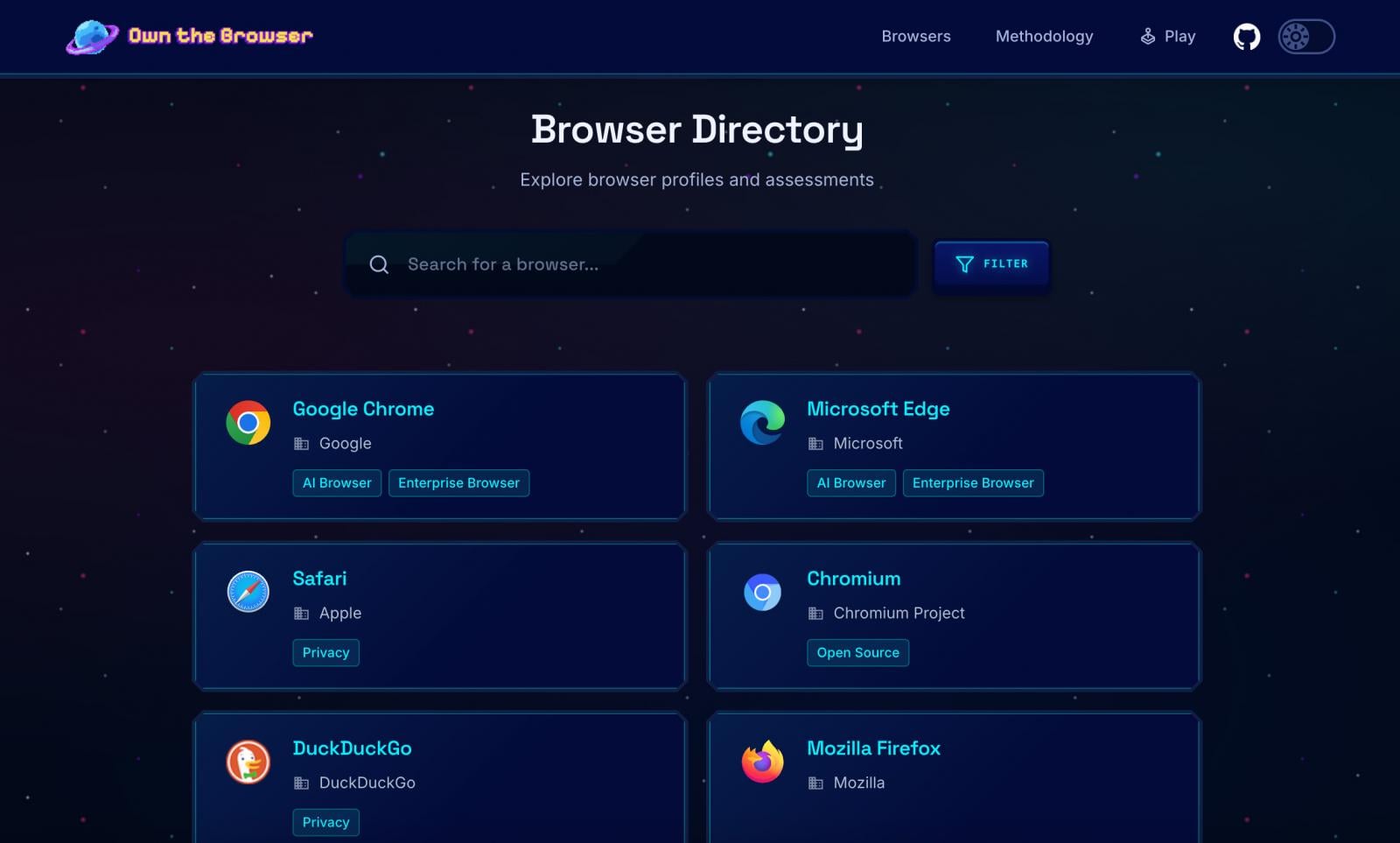
Throughout client, enterprise, and rising AI-native browsers, insurance policies are extensively deployed. What’s lacking is structured visibility into how these insurance policies truly play out in actual person habits. With out that perception, prevention stays blunt, and insurance policies not often evolve or enhance.
AI Instruments and AI-Native Browsers Are Widening the Hole
AI is accelerating this drawback by growing each the quantity and subtlety of browser-based information motion.
Instruments like ChatGPT, Claude, and Gemini normalize copying, pasting, importing, and summarizing delicate data immediately within the browser. AI-native browsers, built-in assistants, and extensions streamline these actions even additional.
From a management standpoint, a lot of this exercise seems authentic. From a prevention standpoint, it’s troublesome to judge danger with out context.
Insurance policies can enable or block actions, however with out observability into how information is getting used, groups can’t adapt controls to match actuality.
As AI-driven workflows turn into routine, prevention that isn’t knowledgeable by browser-level habits shortly falls behind.
What Browser-Stage Observability Modifications: Earlier than and After Incidents
When browser exercise turns into observable, safety groups don’t simply examine higher; they stop extra successfully.
Seeing how information truly strikes via the browser permits groups to set smarter, extra focused controls: stopping dangerous actions in the meanwhile they happen, whereas preserving proof when one thing does go mistaken.
Detection improves as a result of habits may be evaluated in context. Response improves as a result of incidents are reconstructable. Insurance policies enhance as a result of they’re knowledgeable by actual utilization, not assumptions.
This creates a suggestions loop: observability informs prevention, prevention reduces danger, and each incident, blocked, paused, or allowed, sharpens coverage over time.
That results in a easy query: if this class of assault occurred in your atmosphere as we speak, might you each stop it and clarify it? If not, that’s the hole Preserve Conscious is constructed to shut. See what browser-level visibility permits throughout prevention and response.
Request a demo. →
Written by Ryan Boerner, CEO of Preserve Conscious
Boerner, a pc engineer turned cybersecurity practitioner, started as a SOC analyst tackling community threats throughout Texas businesses. Specializing in community and e-mail safety, he later honed his experience at IBM and Darktrace, working with organizations of all sizes. Seeing a important hole between safety groups and workers—the place sturdy defenses nonetheless let threats via—he based Preserve Conscious to make the browser a cornerstone of enterprise safety.
Sponsored and written by Preserve Conscious.
