



Key Insights (AI-assisted):
Tightening integration between intrinsically secure {hardware} and trendy connectivity is shifting hazardous-area IoT from area of interest pilots to scalable deployments. As ATEX smartphones achieve full mobile, GNSS, and sensor stacks, the bottleneck strikes from system functionality to interoperability with SCADA, MDM, and line-of-business purposes. This forces OT and IT groups to converge architectures and safety fashions, notably on personal LTE/5G. The development displays a broader transfer towards real-time, worker-centric IoT in brownfield industrial environments with stringent security and regulatory constraints.
Sensors, requirements, and operational constraints in hazardous zones
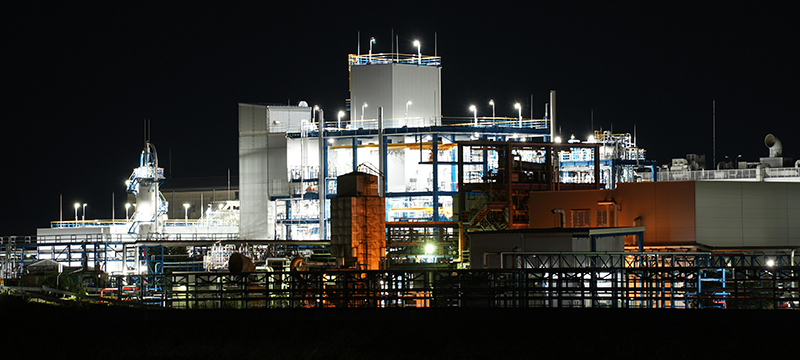
A technician in a chemical plant must log temperature readings, test gear vibration, and {photograph} a valve meeting. Normal process, however in a Zone 2 hazardous space, customary electronics gained’t do. The danger isn’t the system itself – it’s what occurs if a element fails and creates a spark, or if a floor will get scorching sufficient to ignite surrounding gases.
Industrial IoT in petrochemical, mining, and pharmaceutical amenities comes right down to accumulating sensor knowledge whereas guaranteeing gear stays intrinsically secure.
ATEX and IECEx Certification Necessities
ATEX and IECEx requirements outline what’s permissible in explosive atmospheres. A tool marked “Ex ic IIC T4 Gc” meets Zone 2 necessities: floor temperature stays beneath 135°C, and the design limits electrical power to ranges that won’t trigger ignition, even in fault situations.
This is applicable to each sensor. Accelerometers, barometers, GPS modules – all should function inside strict power constraints. Shopper electronics don’t, which is why they’re unsuitable for hazardous areas.
What Knowledge Is Collected in Hazardous Zones
Sensors are chosen for operational necessity quite than comfort:
Barometric strain sensors monitor confined areas. A sudden strain drop of some millibars can point out air flow failure and set off evacuation protocols.
Accelerometers and gyroscopes detect employee falls and measure gear vibration. The previous helps speedy incident response, whereas the latter permits predictive upkeep methods.
Multi-constellation GNSS (GPS, GLONASS, Galileo, BeiDou) improves positioning reliability in environments with heavy metal infrastructure, supporting personnel monitoring throughout emergencies.
NFC permits quick asset identification. Technicians can faucet a valve or pump to entry upkeep information, log inspection knowledge, and proceed working with out guide knowledge entry, even whereas carrying gloves.
Knowledge will be transmitted in actual time over LTE or 5G, or buffered domestically when connectivity is unavailable.
Connectivity Evolution in ATEX Environments
Traditionally, knowledge collected in hazardous zones was synchronised later through Wi‑Fi in secure areas, introducing delays of a number of hours.
Personal LTE and 5G networks in refineries and huge industrial websites are altering this mannequin. ATEX-certified gadgets with mobile connectivity can now help close to real-time sensor telemetry, picture seize, and distant collaboration. Certifying mobile radios for intrinsically secure housings stays complicated, which explains why such gadgets have solely emerged comparatively not too long ago.
Environmental and Human-Issue Constraints
Industrial cellular gadgets sometimes require IP68 safety and compliance with MIL‑STD‑810H, masking mud ingress, immersion, drops, vibration, and temperature extremes.
Equally essential are usability constraints: touchscreens that operate via thick protecting gloves, shows readable in direct daylight, and batteries able to lasting a full 12‑hour shift with GPS and Bluetooth enabled.
Whereas shopper smartphones usually throttle or fail above 45°C, industrial ATEX gadgets are designed to function reliably at temperatures as much as 55–60°C, reflecting actual refinery situations.
Integration Stays the Major Problem
Intrinsically secure smartphones with trendy processors, ample reminiscence, cameras, and Android Enterprise help at the moment are out there available on the market. Gadgets such because the Sensible‑Ex 203 illustrate how up to date smartphone performance will be delivered inside ATEX and IECEx constraints.
In apply, the primary impediment isn’t the {hardware} itself however integration. Many amenities nonetheless depend on legacy handheld devices and guide workflows. Transitioning to cellular IoT platforms requires middleware appropriate with SCADA methods, cellular system administration options appropriate for restricted or air‑gapped networks, and purposes designed for one‑handed, gloved operation.
Sensible Choice Concerns
When specifying ATEX‑licensed IoT gear, industrial operators ought to:
Verify zone classification. Zone 2 / Division 2 covers most accessible areas, whereas Zone 1 / Division 1 requires stricter certification and sometimes entails purposeful commerce‑offs.
Confirm temperature class. T4 (135°C most floor temperature) is ample for a lot of hydrocarbon environments, however some chemical substances require T5 or T6 compliance.
Assess connectivity necessities. Personal mobile, Wi‑Fi, or offline operation with delayed synchronisation will instantly affect system choice.
Consider actual‑world battery life. Producer specs usually assume minimal utilization. Steady GNSS monitoring, lively Bluetooth peripherals, and frequent display screen use sometimes scale back a 4,500 mAh battery to eight–10 hours of operation.
Conclusion
IoT knowledge assortment in ATEX environments is now not constrained by sensor functionality or system availability. The limiting components are methods integration, workflow redesign, and operational change administration. As intrinsically secure cellular platforms mature, organisations that deal with these challenges holistically will likely be finest positioned to extract actual worth from hazardous‑space IoT deployments.
