



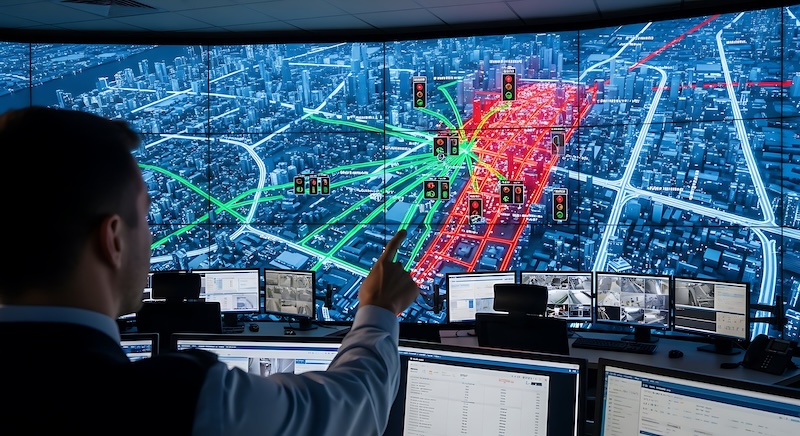
City site visitors creates congestion, wasted time and extra emissions that additionally complicate public transit schedules and emergency response. Sensible cities deal with the problem by treating streets as adaptive techniques. They collect stay knowledge from roadside infrastructure and metropolis platforms, then act on their findings via sign timing, pricing and operations. RFID suits neatly into that mannequin as a result of it shortly and persistently identifies automobiles on the edge, the place selections typically must be made in seconds.
Metropolis planners are making ready for long-run development that can pressure highway and curb house. Specialists challenge that 70% of individuals worldwide will stay in city areas by 2050, turning site visitors administration right into a capability drawback as a lot as a comfort characteristic. In that setting, transport techniques want automation that scales.
RFID helps by producing reliable id occasions that software program can translate into pricing, enforcement precedence and efficiency analytics with out requiring human intervention at each choice level.
How RFID Expertise Streamlines City Mobility
In a wise site visitors deployment, an RFID system nonetheless comes right down to a tag, a reader, an antenna and software program, however the workflow is tuned for high-speed motion.
A tagged automobile passes a reader mounted at a gantry curb entrance or depot gate. The antenna captures the tag’s identification and the reader forwards that occasion to a administration platform the place enterprise guidelines join id to actions, comparable to opening a barrier, logging a timestamp or updating an account.
As a result of reads are quick, RFID turns bodily motion into structured knowledge. This knowledge turns into much more beneficial when it’s mixed with different inputs, comparable to video analytics and Bluetooth travel-time sensing. RFID supplies high-confidence id, so analytics pipelines can separate native buses from non-public automobiles, distinguish permitted supply vans from normal site visitors and validate different sensor detections when circumstances get messy.
Key Functions of RFID in Visitors Administration
RFID helps site visitors operations greatest when deployed at choice checkpoints, or locations the place automobiles should enter, exit, cease or be counted. 4 purposes present how cities use these touchpoints to extend compliance and feed higher automation upstream.
1. Automated Toll and Congestion Cost Assortment. Digital tolling replaces stop-and-go fee with drive-through identification and billing. Businesses shifting towards free-flow tolling emphasize gantry-based assortment that enables automobiles to keep up freeway speeds whereas the system identifies the automobile and processes the transaction. This reduces queues and allows safer roadway operations throughout peak occasions.
RFID additionally allows congestion charging designs wherein the pricing logic relies on entry occasions. Cities can assign completely different billing guidelines primarily based on automobile kind, residency standing or emissions class.
2. Clever Parking. RFID tags on automobiles can establish approved customers at storage entrances and permit-only zones. When readers are additionally current at key inside chokepoints, the system can keep near-real-time occupancy counts and feed steerage to indicators or apps, so drivers spend much less time circling.
Operations take pleasure in essentially the most vital profit. RFID occasions assist cities measure turnover, detect repeat overstays and consider coverage adjustments. These analytics work greatest when RFID knowledge is fused with fee data and curb laws, so the town can see which blocks soak up demand and which guidelines truly change habits.
3. Dynamic Visitors Sign Management. RFID readers positioned upstream of intersections can register tagged fleets, comparable to buses, snowplows, waste vans and emergency automobiles, then publish arrival occasions to the site visitors administration system. Relying on the state of affairs, the controller can then lengthen inexperienced occasions or set off a precedence plan for a selected hall.
RFID additionally validates what different sensors infer. Video and radar estimate queues and turning motion counts, however identity-based reads can affirm {that a} detected automobile is a bus working late or an emergency responder.
4. Environment friendly Public Transport Administration. Public transit companies use RFID for depot automation and fleet visibility. Readers at depot gates can automate check-in and checkout, so dispatch software program is aware of which automobiles left on time and which stayed in upkeep. Related reads at terminals can timestamp actions, giving operations groups a transparent image of headways and layover compliance.
When a bus enters a yard, RFID id can pull its service historical past and set off inspections linked to time-in-service or mileage. When that knowledge is built-in with predictive fashions, companies can schedule work primarily based on precise utilization quite than calendar estimates.
Constructing a Dependable Information Spine for Citywide RFID
RFID produces plenty of small occasions, however metropolis deployments generate them in all places without delay. The toughest failures typically come from bottlenecks in ingestion, storage and analytics, quite than from the readers themselves. Edge processing helps as a result of it filters occasions, applies fundamental validation and retains native operations working throughout community disruptions.
Metropolis site visitors groups additionally handle combined sensor stacks when RFID is used alongside video. Storage design issues seem shortly in video techniques when the backend can not sustain, resulting in latency and dropped frames. Many sensible metropolis deployments deal with this by processing and recording on the edge with AI-capable community video recorders, then pushing chosen knowledge to centralized techniques, together with backends constructed round IP-SAN servers.
When cities undertake this method, RFID turns into a dependable id stream that permits real-time hall operations and feeds AI fashions that forecast congestion. Visitors management might be unforgiving, so cities want applied sciences with predictable efficiency and confirmed safety fashions. RFID already meets that bar in different high-consequence environments — analysis exhibits that 68% of provide chain leaders intend to spend money on RFID-related knowledge foundations for automation and AI tasks in 2026.
The Way forward for Smoother and Smarter City Journeys
RFID helps cities flip motion into actionable knowledge. As city development accelerates, the worth shifts from remoted deployments to linked techniques that share occasions with analytics and AI. Edge processing and scalable backend infrastructure hold these occasions dependable at metropolis scale, whereas enabling video and different high-volume sensors.
With that basis, sensible cities can handle site visitors with quicker suggestions loops and extra predictable outcomes for each day journey.
