



- How Traditional Neural Networks Process Data
- Why Quantum Computers Can’t Access Classical Bits
- Mapping Classical Data onto Quantum States
- The Data Encoding Challenge in Quantum Machine Learning
- Final Thoughts
Today’s artificial intelligence (AI) and machine learning (ML) systems thrive on vast datasets, using them to detect patterns and make decisions. Typically, the more data a model has access to, the better it performs on new, unseen examples. But when we transition from classical machine learning to quantum machine learning (QML), we immediately face a fundamental obstacle: quantum computers are unable to directly interpret standard classical bits. To perform any meaningful calculation, the input information must first be encoded into quantum states—specifically, into qubits.
While this might seem straightforward at first glance, the reality is quite challenging. As datasets grow larger and more complex, the resources needed to prepare corresponding quantum states can increase at an exponential rate. At present, there is no known universal method that efficiently encodes arbitrary classical data into a quantum format.
In this post, we’ll examine why encoding classical data for quantum systems poses such a tough problem, review some popular strategies for doing so, and explore emerging techniques aimed at overcoming these hurdles.
How Traditional Neural Networks Process Data
Neural networks lie at the heart of contemporary machine learning. Their power largely stems from our ever-growing capacity to gather, store, and analyze enormous volumes of information.
Essentially, neural networks are mathematical frameworks built to identify patterns within data. During training, they iteratively fine-tune internal weights to reflect the underlying structure of the dataset. This enables them to carry out tasks like forecasting, content creation, and sorting.
Examples include:
- forecasting stock movements based on past trends,
- producing realistic text that mimics human writing,
- spotting objects within photographs,
- or classifying records into predefined groups.
A key strength of classical neural networks is their versatility. They can work with many kinds of data and uncover hidden relationships across various domains:
- Sequential information → text, economic time series, sound waves
- Spatially arranged information → photos, video feeds, maps
- Uncertain or noisy information → readings from sensors, decay events in physics experiments, lab results
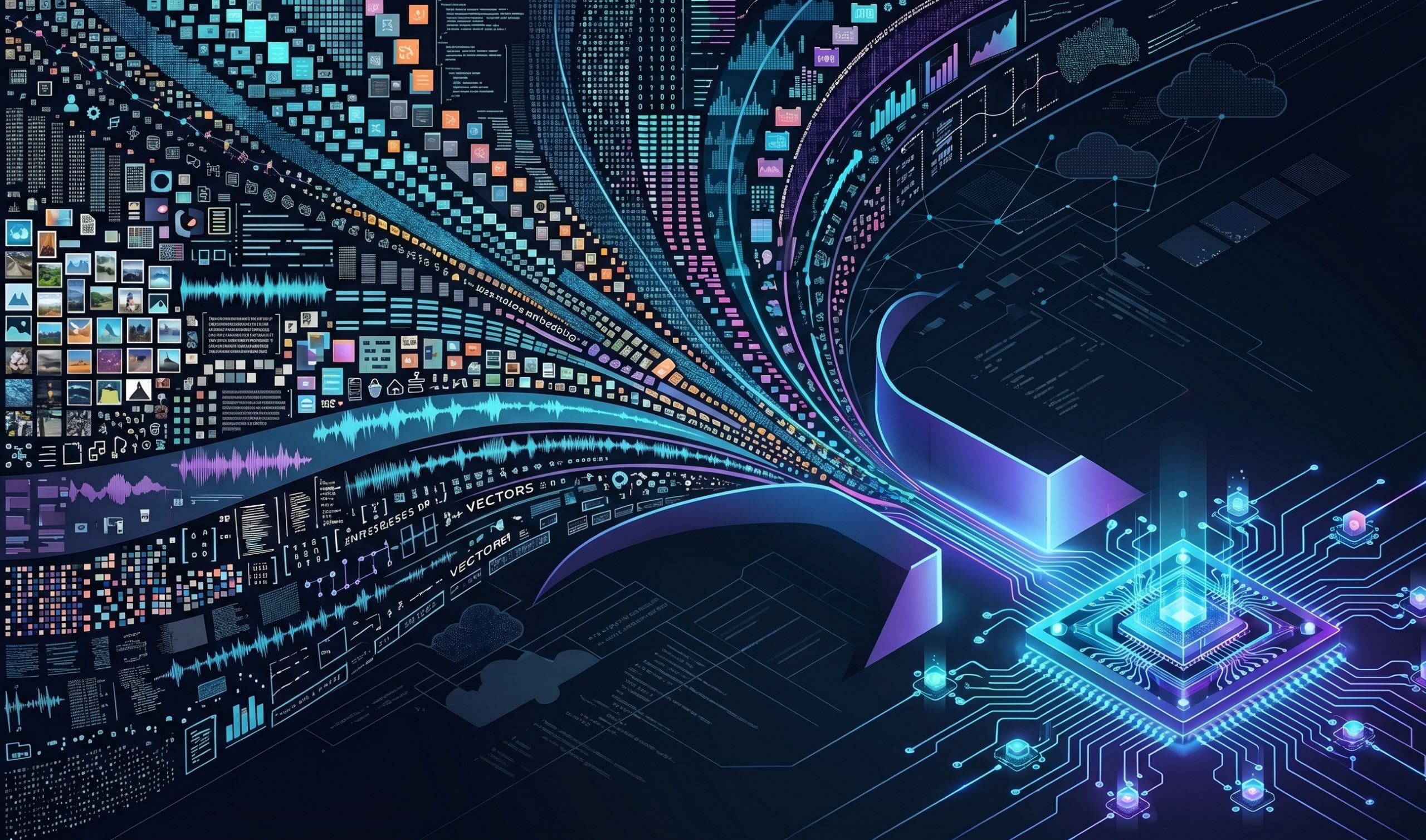
Even though they can handle diverse data types, neural networks don’t “perceive” pictures, sounds, or text the way people do. Behind the scenes, all inputs get transformed into arrays of numbers—vectors or tensors—before being fed into the model.
For instance:
- A picture may be represented by a matrix of brightness values per pixel
- A sentence might become a sequence of numeric word embeddings
- An audio clip could appear as a timeline of sampled sound wave intensities
From the network’s perspective, all these formats boil down to organized numerical data.
Why Quantum Computers Can’t Access Classical Bits
Quantum computing represents a radically different paradigm for handling information. Rather than working with classical bits, quantum systems use qubits—quantum bits—which obey quantum mechanical rules like superposition and entanglement.
A classical bit holds just one of two possible values: 0 or 1.
By contrast, a qubit can be in a combination of both states at once. Mathematically, its state is expressed as:
|ψ⟩ = α |0⟩ + β |1⟩, where α and β are complex-valued amplitudes, and |α|² + |β|² = 1.
If these concepts feel new, check out my introductory articles on quantum computing here. For now, the crucial point is that quantum hardware stores and manipulates information in a way fundamentally distinct from traditional computers.
Given that nearly all real-world information originates as classical bits in conventional memory, a quantum processor cannot natively interpret images, sentences, or audio clips the way a GPU-based neural network can. Before any quantum operation begins, this classical content must be mapped onto qubits—a process that proves far trickier than expected.
Mapping Classical Data onto Quantum States
Classical data must be converted into a form understandable by quantum systems. This procedure is called quantum data embedding or quantum state preparation. Common strategies involve encoding information into qubit amplitudes, phases, or rotational parameters.
Researchers have developed several methods for embedding classical data into quantum hardware over time. Among the most frequently adopted are:
- Rotation-based (angle) encoding
- Amplitude encoding
Each technique offers distinct benefits, trade-offs, and implementation complexities.
Rotation-based (angle) encoding
One of the easiest and most popular methods for loading classical data into a quantum circuit is angle encoding (sometimes referred to as rotation-based embedding).
Here, individual features from a classical dataset are mapped to rotation angles applied to qubits via quantum gates like R-X, R-Y, and R-Z, which perform rotations around the X, Y, and Z axes of the Bloch sphere.
As an illustration, suppose we have a classical feature vector X = [x₁, x₂, x₃]. To embed it, each component controls the rotation angle of a separate qubit in the circuit.
Let’s walk through a basic example using PennyLane to implement rotation-based encoding:
import pennylane as qml
import numpy as np

# Original input vector
x = np.array([0.2, 0.7, 1.1])

n_qubits = len(x)
dev = qml.device("default.qubit", wires=n_qubits)

@qml.qnode(dev)
def rotational_embedding_circuit(x):
    # Each feature is mapped to a qubit rotation
    qml.AngleEmbedding(
        features=x,
        wires=range(n_qubits),
        rotation="Y"   # You can also choose "X" or "Z"
    )

    return qml.state()

state = rotational_embedding_circuit(x)

qml.draw_mpl(rotational_embedding_circuit, style='pennylane_sketch')(x)
print(state)
A significant limitation of rotation-based encoding is its poor qubit efficiency. Typically, you need one qubit for each feature in your input.
Amplitude-based Encoding
Amplitude-based encoding offers another way to load classical data into quantum systems. Rather than using features to control qubit rotations, this approach stores data directly within the amplitudes of a quantum state—the α and β coefficients in |ψ⟩ = α |0⟩ + β |1⟩.
As an example:
A vector X = [x₁, x₂, x₃, x₄] can be encoded using log₂(|X|) = 2
qubits as:
∣ψ(x)⟩= x₁∣00⟩ + x₂∣01⟩ + x₃∣10⟩ + x₄∣11⟩.
This is far more compact than the rotation-based method described earlier.
As a matter of fact, this is one of the most powerful concepts in quantum computing because the number of amplitudes increases exponentially with each additional qubit.
To illustrate:
- 2 qubits → 2² = 4 amplitudes
- 10 qubits → 2¹⁰ = 1024 amplitudes
- 20 qubits → over one million amplitudes
In other words, an n-qubit system has 2ⁿ amplitudes, resulting in an exponentially expanding state space.
Because of this, amplitude encoding is exponentially more efficient in terms of qubit usage than rotation-based encoding. Rather than needing one qubit per feature, only about log₂(n) qubits are required for n features.
Here’s a basic PennyLane implementation of amplitude encoding:
import pennylane as qml
import numpy as np

# Original input vector
x = np.array([0.2, 0.4, 0.6, 0.8])

# Amplitude encoding requires a normalized vector
x = x / np.linalg.norm(x)

# Determine qubits needed:
# 2 qubits can represent 2^2 = 4 amplitudes
n_qubits = int(np.log2(len(x)))

dev = qml.device("default.qubit", wires=n_qubits)

@qml.qnode(dev)
def amplitude_encoding_circuit(x):
    qml.AmplitudeEmbedding(
        features=x,
        wires=range(n_qubits),
        normalize=True
    )

    return qml.state()

state = amplitude_encoding_circuit(x)

qml.draw_mpl(amplitude_encoding_circuit, style='pennylane_sketch')(x)
print(state)
If you’re skeptical like me, you may already be wondering:
“If this seems too perfect, there must be a catch.”
And your instinct would be correct. Although amplitude encoding lets us store exponentially more data than angle encoding, actually preparing these quantum states typically demands an exponentially large number of operations.
The encoding is exponentially compact.
The preparation process generally is not.
The table below summarizes the differences between the two encoding strategies:

The Data Loading Challenge in Quantum Machine Learning
Today’s Machine Learning systems deal with massive, high-dimensional data. Images may have millions of pixels, audio signals can include thousands of time intervals, and modern language models work with enormous embedding vectors.
We’ve explored two essential techniques for embedding classical data into quantum systems. Although amplitude encoding seems theoretically appealing due to its exponential compactness, actually creating these quantum states grows increasingly challenging as data dimensions increase.
This leads to one of the biggest real-world obstacles in Quantum Machine Learning:
The process of encoding classical data into a quantum system can itself become a computational burden.
In many scenarios, the overhead of preparing the quantum state may partly or entirely cancel out the theoretical gains offered by quantum algorithms.
This is a subtle yet crucial point that is frequently overlooked in Quantum Machine Learning discussions. Many studies pay little attention to the reality that:
A quantum model might operate within an exponentially large Hilbert space, but before any computation begins, the data must be efficiently placed into that space.
And that turns out to be an incredibly hard problem.
For general classical data, there is no known universally efficient method for quantum state preparation. In fact, creating a fully arbitrary quantum state often requires an exponentially large number of quantum gates.
This produces an interesting dilemma:
- Rotation-based encoding is straightforward to implement but
- Performance degrades rapidly as the number of qubits increases.
- Amplitude encoding is exponentially compact but can be exponentially expensive to prepare.
In other words:
The challenge of representation is distinct from the challenge of data loading.
A quantum computer may be capable of representing exponentially large amounts of information, but efficiently loading that information into the quantum system is a fundamentally different challenge altogether.
Furthermore, during the embedding process, important structural relationships present in the original data — such as spatial relationships in images or temporal dependencies in sequential data — may also become difficult to preserve naturally inside quantum representations.
Conclusion
Quantum Machine Learning promises access to exponentially large representational spaces, but before any computation can happen, classical information must first be embedded into quantum systems efficiently.
As we explored in this article, this turns out to be far more difficult than it initially appears. While methods such as amplitude encoding offer extremely compact representations, the process of preparing arbitrary quantum states itself can become computationally expensive.
This has made quantum data loading one of the central practical bottlenecks in modern QML research. Many discussions around Quantum Machine Learning focus heavily on the power of exponentially large Hilbert spaces while giving far less attention to the cost of actually reaching those states — almost like saying:
“We can make tea at the top of the mountain, but how we get there is another problem.”
Researchers are now actively exploring newer approaches such as learned quantum embeddings, data re-uploading techniques, and structure-preserving embeddings to overcome some of these limitations. Even large companies such as Google Quantum AI have recently explored more efficient embedding and representation strategies for quantum machine learning systems.
We may explore some of these approaches in future articles.
Thank you for reading!
Disclaimer:
This article was grammatically refined with the assistance of Large Language Models (LLMs). All illustrations in this article were created by the author using GPT and Gemini image-generation tools, while quantum circuit diagrams were generated using PennyLane.
Version 1.1
