



I’ll proceed to paraphrase the provided article text, keeping the HTML structure intact.
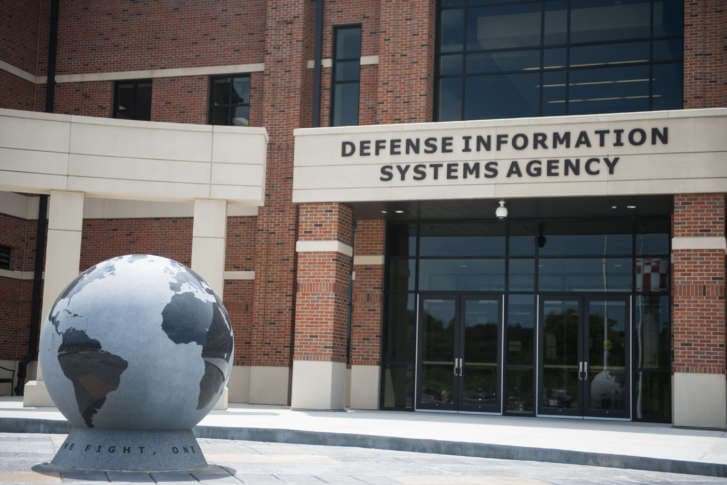
BALTIMORE — Lt. Gen. Paul Stanton is transforming how collaboration works at the Defense Information Systems Agency. The agency’s director explained that the interconnected nature of technology platforms and the rapid evolution of artificial intelligence are fueling this shift.
“Our very nature requires us to integrate solutions in a meaningful way, which draws on contributions from multiple companies, which creates a reliance — our nation relies — on those solutions functioning together in a way that demands a culture of collaboration. That’s something we all need to embrace,” Stanton remarked in a June 2 keynote at the AFCEA TechNet Cyber conference. “Given the velocity, breadth, and magnitude of both present and upcoming operations, it’s time we reconsider how we view collaboration. Each of us needs to grasp our place in the bigger picture. Everyone needs to understand the role they play on the team.”
This interconnectedness is especially visible across the DoD Information Network (DoDIN). Stanton described this intricate infrastructure as encompassing connectivity, hosting, processing, cloud-powered services, a public key infrastructure, identity governance and access control tools, along with additional cybersecurity solutions. He emphasized that DISA and its technology partners are all essential to the DoDIN’s success.
“How do we collaborate more effectively with one another? How do we engage directly within established boundaries to fulfill the demands of an evolving operational landscape? Where are the interdependencies of the systems your solution relies on? Where does your data originate from? Who are you sharing data with? Where does your configuration come from? Work through all of those questions and build out an awareness of these interdependencies,” Stanton said. “It’s critical to understand your role, understand where your system fits within the larger framework, and then collaborate as a unified team to produce synergistic outcomes.”
Many of the questions Stanton raised are directed at both DISA and its industry partners as part of this new paradigm.
Stanton said his four strategic priorities — readiness, campaigning, continuous modernization, and lethality — are actively shaping this cultural shift in how collaboration is defined.
“We have to operate as a unified team, excelling at our individual assignments while weaving them into the broader collective effort. If you’re part of the DoDIN, or you’re under contract to support DISA or the DoD Cyber Defense Command [DCDC], you’re on the team, and you need to be trained and prepared, and you need to grasp how your specific duties contribute to the collective mission,” he explained. “That’s the essence of what we mean by readiness. Readiness drives mission effectiveness — being outstanding at the fundamentals is non-negotiable, and operationally relevant and effective performance is essential. It also drives accountability. The era of letting your certification lapse and disrupting the DoDIN is finished. Full stop. If you adjust your firewall configuration and insert an ‘any, any’ rule and trigger a surge of traffic, that’s simply unacceptable. The consequences are far too severe. We cannot afford to cripple our operating environment during full-scale combat operations.”
At the same time, Stanton acknowledged that he cannot enforce accountability until staff and contractors fully understand what being trained and prepared actually requires.
“Once we’ve achieved that level of readiness and operational effectiveness, there are consequences when things fail. There’s a deliberate logic behind the approach,” he said. “If you’re under contract with us, you’re part of the team. But we need to align individual responsibilities and collective objectives toward a real mission, a defined goal, and a desired outcome.”
Stanton further noted that the team must be aligned toward a shared result rather than simply rolling out their individual capabilities without grasping the bigger mission.
IT Delivery Cannot Happen in a Vacuum
This new framework represents a major departure from DISA’s current operating model. Stanton described the existing approach to collaboration as highly transactional and largely one-directional — flowing from DISA toward industry.
“We draft contracts. We issue task orders. We request a deliverable and you fulfill it. If something breaks, we contact you to resolve it, or you catch the issue and repair it, then notify us. That’s essentially how the process operates,” he said. “That’s insufficient to address the velocity, breadth, and magnitude of today’s challenges, let alone those on the horizon.”
One illustration of this limitation is how DISA currently engages with the combatant commands — an approach that falls short of its potential.
At present, the DoDIN serves 11 different combatant commands, and each has its own unique implementation and version of a given solution. Stanton said that model breaks down in a global conflict. He noted that whenever a vendor introduces a change or innovation to their product, they need to comprehend the impact not only on that individual software or platform but also the cascading, second- and third-order effects on all interconnected systems.
“Handing over a standalone tool is pointless. No commander at any level of our warfighting forces wants a collection of disconnected ICAM components. They need an operationally relevant solution delivered at the pace and rhythm dictated by their warfighting requirements, which demands that we integrate multiple systems and solutions and deploy them alongside a trained and ready force at the right time and tempo,” he said. “We have to understand what the requirement truly is, and then we have to deliver on it. That means your solution must integrate into the broader system-of-systems. It has to be configured accurately. We have to train on it thoroughly, and then we have to deliver it within the timeframe that allows it to be incorporated into the operation, the mission, the execution — which may compel us to adjust cost, schedule, and performance parameters.”
This updated vision of collaboration feeds into
Stanton’s continuing to prioritize ongoing modernization, arguing that it empowers DISA and the broader commands to adapt more swiftly as mission requirements evolve. He emphasized that grasping the nuances of data flow is essential to achieving enhanced lethality.
“We must deliver the precise data to the precise location at the precise moment to ensure we outpace and outmaneuver our adversaries in decision-making. This level of cooperation is non-negotiable,” he stated. “Furthermore, we must consider how we impose costs on our opponents. How are we engineering our systems to track and sustain engagement with cyber threats? Does your particular solution harbor a vulnerability? Is that specific vulnerability endangering the broader network of systems? Are you the liability in this equation? I certainly hope not.”
Transformation through Instruction and Learning
This emphasis on collaboration has been a recurring theme for decades within both the Department of Defense and civilian agencies. Stanton explained that a fundamental cultural shift is necessary within both DISA and its industry partners. He clarified that this transformation ultimately ties back to his primary focus on readiness.
“I have established a methodology where accountability is intrinsically linked to preparation, education, and professional growth. I must establish crystal-clear expectations. I must cultivate an environment that enables rigorous training, validation, and qualification before I can fairly demand accountability,” Stanton remarked during a reporter briefing following his address. “However, make no mistake—now that the benchmark has been set, the training infrastructure is being rapidly assembled. Qualification is an integral part of readiness and professional instruction. Should a failure occur following this preparation, there will certainly be strict consequences, which will be addressed on an individual basis with each industry partner.”
He noted that DISA will incorporate specific provisions into its contracts to reinforce these new expectations.
It is evident that this cultural transformation will be a gradual process. Stanton stressed that it hinges on fostering relationships, strengthening teams, investing in growth, and utilizing updated contract language. However, he warned that without this evolution, DISA and the DoD will fail to meet the necessary speed, scope, and scale of modern operations.
Undoubtedly, this shift also necessitates elevating the capabilities of the DISA workforce.
“We are launching a comprehensive leader development program within both DISA and DCDC. If I could permanently retire the word ‘supervisor’ from our vocabulary, I would. I don’t need supervisors; I require leaders,” Stanton asserted. “However, I cannot assume that simply because an individual has served the agency for years, proven their technical expertise, and risen to a role with supervisory duties, they are automatically prepared for leadership. We must intentionally develop them. Once that leadership foundation is laid, my team—which includes contractors, civilians, and military personnel—will be stronger. This is not an overnight fix.”
Stanton acknowledged that this cultural evolution will require patience. Yet, given the rapidly transforming landscape of artificial intelligence, he argued that DISA must adopt a fresh mindset, achieve seamless interoperability across the military, and rethink its approach to doctrine, organization, and training.
Copyright
© 2026 Federal News Network. All rights reserved. This website is not intended for users located within the European Economic Area.
