



According to three senior European intelligence officials who spoke with The Associated Press, as wartime sanctions tighten their grip on Russia’s economy, the country’s intelligence services have stepped up their aggressive pursuit of Western technology and defense-related secrets.
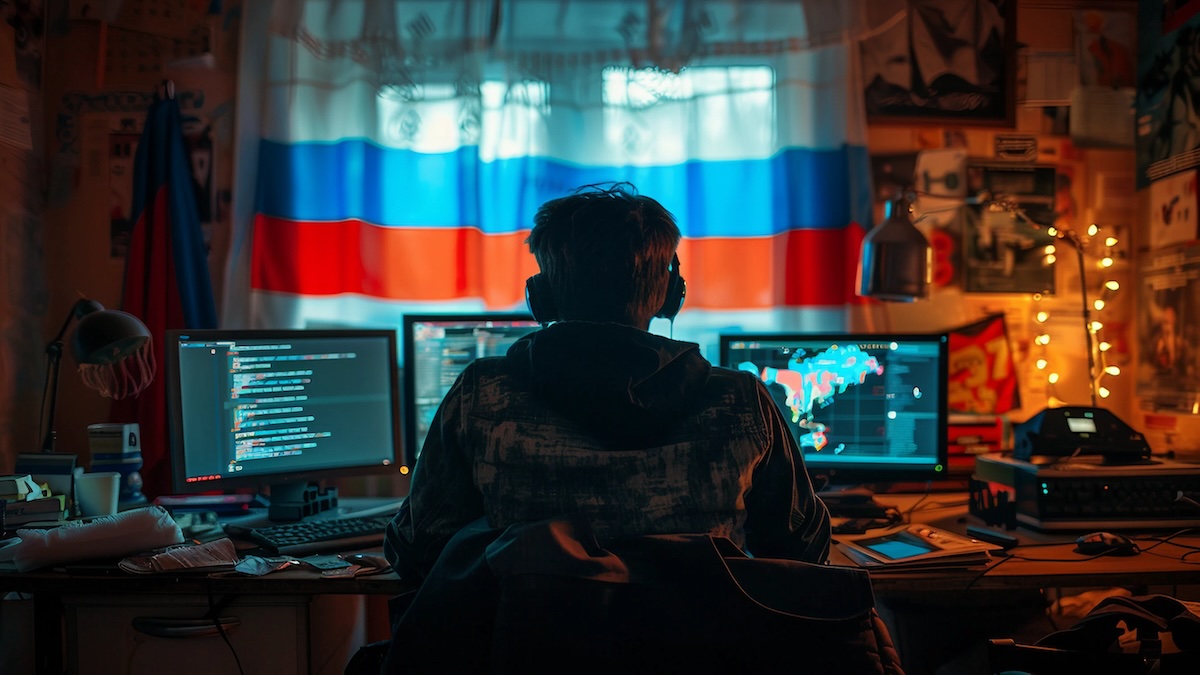
These officials explained that operatives working for Moscow are establishing fraudulent businesses, enlisting intermediaries, and unleashing cyber spies and hackers to collect data that could also be weaponized against critical infrastructure systems.
Four years of global sanctions have restricted Moscow’s capacity to purchase machinery, technology, and research from Europe. Meanwhile, the prolonged conflict in Ukraine has strained vital sectors and steered the nation toward a looming financial emergency.
“They have a clear understanding of what is required” and are investing “significant energy” in obtaining sophisticated machinery, manufacturing equipment, research findings, and dual-use technologies, stated Christoffer Wedelin, the deputy operations chief at the Swedish Security Service.
Russia Aims to Obtain Cutting-Edge Research, Defense Tech, and Software
Within Sweden, Russia is focusing on the defense sector and advanced research into the nation’s most sophisticated arms, including the Gripen fighter aircraft, Wedelin noted. Additionally, Russia seeks to acquire camera and laser technologies originally designed for civilian use but adaptable for Russian military systems, he added.
Moscow is likewise attempting to capture technological knowledge that enables it to keep abreast—or even maintain a lead—over the West in the coming decades, mentioned Juha Martelius, head of Finland’s Security and Intelligence Service.
“We’re referring to space technology, quantum computing … polar technology, and underwater technology,” he elaborated, noting that space technology represents an immediate priority for Russia without providing further details. Nations rely on such technology for satellite-based imaging, communications, and navigation systems.
Russia additionally requires restricted computer technologies and software upgrades for industrial machinery, Martelius added.
On Wednesday, Anne Keast-Butler, director of the United Kingdom’s signals intelligence organization, blamed Russia for “continuously targeting” Britain and its European partners through technology theft while orchestrating plots involving sabotage and murder.
During May, Swedish authorities detained two individuals suspected of breaching sanctions connected to a Turkish firm that had dispatched numerous shipments of metalworking and metal-cutting industrial equipment to Russia.
As these technology acquisition operations become increasingly elaborate, Wedelin emphasized that businesses must remain vigilant about the possibility of unknowingly being drawn into Russia’s military supply network.
“Every security and intelligence body in Russia is contributing to the state’s campaign to secure these assets,” he remarked.
Intelligence Officials Say Russia Is Becoming Less Concerned About Exposure
Moscow is additionally launching cyber operations against European corporations and essential infrastructure to harvest intelligence resources that could be utilized “when opportunity arises and when it aligns with their objectives,” Wedelin stated, referencing an assault on a Swedish energy facility from the previous year.
Actors connected with Russia sought to “demolish” the facility but were thwarted when the system identified the breach, Wedelin explained. He characterized the attack as partly designed to erode Western backing for Ukraine.
Prior to this incident, Sweden’s security agencies had primarily identified reconnaissance activity in preparation for potential strikes, intelligence collection, or operations tied to cybercriminal networks. The assault represented a “shift” in Russia’s approach, Wedelin explained.
“They’ve become less worried about being identified following their operations, meaning they’re accepting larger risks to accomplish their aims,” he observed.
Russia’s Economy Faces Escalating Challenges
Russia’s increasingly bold strategies may indicate growing internal worries about its economic situation, which “is performing extremely poorly,” commented Kaupo Rosin, director of Estonia’s Foreign Intelligence Service.
Roughly one-third of Russia’s total economic output is currently devoted to the military campaign, Martelius stated. The conflict and resulting sanctions have hindered economic expansion and driven persistent inflation.
Russian authorities had originally projected a budget shortfall of 3.7 trillion rubles ($52.1 billion) for all of 2026 but had already accumulated approximately 3.4 trillion rubles ($47.9 billion) by late February, Rosin noted.
The Iran conflict that began on February 28 has offered temporary relief by driving oil prices upward. The United States has issued sanctions exemptions permitting Russian oil sales, and the United Kingdom has relaxed its sanctions to ease worldwide fuel expenses.
Heightened revenue streams in the interim have probably strengthened Russia’s fiscal position, yet “it provides no real solution,” Rosin remarked, adding that sustained Western pressure could drive Moscow toward a monetary crisis before the year’s conclusion.
Rosin stated that intelligence material reviewed by his organization reveals a more pessimistic mood among Russian leadership in recent months, with the promise of “complete triumph” in Ukraine having disappeared. Keast-Butler, from British intelligence, reported that nearly 500,000 Russian troops have perished in Ukraine following the 2022 full-scale invasion.
Both Russia and Ukraine have largely maintained secrecy regarding their battlefield casualty statistics.
Military deadlock and economic deterioration are prompting many Russian officials to silently question “what purpose does this serve,” Rosin indicated, pointing to the intelligence assessments.
Martelius, representing Finland’s intelligence agency, suggested that although certain updates on the Ukrainian conflict may have been “filtered” before reaching President Vladimir Putin’s desk, he is convinced the Russian president possesses a reasonably accurate awareness of the economic difficulties.
However, this awareness does not necessarily translate to any political transformation.
It is “extremely risky … to begin evaluating Russia as though it resembles any nation like ours,” Martelius cautioned. “It does not.”
