



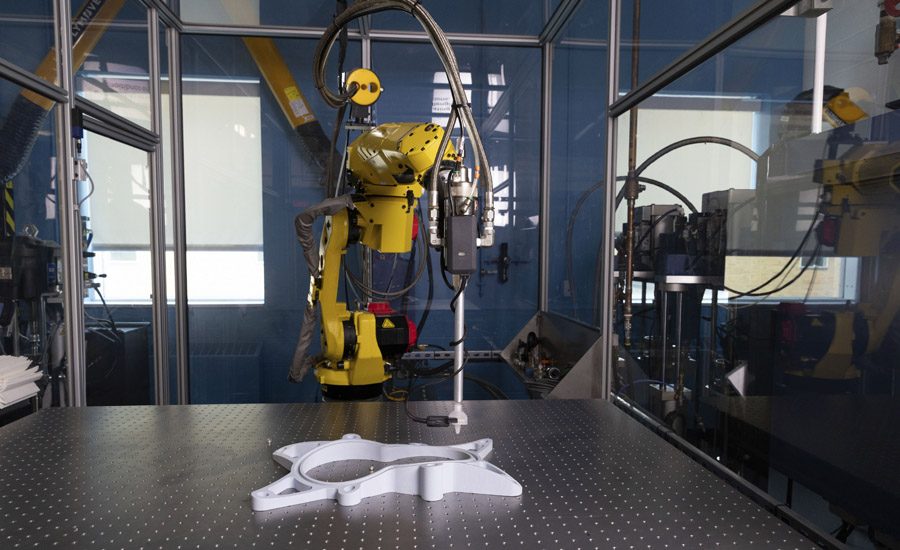
Two-part structural adhesives give manufacturers notable benefits, such as robust bonding capability, extended shelf life, and compatibility with diverse materials. However, unlike single-component adhesives that are ready to use right out of the package, two-part formulations demand accurate metering and thorough mixing before application.
When the resin and hardener aren’t blended in the correct proportion, or if mixing is insufficient, the adhesive may not cure as expected or reach its designed strength. Since the curing reaction initiates the instant the two components come into contact, manufacturers generally depend on automated meter-mix-and-dispense equipment to combine the materials directly on the production line.
“The most frequent challenges in two-part adhesive dispensing include inaccurate mix ratios, early curing within the static mixer, and excessive purging at the beginning of a dispense cycle,” says Alissa Wenner, an application engineering specialist in 3M’s Industrial Adhesives and Tapes Division. “These issues can stem from a variety of causes. Fluctuations in plant temperature can influence how quickly the adhesive cures inside the static mixer. Degraded pumps and seals can lead to off-ratio dispensing.”
Complications can emerge prior to production launch and persist throughout the entire dispensing operation.
“The expenses can accumulate rapidly, because the problem is seldom confined to the adhesive alone,” Wenner notes. “Manufacturers may face additional quality inspections, rework efforts, scrapped components, unplanned downtime, and blocked mixers that disrupt production flow.”
Looking Inside the Adhesive Flow
Historically, manufacturers have depended on setup validation, lab-based testing, and periodic quality audits to verify that a dispensing process stays within specification. The difficulty is that those approaches offer only intermittent glimpses of how the system is performing.
The 3M Adhesive Mix Monitor is engineered to assess the adhesive stream itself—after the two components have been combined but before the material reaches the assembly.
Looking for quick answers on assembly and manufacturing topics?
Try Ask ASM, our new smart AI search tool.
Ask ASM
The 3M Adhesive Mix Monitor processing unit gives operators a straightforward pass-fail signal and can relay time-stamped dispensing data to a PLC or manufacturing execution system. Photo courtesy 3M
“The sensor is positioned at the outlet of the static mixer, meaning it sits between the mixing stage and the point where the adhesive is deposited onto the part,” Wenner explains.
As the adhesive travels through the mixer and passes into the sensor, the system captures temperature readings and electrical characteristics. Those readings are then analyzed using a proprietary 3M adhesive mixing model to estimate the actual mix ratio being dispensed in real time at the point of application.
For machine operators, the system communicates results through a simple pass-fail indicator.
“A green signal means the adhesive falls within the predefined dispense window, while a red signal indicates it has drifted outside acceptable limits,” Wenner says. “If the process starts trending out of spec, the operator notices the change right away via the red indicator and can halt output, purge the system, or begin troubleshooting before additional parts are affected.”
Catching Defects Before They Become Scrap
Gradual process drift and mix-ratio deviations can go undetected until they compromise the finished product.
“A typical scenario occurs at startup,” Wenner says. “The adhesive feed pump pressure may fall outside the acceptable range, the supply pumps could be running low or be empty, or pre-start checks may not have been carried out correctly.”
She also points out that the adhesive may still be off-ratio during the initial moments of dispensing.
“In that situation, the system can indicate that additional purging is necessary before production commences, helping to prevent material from being applied before the process has stabilized on target.”
During ongoing production, issues can also arise when material lines develop partial blockages, air pockets interrupt the flow, or pump parts start to wear down.
From a quality management standpoint, the system enables manufacturers to stop the line as soon as a deviation is identified, potentially minimizing scrap and containing the extent of production defects.
Fast-curing adhesives introduce yet another complication.
“The chemical reaction can generate heat as the adhesive cures,” Wenner explains. “That’s significant because if the adhesive lingers too long inside the mixer and begins curing there, it may not flow or dispense the same way as freshly mixed material.”
Fast-curing formulations can start hardening within the mixer during pauses in dispensing, creating potential inconsistencies before the adhesive ever reaches the assembly.
Adding Traceability to Adhesive Dispensing
Beyond quality assurance, the technology introduces a new dimension of traceability to adhesive dispensing operations.
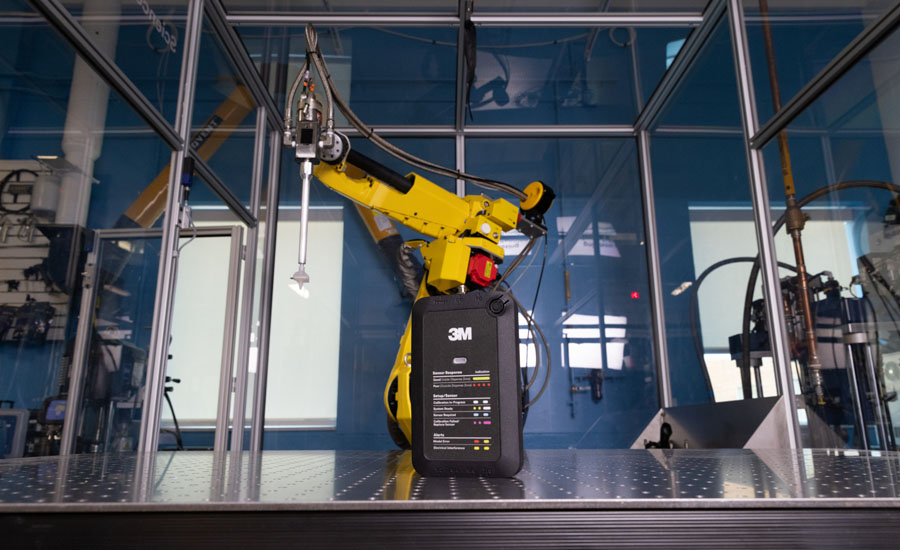
The 3M Adhesive Mix Monitor helps manufacturers detect mix-ratio irregularities, curing anomalies, and other dispensing issues before adhesive is applied to a component. Photo courtesy 3M
“The 3M Adhesive Mix Monitor can interface with a PC or PLC and transmit time-stamped data to a manufacturing execution system,” Wenner says. “This delivers meaningful insight into the dispensing process and supports process oversight, traceability, and root-cause analysis.”
The technology may prove especially valuable in sectors that demand thorough process documentation, including aerospace, automotive, defense, electronics, marine, and medical device manufacturing.
Paving the Way for Smarter Dispensing Systems
At present, the Adhesive Mix Monitor serves primarily as a monitoring, alerting, and data-streaming solution.
However, because the system can feed real-time dispensing data into manufacturing control platforms, it could eventually underpin more sophisticated dispensing workflows. That potential could mark a meaningful step forward in visibility and control over one of assembly’s most challenging processes to oversee.
The technology delivers a degree of transparency into the mixed adhesive stream that has traditionally been hard to attain, empowering manufacturers to spot problems before they escalate into scrap, rework, or production stoppages.
