



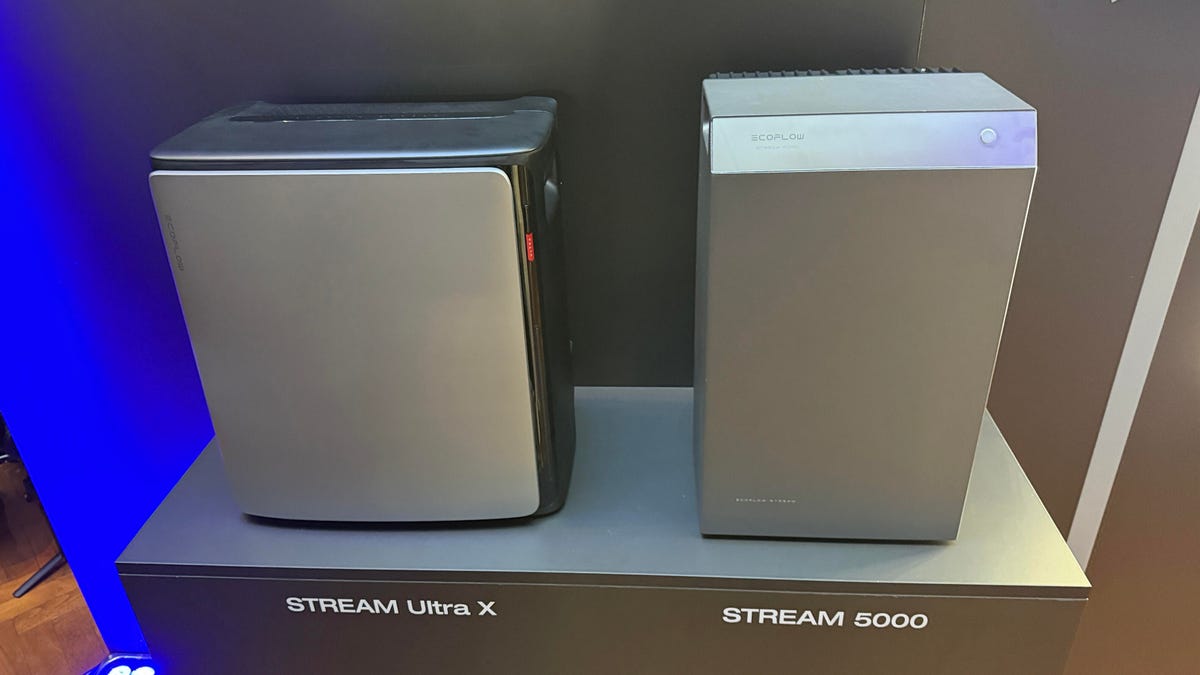
# Home Battery Systems: The Smarter Way to Save on Energy Bills
The way we power our homes is undergoing a quiet revolution. Battery storage systems are emerging as one of the most practical investments homeowners can make — not just for those with solar panels, but for anyone looking to take control of their electricity costs and energy resilience.
## Why Batteries Are Changing the Game
At their core, home batteries solve a fundamental problem: the times when we need electricity rarely align with the times when it’s cheapest or most abundant. Most households follow a predictable daily rhythm — energy consumption surges in the morning when people wake up and again in the evening when families return home and cook dinner. Between those peaks lies a lull, typically around midday.
This pattern creates a challenge for traditional solar setups. Solar panels produce their maximum output around noon, precisely when many homes are empty and drawing little power. That valuable midday energy gets fed back into the grid at low value, while households later reach for expensive electricity during peak evening hours.
A battery system bridges this gap entirely. By storing energy — whether generated by rooftop solar or drawn from the grid during off-peak hours — and releasing it when demand and prices spike, batteries let households “time-shift” their power usage.
## You Don’t Even Need Solar Panels
Here’s something that surprises many people: solar panels aren’t strictly necessary to benefit from home battery storage. If your utility offers a time-of-use (TOU) tariff — a pricing plan where electricity costs significantly less during certain hours and more during others — you can charge your battery from the grid when rates are low and use that stored energy during expensive peak periods.
The economics hinge on the spread between off-peak and peak rates. The wider the gap, the more compelling the financial case becomes. In some regions, off-peak electricity can cost less than a fifth of peak-period prices, creating a meaningful opportunity for savings through strategic charge-and-discharge cycles.
## Understanding the Real-World Math
No energy storage system is perfectly efficient. Every battery involves losses — heat generated during charging and discharging, internal chemistry inefficiencies, and small amounts of standby power drain. Across a full charge-and-discharge cycle, the average round-trip efficiency sits somewhere between 80% and 90%. This means that for every kilowatt-hour you put into the battery, you recover somewhere between 0.8 and 0.9 kWh of usable power.
Those losses are worth factoring into any cost-benefit analysis. For example, consider a 12 kWh battery system being charged entirely from the grid during off-peak hours. Factoring in efficiency losses, you’d need to draw roughly 15 kWh from the wall. Using current residential electricity rates from a major utility provider, filling that battery might cost around 78 cents. Yet that same stored energy would be worth significantly more during peak hours — roughly $3.34 in summer months and about $2.05 during winter. The daily savings from a single charge cycle could be in the range of one to two and a half dollars.
Smaller systems tell a different story. A compact 3 kWh unit might require just under 4 kWh to fill, costing around 20 cents. The savings per cycle would be more modest — perhaps 30 to 60 cents daily — but even that adds up over time.
## The Investment Side
It’s important to be realistic about upfront costs. A whole-home battery system capable of storing several kilowatt-hours of energy represents a meaningful financial commitment. Prices for a 5 kWh unit, including professional installation, can run into the thousands of dollars. Expanding the system with additional battery modules or pairing it with solar panels pushes that figure considerably higher.
However, these systems aren’t short-term purchases meant to save a few dollars on a monthly bill. They’re long-term investments comparable to upgrading a boiler or adding insulation to your attic. Many manufacturers back their products with warranties spanning a decade, reflecting the durability and expected lifespan of modern battery technology.
On average, most well-designed battery storage systems pay for themselves within roughly five years, after which the electricity savings become pure gains. The exact timeline depends heavily on local electricity rates, solar exposure, daily consumption patterns, and the specific tariff structure available to the homeowner.
## Beyond Savings
Financial returns are only one part of the equation. Many homeowners adopt battery storage for reasons that go beyond the bottom line. Some are motivated by reducing their environmental footprint, storing clean solar energy to reduce reliance on fossil-fuel-powered grid electricity. Others are driven by energy independence — the desire to generate and manage their own power rather than depending entirely on utility companies.
Then there’s the growing concern about grid reliability. Power outages are becoming more frequent and severe in many regions, and having a home battery provides a dependable backup source of electricity that can keep essential systems running during emergencies.
## Is a Home Battery Right for You?
The answer depends on your circumstances. Light power users may find that a large battery system is oversized for their needs — they’d be paying for storage capacity they rarely fully utilize. Heavy power users, on the other hand, stand to benefit the most, as they have greater demand to shift away from expensive peak periods.
Smart features like app-based controls and automated charge/discharge scheduling have made these systems increasingly user-friendly. Many modern systems operate largely on their own, intelligently deciding when to pull power from the grid and when to discharge based on real-time pricing signals.
## Frequently Asked Questions
**How long do home battery systems last?**
Most modern lithium-ion home batteries are designed to last 10 to 15 years or more, with many manufacturers offering 10-year warranties. Over time, battery capacity does degrade slightly, but the decline is gradual.
**Can I install a battery system myself?**
Professional installation is strongly recommended. Battery systems involve high-voltage electrical connections and must be integrated safely with your home’s electrical panel. Many manufacturers offer professional installation services as part of the purchase.
**Do I need solar panels to use a home battery?**
No. Batteries can be charged from the grid during off-peak hours, making them valuable even for homes without any solar installation, provided you have a TOU tariff with favorable rate differentials.
**What is round-trip efficiency, and why does it matter?**
Round-trip efficiency measures how much of the energy you put into the battery you actually get back out. Because of heat loss and chemical inefficiencies, no battery is 100% efficient. A system with 85% efficiency, for instance, loses about 15% of the energy during each charge-discharge cycle — an important factor when calculating actual savings.
**Are home batteries safe?**
Modern battery systems incorporate multiple layers of safety protections, including thermal management, overcharge protection, and automatic shutdown protocols. When installed properly, they pose minimal risk.
**How much can I realistically save each year?**
Annual savings vary widely based on electricity rates, battery size, daily usage patterns, and the rate spread between peak and off-peak periods. Some homeowners save several hundred dollars annually, while those in regions with extreme peak/off-peak price differences may save significantly more.
**Can a home battery power my entire house during an outage?**
It depends on the battery capacity and how much power your household draws. A larger system paired with mindful energy use can sustain essential loads for many hours or even days. However, most residential systems are sized to handle critical circuits rather than an entire home’s full load simultaneously.
## Final Thoughts
Home battery storage represents one of the most exciting developments in residential energy technology. Whether the motivation is financial savings, environmental responsibility, or simply the peace of mind that comes with backup power, these systems offer tangible benefits that are only growing as electricity prices fluctuate and grid reliability becomes less certain.
The key is doing your homework — understanding your local rates, calculating realistic payback periods, and choosing a system that matches your household’s actual energy profile. When approached thoughtfully, a home battery isn’t just a gadget purchase; it’s an investment in your home’s future.
Thank you for reading
