



**How Cybercriminals Are Evading Platform Defenses with Phishing and Fake Fonts**
The landscape of open-source software security is evolving rapidly, and threat actors are constantly changing their tactics to bypass platform defenses. Recently, a sophisticated campaign targeting developers escalated from automated code injections to advanced phishing and persistent local malware. This shift highlights how attackers adapt when their initial methods are blocked, forcing the community to stay vigilant.
**The Shift to Social Engineering**
Initially, the attackers relied on injecting malicious automated workflows into legitimate projects. When the platform took steps to prevent these malicious workflows from running, the threat actors pivoted to tricking developers directly. They registered a deceptive domain that closely mimicked the legitimate platform’s branding.
Using this fake domain, the attackers sent phishing emails impersonating security alerts. These messages warned developers of suspicious logins—often claiming the attempt originated from a foreign country—and urged them to click a link to secure their accounts. The link led to a counterfeit login page designed to harvest usernames, passwords, and two-factor authentication codes.
Once a developer entered their credentials, the malicious page did not stop there. It silently executed background scripts that authorized unauthorized applications with broad permissions. This gave the attackers the ability to read and modify the developer’s repositories and workflow configurations, essentially handing over the keys to the kingdom without the victim ever realizing it.
**The Rise of Persistent Local Malware**
After the platform successfully blocked the initial remote attack, the threat actors adapted once more. They introduced a second-stage component that resides directly on the developer’s computer, ensuring they maintain access even if the original malicious workflow is removed.
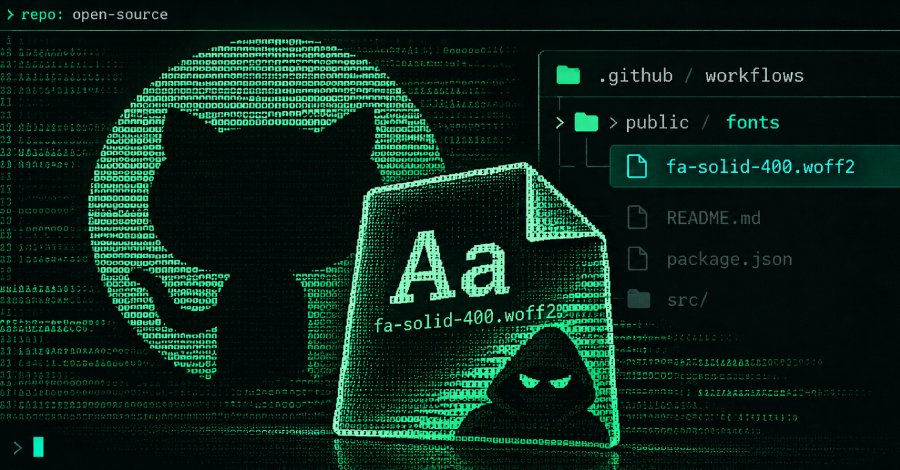
This new approach borrows techniques from state-sponsored cyber operations. Attackers embedded a malicious payload inside a fake font file, which is a common tactic used to evade detection. When a developer opens the project folder using a local code editor, a hidden script automatically triggers the font file, launching a credential-stealing program.
This stealer malware aggressively searches the victim’s machine for sensitive data, targeting cloud service keys, software package tokens, Git login credentials, and even artificial intelligence service keys. To ensure it remains on the system, the malware installs a background task that runs every five minutes, continuously sending harvested data to external servers over unsecured connections. Additionally, a secondary automated script is in place that attempts to re-upload stolen data if the primary method fails, acting as a safety net for the attackers.
**The Scope of the Attack**
Security analysts have identified hundreds of repositories affected by this second-stage malware. Many of these compromised projects belong to dormant or abandoned open-source maintainers, some left untouched for years. While the attackers have been successful in their pivot, researchers note they appear to be relatively inexperienced, making critical mistakes like using a single server to handle all their malicious traffic.
**FAQ**
**Q1: How did the attackers initially trick developers?**
A1: They sent phishing emails disguised as legitimate security alerts from the code-hosting platform. These emails claimed there was a suspicious login and directed developers to a fake website to “secure” their accounts, where their credentials were stolen.
**Q2: What happens when the fake font file is opened?**
A2: When a developer opens a project folder containing the fake font file, it silently triggers a credential-stealing program. This program automatically searches the local machine for sensitive information like cloud keys, software tokens, and SSH keys, then sends the data to the attackers.
**Q3: Why did the attackers switch from remote code injection to local malware and phishing?**
A3: The attackers switched methods after the code-hosting platform blocked their initial malicious automated workflows. By moving to local malware and phishing, the attackers found a way to compromise systems that doesn’t rely on the platform’s automated security checks, giving them persistent access even if the original workflow is deleted.
**Q4: How can open-source developers protect themselves?**
A4: Developers should immediately revoke any active access tokens, change their account passwords, and audit their repositories for unauthorized changes. It is also crucial to rotate all credentials that the affected workflows could access, such as cloud service keys and API tokens.
**Conclusion**
This campaign serves as a stark reminder that platform-level defenses are only one piece of the security puzzle. As platforms patch vulnerabilities and block malicious code, threat actors inevitably shift to human-focused attacks like phishing and local machine compromises. Open-source maintainers must remain proactive by scrutinizing unexpected emails, auditing their account permissions regularly, and treating local development environments with the same level of suspicion as remote code repositories. Security is an ongoing process, not a one-time fix.
Thank you for reading
