



**Bridging the Gap: Why Enterprise AI Demands Machine-Speed Identity Security**
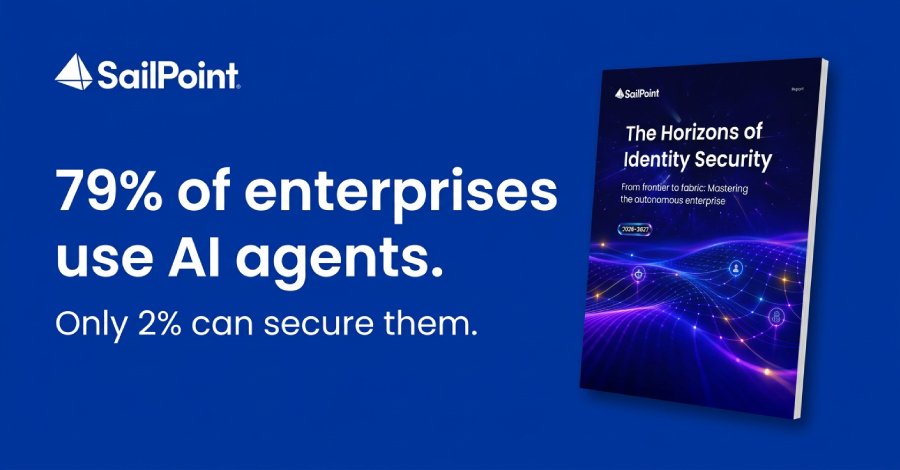
As businesses rush to implement autonomous AI agents to accelerate operations, a glaring mismatch has emerged between operational speed and security architecture. A recent industry analysis exposes a “velocity paradox”: organizations are deploying AI-speed business processes while relying on human-speed security controls. This structural misstep creates a failure that legacy approaches simply cannot solve.
The data reveals that years of maturing identity programs for human employees have not translated into the rapidly multiplying world of non-human, autonomous agents. The playbooks built to govern people are fundamentally broken when applied to machines executing thousands of transactions per minute.
**The Stalemate of Maturity**
Despite significant investments in identity and access management, the market’s overall security maturity has hit a wall. Current findings indicate that 60% of organizations remain firmly planted in the earliest stages of identity governance—either having no formal program at all or relying on manual, tool-assisted methods. This multi-year persistence reveals an architectural ceiling; the operational frameworks designed for human workforces simply do not scale to govern ephemeral machine identities.
**The Human vs. Non-Human Divide**
The most striking revelation is the stark divergence between human and non-human identity security. For human workforces, progress is evident: the percentage of organizations at the lowest maturity level has been cut nearly in half over the last five years, dropping from 45% to 23%.
However, the timeline for agent identity security is moving in the opposite direction. Today, 54% of organizations sit at the lowest maturity level for non-human and AI agent identities—a worse starting point than where human security stood half a decade ago. This disconnect shows that even organizations with strong capabilities for managing human access are struggling to extend those same standards to cloud workloads and agentic environments. It is a coverage gap, not a competence gap.
**The Digitization Trap**
Why do traditional security playbooks fail in this new era? The core issue is the “digitization trap.” Organizations in the middle-maturity tiers have successfully automated human-centric processes like employee onboarding and periodic access reviews. However, applying these same scheduled review cycles to ephemeral machine identities—which may exist for only minutes or seconds—creates severe operational drag and is functionally useless.
Breaking into the upper tiers of maturity requires a fundamental paradigm shift. Advanced organizations have moved away from manual, ticket-based access decisions, replacing standing privileges with continuous, contextual, and automated policy enforcement that operates at machine speed.
**The Illusion of Balance**
When faced with the conflict between moving fast and staying secure, nearly half of the market (49%) claims to “balance both equally.” However, the data suggests this is a false compromise. A stated posture of balance without the underlying operational capability to enforce it is not a strategy; it is a stall. Organizations are caught in the paradox: they have an AI-speed ambition but a human-speed foundation, leaving them unable to move decisively.
The ultimate conclusion is clear: Securing the autonomous enterprise does not require rebuilding from scratch. The immediate priority is for organizations to extend their proven governance disciplines to cover the unmanaged non-human identities operating across their digital estate, unifying them into a single fabric that can finally match the speed of AI.
***
**Frequently Asked Questions (FAQ)**
**Q: What exactly is the “velocity paradox” in enterprise security?**
A: The velocity paradox describes the gap between how fast businesses are deploying autonomous AI agents and how slowly their security controls operate. Organizations are building AI-speed business operations but securing them with human-speed, manual processes, creating a structural failure in their security architecture.
**Q: How mature is the average organization’s identity security program?**
A: The majority of organizations are still in the foundational stages. A combined 60% of organizations remain in the earliest phases of identity governance—either having no formal program in place or relying on manual, tool-assisted approaches.
**Q: Why are human identity programs more mature than non-human or AI agent identity programs?**
A: Human identity security has steadily improved over the last five years, but agent identity security is lagging significantly. Many organizations are still starting from scratch when it comes to governing autonomous and ephemeral digital entities, creating a massive coverage gap even within firms that have strong human access controls.
**Q: What is the “digitization trap” in identity security?**
A: The digitization trap is the mistake of applying human-centric processes, such as scheduled periodic access reviews, to machine identities. Because machine identities can exist for mere minutes or seconds, scheduled review cycles are too slow and functionally useless, causing severe operational drag rather than providing security.
**Q: Is claiming to “balance” speed and security a viable strategy?**
A: No, it is often a false compromise. Without the underlying operational capability to enforce policies at machine speed, a stated posture of balance is simply a stall. Organizations cannot be secure and fast if they lack the automated architecture to support both simultaneously.
**Q: What is the solution to securing autonomous AI agents?**
A: The solution does not require a complete rebuild of existing systems. Instead, organizations must extend their proven governance disciplines to cover unmanaged non-human identities and unify them into a single identity fabric. The goal is to shift from manual, ticket-based decisions to continuous, contextual, and automated policy enforcement that operates at the same speed as AI.
***
**Conclusion**
The transition to an autonomous enterprise requires more than just faster technology; it demands a fundamental evolution in security architecture. Bridging the gap between human-speed controls and AI-speed operations is critical for any organization looking to leverage autonomous agents without compromising security. By extending established governance frameworks to cover non-human identities and shifting toward continuous, automated enforcement, organizations can resolve the velocity paradox. The future of enterprise security depends on a unified identity fabric that moves as fast as the AI driving the business.
Thank you for reading
