



# Why Interoperability Alone Isn’t Enough: The Hidden Vendor Lock-In Risk in SGP.32 eSIM IoT Ecosystems
## Introduction
As cellular IoT deployments scale from thousands to millions of devices, the technology stack connecting those devices to the cloud is becoming increasingly complex. The GSMA’s SGP.32 specification promised a future where enterprises could remotely manage SIM profiles and switch connectivity providers without ever physically touching a device. But a critical gap has emerged between what the standard enables on paper and what businesses can actually achieve in practice — and that gap is being exploited as a new form of vendor lock-in.
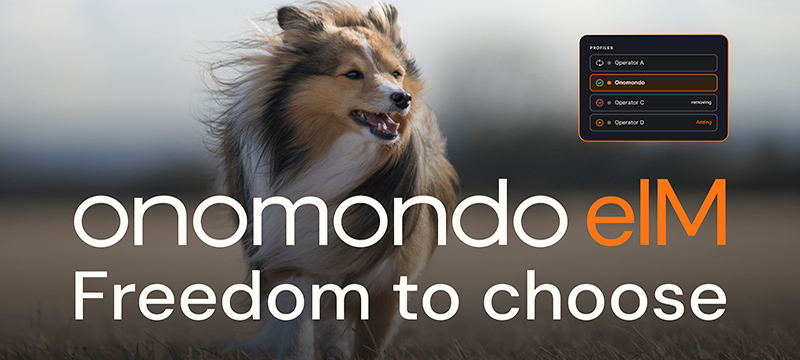
A leading IoT infrastructure provider has launched its own solution to address this problem, offering a fully independent Remote Manager that works alongside any connectivity provider, not just its own. The move signals a growing concern within the enterprise IoT space: that without genuine commercial interchangeability, SGP.32’s promise of long-term control may fall short.
## Understanding the SGP.32 Architecture
SGP.32 defines a framework for remote SIM provisioning in IoT devices built around three core components:
– **eUICC SIMs** – The physical hardware embedded in devices that can store multiple operator profiles.
– **eSIM Profiles** – Digital profiles containing connectivity credentials that can be downloaded, activated, or removed remotely.
– **eIM (eSIM IoT Remote Manager)** – The software layer that orchestrates profile management on deployed SIMs.
Together, these components are designed to give fleet operators full, remote control over the cellular connectivity running on their devices throughout their entire operational lifespan — potentially a decade or more.
## The Practical vs. Theoretical Freedom Problem
While GSMA specifications mandate that eUICC SIMs support the remote operations needed to swap between connectivity providers, the same strict interoperability requirements do not extend to the eIM itself. This creates an asymmetry: the SIM can technically receive new profiles from different sources, but the management tool sitting between the device and the SIM might be restricted to a single provider’s ecosystem.
When the eIM becomes the controlling gateway for a fleet, and that eIM is not independently configurable, the entire architecture becomes a closed loop. Enterprises find themselves able to change their SIM profiles — but only within the boundaries of the eIM they were given at deployment time.
For organizations managing large-scale IoT installations across vehicles, industrial equipment, utility meters, and payment terminals, this represents a serious operational risk. A connectivity provider decision made at the time of manufacturing could effectively bind the fleet to a single management platform for years, potentially requiring costly physical interventions — such as field technician visits or device recalls — to break free.
## Independence as a Design Principle
The newly launched Remote Manager takes a different approach. It is built from the ground up to function independently of any single connectivity provider’s platform. Enterprises can pair it with the provider’s own cellular service, with third-party connectivity, or reconfigure it entirely as business needs evolve over time.
This design philosophy treats the management layer as a neutral control point rather than a commercial tether. The goal is to ensure that the freedom to change connectivity providers is not just a technical possibility but a practical, day-to-day reality.
## Why This Matters for Long-Lived IoT Deployments
Cellular IoT devices often remain in the field for years, sometimes outlasting the business relationships that put them there. A fleet deployed in 2024 may still be active in 2034, and the connectivity needs of that fleet will almost certainly change over that timeline — whether due to mergers, geographic expansion, cost optimization, or shifts in technology standards.
Without a genuinely interchangeable management layer, enterprises risk discovering that the tool controlling their SIM estate cannot support their evolving requirements. The very technology designed to future-proof IoT connectivity could inadvertently create a dependency that is just as hard to escape as the legacy SIM swapping models it was meant to replace.
## Key Takeaways
– SGP.32 provides the technical foundation for remote eSIM management in IoT, but interoperability does not automatically equal interchangeability.
– The eIM layer can become a hidden lock-in point if it is not designed to work across multiple connectivity ecosystems.
– True long-term control requires that the management platform be commercially and technically independent.
– Enterprises deploying large fleets should evaluate whether their remote management tools allow provider changes without physical device access.
—
## Frequently Asked Questions (FAQ)
**Q1: What does SGP.32 stand for, and who created it?**
SGP.32 is a specification developed by the GSMA (GSM Association) that defines how eSIMs in IoT devices can be remotely provisioned and managed. It establishes the technical standards for eUICC SIMs, eSIM profiles, and the remote management interface.
**Q2: How is an eUICC SIM different from a traditional SIM card?**
A traditional SIM card is tied to a single mobile network operator. An eUICC (embedded Universal Integrated Circuit Card) SIM is programmable, meaning it can store multiple operator profiles and switch between them remotely without needing a physical SIM swap.
**Q3: Can an eSIM profile be changed remotely on deployed devices?**
Yes, one of the core capabilities of SGP.32 is enabling profiles to be downloaded, activated, deactivated, and deleted remotely — eliminating the need for physical access to the device or its SIM.
**Q4: Why is the eIM considered a potential lock-in risk?**
Because the eIM serves as the bridge between an enterprise’s device fleet and its cellular connectivity. If the eIM is only compatible with one provider’s connectivity services, the enterprise cannot easily switch providers — even if the underlying SIM hardware supports it.
**Q5: What does “commercial interchangeability” mean in this context?**
It means an enterprise can swap out connectivity providers (or their management platform) without being restricted by technical or contractual barriers that tie them to a single ecosystem.
**Q6: Is the Remote Manager described here available for use right now?**
Yes, the solution is available for enterprises deploying cellular IoT fleets today, whether they use the provider’s own connectivity services or those of third parties.
**Q7: What types of businesses benefit most from a provider-independent eIM?**
Organizations with large-scale, geographically dispersed IoT deployments — such as automotive manufacturers, industrial automation firms, utility companies, and logistics operators — stand to benefit the most, especially those with device lifetimes spanning many years.
—
## Conclusion
The evolution of cellular IoT connectivity has brought us closer than ever to truly autonomous, remotely managed device fleets. But the promise of SGP.32 can only be fully realized when every layer of the technology stack — hardware, profiles, and management software — is designed with genuine independence and interchangeability in mind. Enterprises evaluating their IoT infrastructure should look beyond mere technical compliance with standards and ask whether the tools they use today will still give them meaningful choices a decade from now.
Thank you for reading
