



**How NVIDIA’s RoboLab Tackles Robot Evaluation Challenges in Real‑World Simulation**
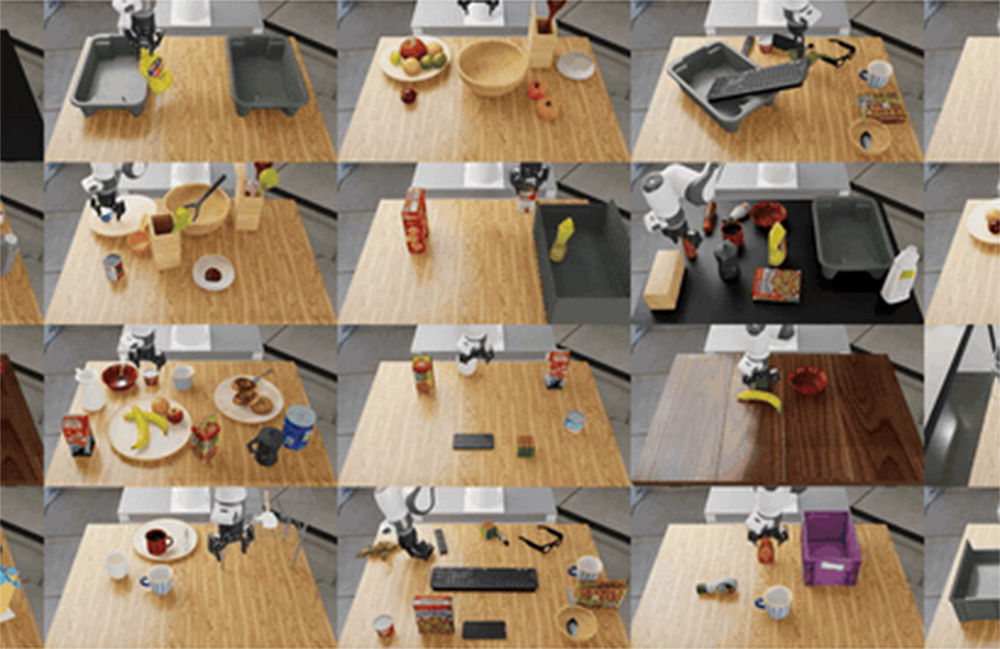
As robotics foundation models advance, the ability to assess their true capabilities in a scalable, reliable way has become one of the field’s most pressing challenges. Traditional evaluation methods often fall short due to visual domain overlap, benchmark saturation, limited diagnostics, and insufficient statistical rigor. To address these issues, NVIDIA has introduced **RoboLab**, a simulation benchmarking platform designed to support robot‑agnostic, capability‑focused, and statistically trustworthy evaluation at scale.
—
### Why Existing Benchmarks Fall Short
Real‑world robot testing is expensive, slow, and hard to reproduce, making simulation an attractive proxy. However, most existing benchmarks suffer from three major problems:
1. **Visual and task‑domain overlap**: Policies are often trained and evaluated in identical simulated environments, rewarding memorization rather than generalization. Even photorealistic reconstruction techniques (e.g., 3D reconstruction, inpainting) remain per‑scene and computationally expensive, limiting large‑scale use.
2. **Benchmark saturation**: Static task sets quickly max out performance, causing success rates to plateau. When nearly all systems achieve 90%+ success, the scores lose meaningful discriminative power.
3. **Lack of diagnostics**: A simple binary success/failure label does not explain *why* a task failed, leaving researchers without actionable insight into perception, reasoning, or execution flaws.
Additional issues include insufficient statistical confidence due to limited rollout counts and large sim‑to‑real visual gaps from low‑fidelity procedural scenes.
—
### Introducing RoboLab: Three Pillars of Better Evaluation
NVIDIA’s RoboLab is built around three core principles:
1. **Robot‑agnostic evaluation with meaningful metrics**
– Tasks are decoupled from specific robot hardware or policy architectures.
– Multiple complementary metrics are used beyond success rate, including graded task scores, trajectory quality, and execution speed.
2. **Rapid, scalable task generation**
– A flexible pipeline enables quick creation of new scenes, tasks, and language instructions.
– Integration with agentic AI workflows helps prevent benchmark saturation by continuously introducing new challenges.
3. **Comprehensive diagnostic tools**
– Failure event logging and an in‑built dashboard highlight exactly where and why a policy fails.
– This shifts analysis from post‑hoc guessing to near‑real‑time debugging, similar to stepping through code in a debugger.
—
### Supporting Evaluation Rigor
**Statistical Trustworthiness**
Success probabilities can be estimated with confidence intervals rather than point estimates. NVIDIA employs the **Clopper–Pearson method**, an exact technique for binomial confidence intervals, showing that modest sample sizes can yield wide error margins. Increasing rollout counts dramatically narrows these intervals, making comparisons between policies more reliable.
**Capability‑Specific Task Design**
RoboLab evaluates three core competencies:
– **Visual**: Recognizing color, size, and semantic attributes.
– **Procedural**: Understanding and executing multi‑step actions such as stacking or reorientation.
– **Relational**: Reasoning over spatial and linguistic constraints like conjunctions and counting.
Each task is tagged with the competencies it tests, enabling transparent coverage analysis.
—
### Evaluating Generalization under Realistic Conditions
RoboLab explicitly tests performance under increasing complexity:
– **Language complexity**: Policies are evaluated on multiple phrasings, from vague to highly specific, exposing brittleness in instruction understanding.
– **Scene complexity**: Distractor objects and visual clutter measure whether policies can still identify target objects.
– **Task complexity (horizon)**: Longer, multi‑subtask sequences reveal how well policies maintain accuracy over extended reasoning chains. Current models generally struggle beyond a few steps.
—
### Sensitivity and Robustness Analysis
Rather than testing variables in isolation, RoboLab runs evaluations across many scene variations simultaneously. Using **Neural Posterior Estimation (NPE)**, it then identifies which environmental factors most strongly affect performance. This transforms heuristic assumptions (e.g., “camera placement might matter”) into quantified, actionable insights.
—
### FAQ
**Q: What is RoboLab?**
RoboLab is NVIDIA’s simulation benchmarking platform designed to evaluate robot policies in a scalable, diagnostic, and statistically rigorous way. It emphasizes robot‑agnostic evaluation, rapid task generation, and detailed failure analysis.
**Q: Why is simulation evaluation important?**
Simulation allows large‑scale, reproducible evaluation that is impractical in the real world. However, benchmarks must avoid visual and task overlap, maintain realism, and provide meaningful diagnostics.
**Q: How does RoboLab prevent benchmark saturation?**
RoboLab supports agentic AI workflows that can automatically generate new tasks and environments, ensuring benchmarks can evolve alongside model capabilities.
**Q: What metrics does RoboLab use besides success rate?**
It employs graded task scores, trajectory quality (including SPARC), execution speed, and detailed failure event logging.
**Q: What are the three competencies evaluated by RoboLab?**
Visual competency, procedural competency, and relational competency.
**Q: Why are confidence intervals important in benchmarking?**
They quantify uncertainty in success rates, showing whether observed differences are meaningful given the number of rollouts.
**Q: How does RoboLab handle language variation?**
It allows multiple language instructions per task and evaluates performance across varying levels of specificity and vagueness.
**Q: What is sensitivity analysis used for?**
Sensitivity analysis identifies which environmental variables most influence performance, helping researchers understand robustness without exhaustive pairwise testing.
—
### Conclusion
Robotics evaluation has reached a point where simple success rates are no longer sufficient. As models grow more capable, benchmarks must evolve to avoid saturation, provide deep diagnostics, and maintain statistical rigor. NVIDIA’s RoboLab addresses these needs by combining robot‑agnostic evaluation, rapid task generation, and detailed failure analysis within a scalable simulation platform. By focusing on graded metrics, capability‑specific testing, and robustness to language, scene, and task complexity, RoboLab offers a path toward evaluation practices that can keep pace with—and even accelerate—progress in general‑purpose robot learning. For the field to advance, evaluation must be as dynamic and insightful as the models it measures, and RoboLab represents a significant step in that direction.
