



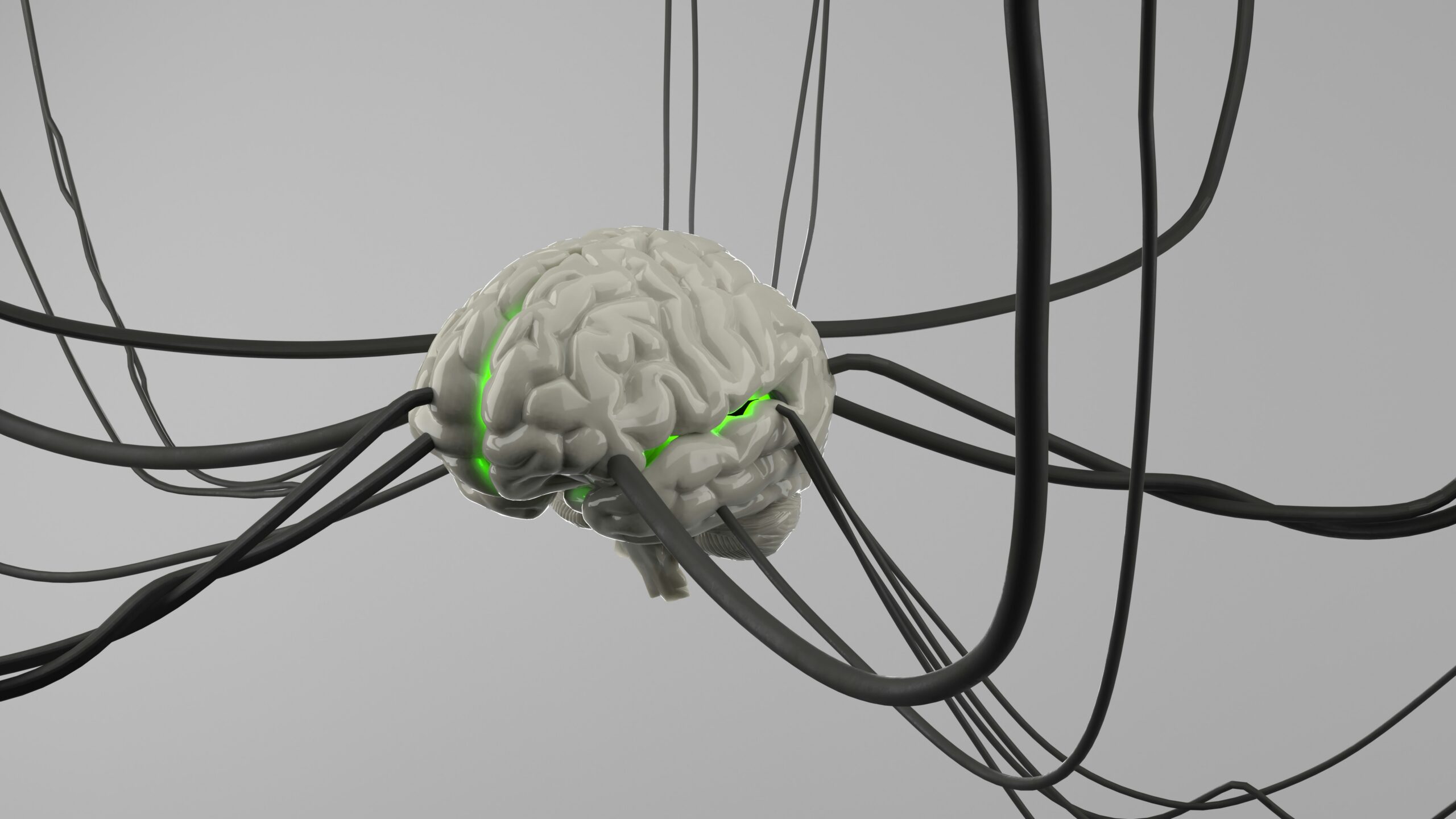
We’ve been stepping into the world of generative AI adoption for nearly three years now. Over this time, we’ve grown accustomed to communicating with AI—but what if the next major evolution isn’t about talking to AI, but about learning when *not* to let it do our thinking for us?
As AI becomes increasingly embedded in both our personal and professional lives, discussions with peers, industry leaders, and experts consistently highlight one critical skill: **prompting**. It’s now seen as a foundational ability for meaningful AI collaboration. We’ve moved beyond simply integrating generative AI into daily workflows; instead, we’re building dynamic, context-aware partnerships between humans and AI—partnerships that are precise, purposeful, and outcome-driven. These collaborations bridge high-level human intent with actionable, valuable AI outputs.
Here’s the twist: those who derive the most value from AI aren’t necessarily the most skilled prompters. The real differentiator? People who actively manage and monitor their own thinking *while* using AI.
This group doesn’t just work *with* AI—they reflect *on* how they’re working with it. And this skill may quietly emerge as the defining human edge in the age of intelligent systems. That skill is **metacognitive regulation**.
So, What Exactly Is Metacognition?
Metacognition means “thinking about your own thinking.”
It’s your internal system for recognizing your thought patterns—being aware of when you’re rushing, overconfident, emotionally invested in an idea, logically inconsistent, or accepting something simply because it sounds plausible.
With the rapid rise of human-AI interaction, I’ve delved deeply into psychology and cognitive science—and that’s where I discovered metacognition. It’s a powerful internal mechanism that flags mental blind spots. And in our AI-saturated world, it’s becoming more crucial than ever.
Consider this: when was the last time you had an original idea and followed through on it without checking online?
Today’s large language models excel at producing responses that *feel* complete—even when they’re shallow, slightly off-base, or subtly narrow your thinking—all without you realizing it. That’s precisely where metacognitive regulation becomes indispensable.
The most effective AI users continuously ask themselves:
- Do I truly understand this output?
- Do I agree with it—and why?
- Am I being intellectually lazy right now?
- Is AI enhancing my reasoning—or replacing my original thought?
This kind of self-awareness is shaping up to be the real differentiator in AI fluency—a topic few are discussing openly today.
AI Users vs. AI Thinkers: A Critical Distinction
Through my full-time work in AI adoption—and countless conversations at conferences and meetups—I’ve noticed a fascinating divide. Most people use AI passively, trading deep thinking for speed. But a smaller, more intentional group uses AI not to replace reasoning, but to **stress-test**, expand, organize, or challenge their own thinking (and yes, this is exactly how I strive to use AI every day).
Instead of asking, *“What’s the solution to problem X?”*, these strategic thinkers prompt AI with questions like:
- What key assumptions might I be overlooking?
- What evidence would disprove my argument?
- Can you identify flaws in my logic?
- Which perspectives am I ignoring?
- Why does this conclusion feel incomplete?
In the coming months, your mastery of AI won’t be measured by technical prowess—it’ll be a test of cognitive self-awareness.
AI isn’t just automating tasks—it’s reshaping how we think.
In a recent post, I highlighted that one of the most overlooked aspects of generative AI is its ability to transform not just workflows, but habits.
What Does a Metacognitive AI User Actually Look Like?
Metacognitive regulation isn’t about crafting better prompts. It’s about staying mentally engaged and intentional throughout your interaction with AI.
Top-tier AI users don’t chase speed or output at all costs. They remain present, know when to pause, question, refine, and think independently.
Let me illustrate with an example:
Typical user: “Summarize this report and give recommendations.”
Metacognitive user: “Summarize this report—but also tell me what assumptions you’re making, where the data could mislead me, and which conclusions aren’t fully supported.”
True AI fluency means resisting the temptation to offload every complex thought. Here’s how to practice it:
- Actively challenge AI outputs
AI can offer quick answers that shut down deeper inquiry. Don’t accept them at face value. Push back, look for contradictions, and remember: the fastest response isn’t always the correct one.
- Sit with uncertainty long enough to form your own ideas
Humans naturally avoid discomfort, ambiguity, and slow iteration. Yet AI gives you instant access to multiple viewpoints. Metacognitive users resist the urge to jump to answers. They sit with ideas long enough to develop their own perspective.
- Hold competing ideas in tension
AI can generate a 400-line code snippet or a polished dashboard in seconds—but thoughtful users evaluate, don’t rush to resolve. I thrive on nuance; it pushes me to explore gray areas and dig into complexity.
- Continuously question your assumptions
Don’t use AI to confirm what you already believe. Instead, use it proactively to uncover blind spots in your data, logic, and analysis.
In addition to critical reflection, analytical thinking, and storytelling, ask yourself these key questions: Why do I agree with this idea? What evidence would cause me to change my perspective? Is there an alternative viewpoint worth considering?
- Treat AI as a thinking partner—not a substitute for your own judgment
Top-performing users engage with AI as a sounding board, challenger of assumptions, or reflective lens—while keeping full ownership of their reasoning, insight, and final decisions.
As human analysts, we routinely tackle cognitively demanding tasks in our roles—activities that AI can accelerate dramatically. That dual nature—efficiency boost and hidden risk—defines the AI paradox. If we consistently offload our hardest thinking to machines, we risk eroding our own mental resilience. Embrace the productive struggle; don’t let decision fatigue push you toward easy answers!
Metacognitive Regulation: The Next Frontier in Leadership
In my view, this discussion becomes even more crucial when shaping tomorrow’s leaders and decision-makers. In AI-integrated workplaces, leaders will navigate unprecedented challenges: information overload, rapid-fire output, and constant cognitive strain. The real bottleneck isn’t access to data—it’s the ability to discern what truly matters.
This shift means leadership evolves from “Who holds the right answers?” to “Who can thoughtfully manage their thinking to cut through the noise and arrive at sound judgments?”
To address this, I’d like to introduce another powerful psychological framework gaining traction in corporate settings: neuroleadership.
Neuroleadership examines how individuals direct attention, manage emotions, support decision-making, and navigate cognition amid complexity.
AI-driven environments are highly cognitively intense—and without deliberate metacognitive control, AI can reinforce confirmation bias, enable surface thinking, trigger rash decisions, inflate false confidence, and accelerate mental exhaustion. However, when paired with robust metacognitive habits, AI transforms into a catalyst for deeper reflection and sharper strategic insight.
Final Reflections
The Real Edge in the AI Era May Be Human Self-Awareness
Many assume the future favors those who interact with AI the quickest—but I believe it will reward those who stay intentional while using it. Within the next 2–3 years, I expect prompt engineering skills to become commoditized, while genuine cognitive discipline remains rare and highly valuable.
And therein lies the great irony of the age of artificial intelligence: the more instantly available smart output becomes, the more precious self-awareness truly is.
That wraps up my thoughts for this post. Thanks for reading! I hope it sparked some reflection.
…………….
Rashi is a passionate data expert based in Chicago who specializes in uncovering insights from complex datasets and translating them into compelling stories. By day, she’s a senior healthcare analytics consultant, and on weekends, you’ll find her crafting data-driven blogs with a fresh cup of coffee in hand.
