



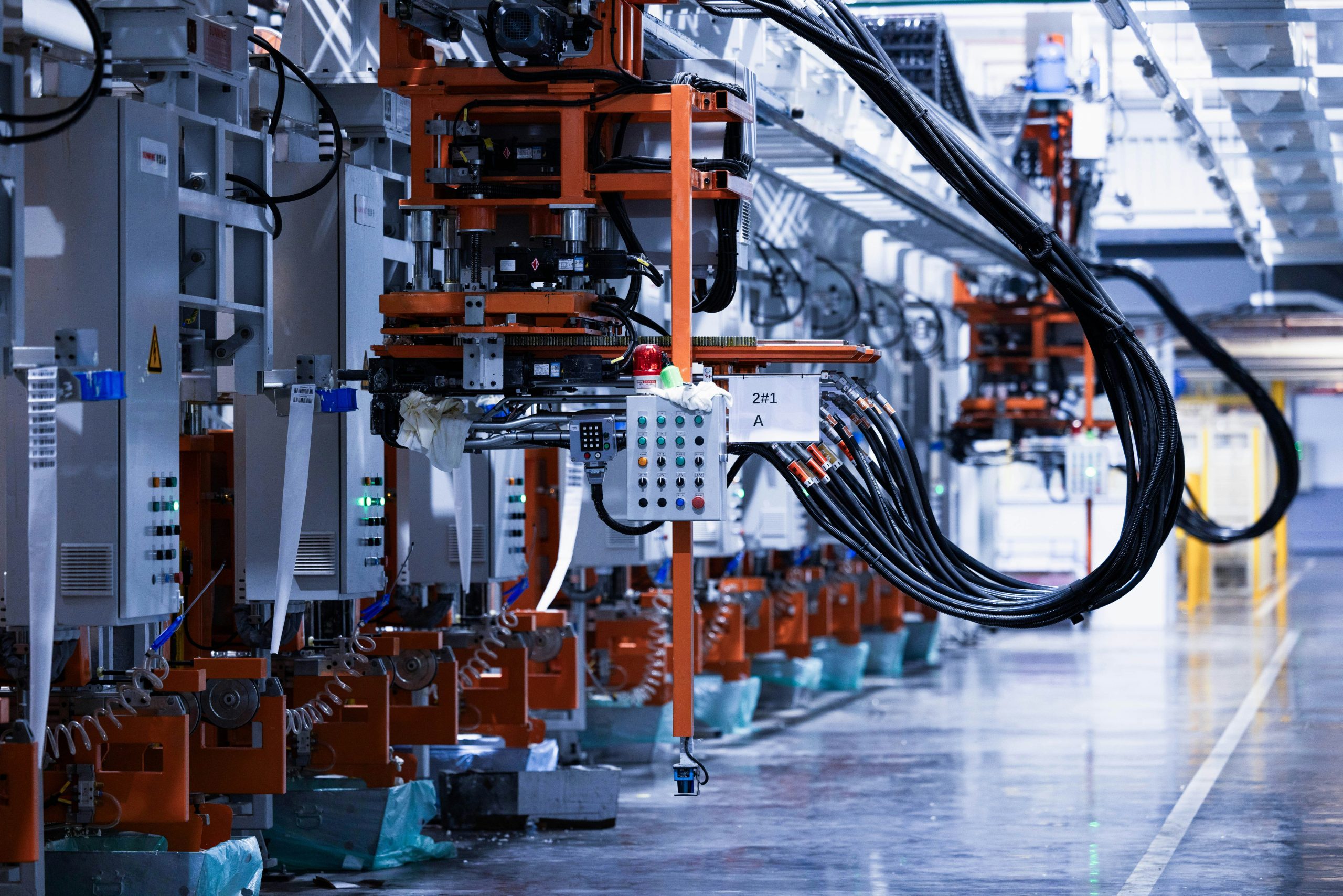
**Edge Computing in Manufacturing: Why Factory Computers Are Competing with AI Data Centres**
Edge computing has become the go-to solution for many challenges on the factory floor. Instead of transmitting camera footage and sensor data to a distant cloud server—and waiting for a response—plants deploy small computers directly beside machines. This setup delivers answers in milliseconds, keeps the line running even when the internet fails, and reduces bandwidth costs.
However, this year has brought a new dynamic. The cost and availability of these factory computers have shifted, and the cause lies outside manufacturing itself.
—
### Why a Factory Computer Competes with an AI Data Centre
Every computer requires memory, specifically DRAM (Dynamic Random Access Memory), where software operates during execution. Industrial control applications typically need DRAM, but not at the extreme levels demanded by AI.
AI models that inspect products on conveyor belts require substantial DRAM because the entire model must reside in memory to execute at full speed. This memory is produced by three dominant suppliers: Samsung, SK Hynix, and Micron. The same production lines that manufacture DRAM for industrial controllers also produce High Bandwidth Memory (HBM), a denser, faster variant used in AI accelerators—and HBM commands significantly higher prices.
When capacity is constrained, the more profitable product naturally takes priority.
Industrial control systems, networking equipment, and controllers fall into the consumer DRAM segment, which sits below PC and server memory in the market hierarchy. According to TrendForce, suppliers continue to prioritise higher-margin AI and server products, limiting wafer availability for the open market. As a result, consumer DRAM remains undersupplied, with contract prices rising, albeit at a decelerating rate.
Pricing trends reflect this pressure:
– **Second quarter of 2026:** DRAM contract prices rose 58–63% year-on-year, with NAND flash increasing 70–75%.
– **Third quarter of 2026:** Increases slowed to 13–18%, indicating a cooling trend but continued scarcity.
—
### The Older the Part, the Harder It Is to Get
One detail often surprises outsiders in procurement: industrial hardware frequently relies on DDR4 DRAM, an older generation largely displaced in consumer laptops by DDR5. Yet DDR4 persists in factories because it is stable, well-understood, and supported throughout a typical equipment lifecycle of ten years.
Suppliers now classify DDR4 and DDR5 under allocation controls with extended lead times. Legacy DDR3 supply is also becoming increasingly difficult to secure.
Migrating an existing design to newer memory is not a simple swap—it requires board redesign and requalification, adding engineering cost to a layer of the system intended to remain stable beneath AI-centered upgrades.
—
### Not Every Part of the Plant Feels This Equally
Not all factory components suffer equally from memory shortages:
– Simple deterministic controllers have modest memory needs and are less affected.
– Niche demand in automotive and networking equipment has remained relatively stable, especially for buyers with long-term supply agreements.
The pressure concentrates on a single tier: **vision boxes and AI accelerators** added to existing control systems. These are the newest capital investments, the most memory-hungry, and the least likely to have secured multi-year supply contracts.
—
### What This Changes About Specifying Edge Computing Deployments
Two shifts follow from these conditions, and neither undermines the value of edge computing itself:
1. **Memory becomes a design variable.** Quantised and smaller AI models reduce the DRAM required, turning a procurement constraint into an engineering decision. Plants that specified hardware around the original model footprint often over-provisioned—and trimming that demand now saves money.
2. **Supply terms move earlier in the conversation.** Leading buyers are locking in long-term agreements, and the same logic applies downward the chain. Contracts with defined validity periods and firm lead times belong in business cases, not just post-approval paperwork. Hardware that supports multiple qualified memory suppliers offer resilience when lead times stretch.
The technical case for inference at the edge remains strong. The buying process, however, has evolved from a hardware decision to a supply-chain decision—and plants that recognise this are the ones getting their nodes installed this year.
—
### FAQ
**Q: Why are factory computers becoming harder to obtain?**
A: Factory computers use DRAM and NAND flash, the same memory chips needed for AI data centres. Because AI applications generate higher profits, memory manufacturers are prioritising those markets, leaving industrial users with limited supply and rising prices.
**Q: Why don’t factories just use the same memory as laptops?**
A: Industrial equipment often requires DDR4 memory, which is stable, cost-effective, and supported over a ten-year lifecycle. Laptop technology has moved to DDR5, but industrial systems are designed for longevity and reliability rather than cutting-edge specs.
**Q: Is edge computing still worth it given these supply challenges?**
A: Yes. The technical benefits—low latency, offline operation, reduced bandwidth—remain valuable. The shift is not in the technology itself but in how buyers plan and negotiate hardware supply, with more emphasis on long-term agreements and flexible component choices.
**Q: What can manufacturers do to secure edge hardware?**
A: They can prioritise boards that use widely available memory, negotiate long-term supply contracts early, and consider quantised AI models that require less memory. Designing hardware with multi-supplier compatibility also provides flexibility.
—
### Conclusion
Edge computing continues to offer compelling advantages for factory automation, delivering fast, local decision-making and resilience against internet outages. Yet the economics of memory supply have introduced new complexities. The bottleneck is not the technology itself but the competition for critical components between industrial users and AI data centres.
Manufacturers that adapt—by treating memory as a core design consideration, engaging early with suppliers, and optimising models for constrained hardware—are the ones that will successfully deploy edge nodes this year. The future of factory computing remains local; the challenge now is navigating the supply chain realities that come with it.
