



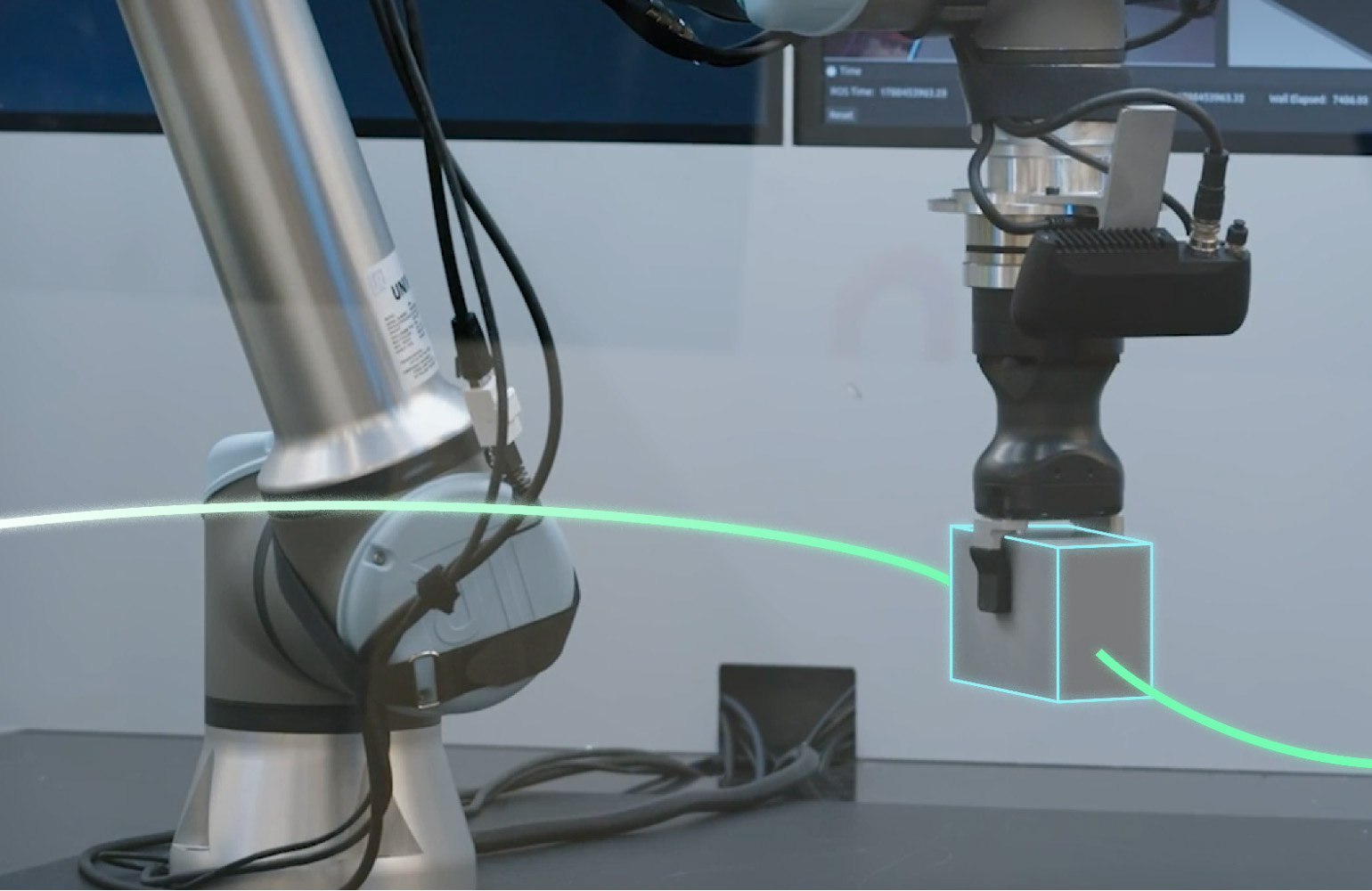
# Intrinsic Unveils Open-Source Robotics Platform to Accelerate Industrial Application Development
**A new open-source software stack aims to slash the time robotics teams spend building foundational capabilities from scratch, offering a modular toolkit designed for real-world manufacturing environments.**
—
## A New Open-Source Toolkit for Robot Developers
A technology company called Intrinsic Innovation LLC has introduced **Intrinsic Core**, an open-source software platform built on top of the Robot Operating System (ROS) ecosystem. The release is designed to give developers access to pre-built, foundational robotic capabilities that can be combined to create adaptive, AI-driven applications — without having to build everything from the ground up.
Intrinsic Core was officially announced at **ROSCon 2026**, held in Toronto, and is now available for download on GitHub under a **permissive Apache 2.0 license**.
## Why This Matters for Robotics Teams
Robotics development teams often spend hundreds of hours writing low-level code for capabilities that are common across most projects — things like controlling robot arms, planning movements, detecting objects, and calibrating sensors. Intrinsic says it has repackaged the capabilities it developed through real manufacturing deployments into a ready-to-use software environment that runs on local hardware.
These capabilities are designed to function as modular building blocks. Developers can mix and match them to construct more complex, adaptive robotic systems with less effort and faster turnaround times.
## What’s Inside Intrinsic Core
The platform bundles together several key capabilities that address common challenges in industrial robotics:
– **Intrinsic Control** — A hardware-agnostic, real-time control framework that allows robots to dynamically adjust their behavior mid-motion based on sensor feedback. It supports swapping out arms, grippers, and sensors without requiring driver rewrites.
– **Pose Estimation** — Powered by NVIDIA FoundationPose, this capability delivers six-degree-of-freedom (6 DoF) tracking and detection of 3D parts. It eliminates the need for rigid, costly physical fixtures by letting robots identify and handle parts in unstructured environments.
– **Motion Planning** — Automatically generates efficient, collision-free paths for robots, removing the need for manually programming joint-by-joint movements. It works across a variety of robot models.
– **Grasp Planning** — Enables grippers to dynamically adapt to the position and orientation of a part, improving the probability of successful pick-and-place operations using real-time sensor input.
– **Simulation Services** — Built on Gazebo, this feature provides a unified environment for testing, debugging, and validating robotic applications, including state machines and workcell behaviors, as they are being developed.
– **Camera Calibration** — Automates the process of aligning and calibrating a robot’s vision system, reducing setup time and configuration complexity.
– **ROS Drivers** — Pre-configured, ROS-compatible drivers for supported robots, grippers, and 3D cameras, with tight integration between sensor calibration and control systems for faster deployment.
## A Reference Application to Get Started
Alongside Intrinsic Core, the company also introduced the **Open Machine Tending Solution (OMTS)** — a ready-made reference design for a CNC machine tending use case. OMTS runs on Intrinsic Core and is built to be open and customizable, supporting assets from manufacturers like FANUC and Universal Robots.
The goal is to give developers a concrete example of how the platform can be applied in a real factory setting, providing both a starting point and a proof of concept that the toolkit is robust enough to support production-grade systems.
## Who Is It For?
Intrinsic Core is currently targeted at developers who are already familiar with ROS and are working on manipulation-focused applications involving robotic arms. It is designed for commercial, industrial deployments rather than research or hobbyist use.
Intrinsic’s leadership has emphasized that the platform is meant to start with a specific user base and grow from there. By focusing first on industrial manipulation, the company hopes to build credibility and trust before expanding into broader robotics domains.
## Frequently Asked Questions (FAQ)
**What is Intrinsic Core?**
Intrinsic Core is an open-source software platform that provides ROS-compatible robotic capabilities — including control, pose estimation, motion planning, grasp planning, simulation, camera calibration, and drivers — designed to accelerate the development of industrial robotic applications.
**Who developed Intrinsic Core?**
Intrinsic Innovation LLC, a technology company with roots in the original ROS project, developed Intrinsic Core. Brian Gerkey, co-founder and board chair of Open Robotics, serves as Intrinsic’s Chief Technology Officer.
**Is Intrinsic Core free to use?**
Yes. Intrinsic Core is released under the Apache 2.0 license, a permissive open-source license that allows users to freely use, modify, and distribute the software, including in commercial products.
**Where can I download Intrinsic Core?**
The software is available on GitHub under the Intrinsic organization, and it was publicly demonstrated at ROSCon 2026 in Toronto.
**What is the Open Machine Tending Solution?**
The Open Machine Tending Solution (OMTS) is a reference application built on Intrinsic Core that demonstrates how the platform can be used for CNC machine tending in a real-world manufacturing environment. It is customizable and supports multiple robot brands.
**Does Intrinsic Core support mobile robots or humanoids?**
No, Intrinsic Core is currently focused on robotic arm manipulation and does not support mobile robots or humanoids.
**What hardware is Intrinsic Core compatible with?**
Intrinsic Core is hardware-agnostic and offers pre-configured ROS drivers for supported robot arms, grippers, and 3D cameras. It allows users to swap components without rewriting software drivers.
**How does Intrinsic Core compare to ROS?**
Intrinsic Core is built on top of ROS and extends the ecosystem by providing pre-built, production-ready capabilities that fill gaps in the existing ROS toolset. Rather than replacing ROS, it complements it by offering higher-level, application-oriented building blocks.
**Can I use Intrinsic Core for research or academic projects?**
While Intrinsic Core is designed primarily for commercial deployments, its open-source nature means it can be used for any purpose, including research and education.
—
## Conclusion
The release of Intrinsic Core represents a significant step toward lowering the barriers to building industrial robotic systems. By packaging proven, production-tested capabilities into an open-source framework, Intrinsic aims to save development teams countless hours of groundwork and help bring reliable, adaptive robotic solutions to market faster. With the companion Open Machine Tending Solution, developers have both a toolkit and a tangible example to guide their projects. As the robotics industry continues to evolve, platforms like Intrinsic Core could play a vital role in shaping how the next generation of robotic applications is built.
Thank you for reading
