



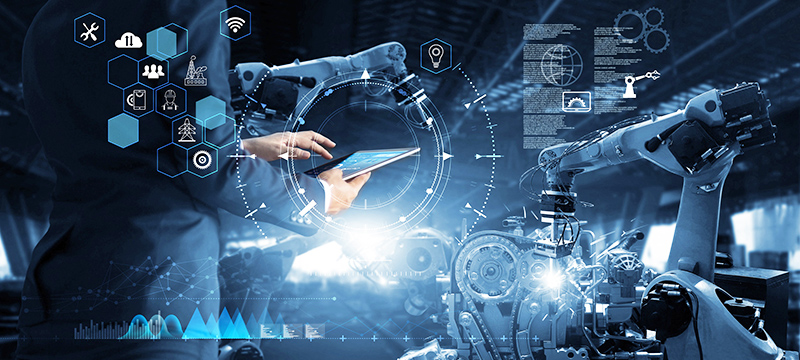
Industrial IoT has turn into a central part of recent industrial techniques, pushed by the necessity to enhance operational effectivity, resilience and visibility throughout more and more complicated environments. As industrial belongings generate rising volumes of information, organizations are wanting past primary connectivity to extract significant insights that may help real-time decision-making and long-term optimization.
At its core, Industrial IoT brings collectively sensors, connectivity and knowledge platforms to bridge the hole between operational know-how and enterprise IT techniques. This convergence is reshaping how industrial processes are monitored and managed, whereas elevating new questions round interoperability, cybersecurity and the sensible supply of enterprise worth at scale.
Key Takeaways
- Industrial IoT connects bodily industrial belongings to digital techniques for real-time monitoring and optimization.
- It depends on layered architectures combining edge computing, connectivity and cloud platforms.
- Use circumstances span predictive upkeep, asset monitoring, power administration and course of automation.
- Interoperability, safety and scalability stay key technical challenges.
- Its enterprise worth lies in operational effectivity, decreased downtime and data-driven decision-making.
What’s Industrial IoT (IIoT)?
Industrial IoT refers back to the utility of related sensors, units and software program techniques to watch, accumulate and analyze knowledge from industrial operations in actual time, enabling improved effectivity, reliability and decision-making.
In contrast to shopper IoT, Industrial IoT operates in environments the place reliability, security and latency are essential. It integrates operational know-how (OT) techniques—reminiscent of industrial management techniques—with info know-how (IT) platforms, bridging traditionally separate domains.
Industrial IoT performs a central position in Business 4.0 initiatives, the place data-driven automation and interconnected techniques redefine industrial manufacturing and infrastructure administration.
How Industrial IoT works
Industrial IoT techniques are usually constructed on a multi-layered structure that connects bodily belongings to digital platforms.
On the machine layer, sensors and actuators are embedded into equipment, tools or infrastructure. These units accumulate knowledge reminiscent of temperature, vibration, stress or location.
The connectivity layer allows communication between units and techniques. This will contain wired networks reminiscent of Ethernet or industrial fieldbuses, in addition to wi-fi applied sciences together with mobile IoT, Wi-Fi or LPWAN.
Edge computing performs a essential position in Industrial IoT by processing knowledge nearer to the place it’s generated. This reduces latency, allows real-time decision-making and limits bandwidth utilization.
Information is then transmitted to centralized platforms—both on-premises or within the cloud—the place it’s aggregated, analyzed and built-in into enterprise techniques reminiscent of ERP or MES.
Purposes and analytics layers present dashboards, alerts and automation capabilities, enabling operators to behave on insights derived from industrial knowledge.
Key applied sciences and requirements
Industrial IoT depends on a mix of {hardware}, connectivity applied sciences and software program frameworks.
- Connectivity applied sciences: Ethernet/IP, Modbus, PROFINET, LTE-M, NB-IoT, 5G and personal mobile networks.
- Communication protocols: MQTT, CoAP, OPC UA and DDS, designed for environment friendly and dependable knowledge alternate.
- Edge computing platforms: Industrial gateways and edge servers that course of knowledge regionally.
- Cloud and knowledge platforms: Programs for knowledge storage, analytics, digital twins and AI-driven insights.
- Safety frameworks: Gadget authentication, encryption and zero-trust architectures tailor-made to industrial environments.
Requirements reminiscent of OPC UA are notably essential in Industrial IoT for making certain interoperability between heterogeneous industrial techniques.
Important IoT use circumstances
Industrial IoT helps a variety of purposes throughout sectors, typically targeted on enhancing operational effectivity and asset utilization.
- Predictive upkeep: Monitoring tools situations to detect anomalies and forestall failures earlier than they happen.
- Asset monitoring: Actual-time monitoring of instruments, autos or stock throughout industrial websites and provide chains.
- Course of optimization: Utilizing sensor knowledge to enhance manufacturing effectivity and cut back waste.
- Power administration: Monitoring and optimizing power consumption in industrial amenities.
- Distant operations: Enabling centralized monitoring and management of distributed belongings reminiscent of pipelines or wind farms.
- Security and compliance: Monitoring environmental situations and employee security in hazardous environments.
In manufacturing, Industrial IoT is commonly built-in with robotics and automation techniques. In logistics, it helps fleet administration and provide chain visibility. In power and utilities, it allows grid monitoring and predictive asset upkeep.
Advantages and limitations
Industrial IoT delivers measurable advantages, however its deployment includes technical and organizational trade-offs.
Advantages embrace:
- Lowered downtime by way of predictive upkeep
- Improved operational effectivity and productiveness
- Enhanced visibility throughout industrial processes
- Higher useful resource utilization and price optimization
- Information-driven decision-making throughout organizations
Limitations and challenges embrace:
- Integration complexity with legacy techniques
- Interoperability points throughout distributors and protocols
- Cybersecurity dangers in related industrial environments
- Scalability constraints in massive deployments
- Excessive upfront funding and unclear ROI in early phases
Latency necessities additionally differ considerably relying on the use case. Whereas some purposes tolerate delays, others—reminiscent of real-time management techniques—require ultra-low latency and deterministic communication.
Market panorama and ecosystem
The Industrial IoT ecosystem includes a broad vary of stakeholders, every contributing to totally different layers of the know-how stack.
- Gadget producers: Suppliers of sensors, modules and industrial tools.
- Connectivity suppliers: Telecom operators and community infrastructure suppliers providing mobile and personal community options.
- Platform distributors: Firms delivering IoT platforms, cloud companies and knowledge analytics instruments.
- System integrators: Organizations chargeable for integrating Industrial IoT options into present industrial environments.
- Software program suppliers: Builders of purposes, digital twin options and industrial analytics instruments.
The market is characterised by fragmentation, with a number of competing requirements and architectures. Partnerships and ecosystems are subsequently essential for delivering end-to-end Industrial IoT options.
Future outlook
Industrial IoT continues to evolve alongside advances in connectivity, computing and synthetic intelligence.
5G and personal mobile networks are anticipated to play a rising position in enabling dependable, low-latency connectivity for industrial environments. On the identical time, edge AI is more and more used to course of knowledge regionally and allow real-time automation.
Digital twins have gotten extra prevalent, permitting organizations to simulate and optimize industrial techniques utilizing real-time knowledge. This development is intently linked to the growing adoption of cloud-to-edge architectures.
Standardization efforts are additionally progressing, aiming to enhance interoperability throughout units and platforms. Nonetheless, fragmentation stays a problem within the close to time period.
As Industrial IoT matures, the main target is shifting from connectivity to worth creation—particularly how knowledge could be remodeled into actionable insights that ship measurable enterprise outcomes.
Continuously Requested Questions
What’s the distinction between IoT and Industrial IoT?
Industrial IoT focuses on industrial purposes reminiscent of manufacturing, power and infrastructure, the place reliability, security and efficiency necessities are greater than in different IoT verticals.
What are the principle elements of an Industrial IoT system?
An Industrial IoT system usually consists of sensors, connectivity networks, edge computing units, knowledge platforms and analytics purposes.
Which connectivity applied sciences are utilized in Industrial IoT?
Industrial IoT makes use of a mixture of wired and wi-fi applied sciences, together with Ethernet, Wi-Fi, LPWAN, LTE-M, NB-IoT and 5G, relying on the use case.
What are the most important challenges in Industrial IoT deployments?
Key challenges embrace integrating legacy techniques, making certain interoperability, managing cybersecurity dangers and scaling deployments effectively.
How does Industrial IoT create enterprise worth?
Industrial IoT creates worth by enhancing operational effectivity, lowering downtime, optimizing useful resource utilization and enabling data-driven decision-making.
Associated IoT subjects
- Edge Computing
- Digital Twins
- 5G for IoT
- LPWAN Applied sciences
- IoT Cybersecurity
- Sensible Manufacturing
