



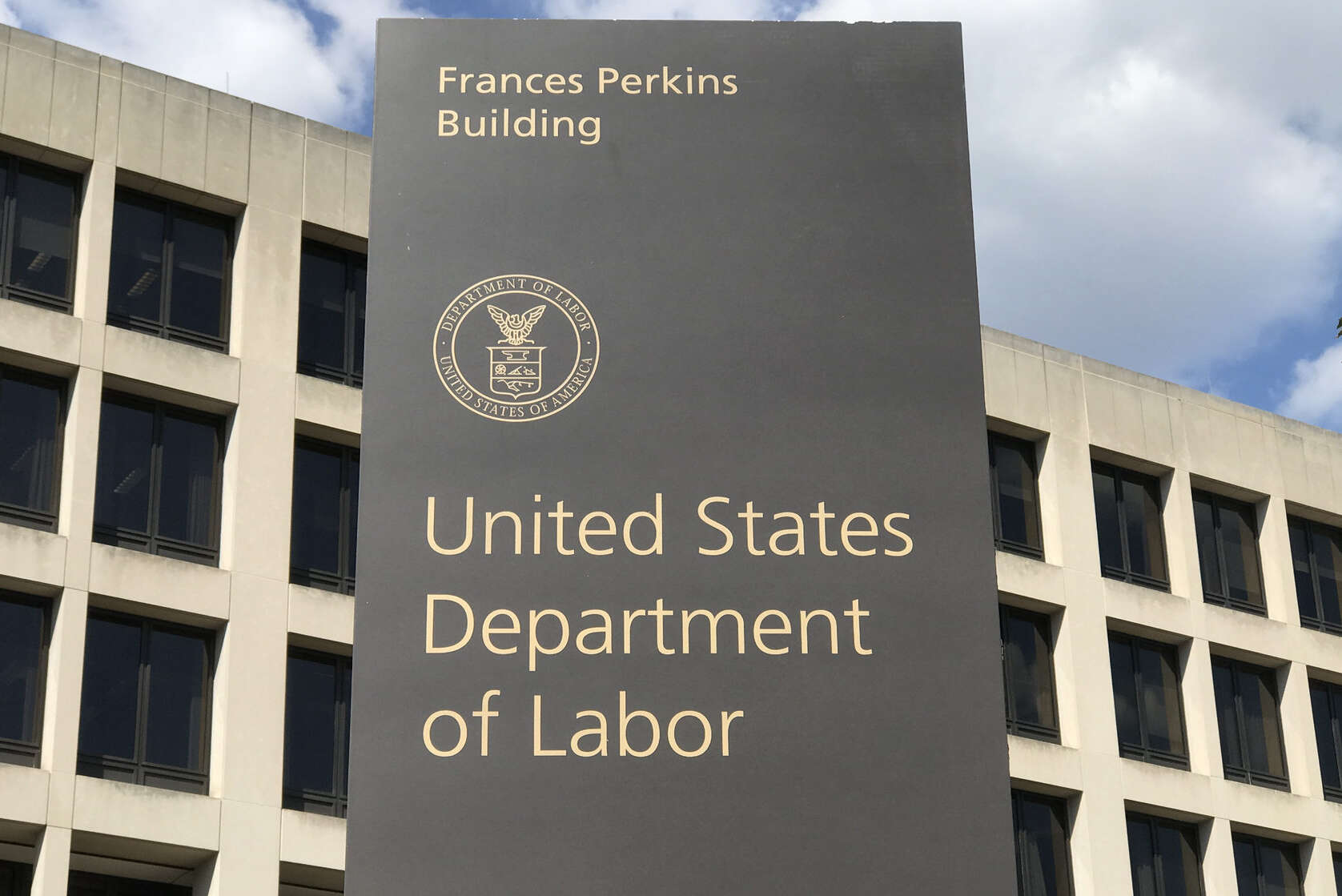
The Labor Department’s unemployment insurance program issued roughly $5.6 billion in incorrect payments during fiscal year 2025. With an error rate of 14.9%, it placed ninth among the 19 federal programs exceeding a 10% improper payment threshold.
A primary driver behind this elevated error rate is the outdated technology that state agencies rely on to administer unemployment benefits.
In response, the Labor Department’s Office of Inspector General is initiating a fresh review of how states are spending the Unemployment Insurance (UI) Information Technology (IT) modernization grants distributed through the department’s Employment and Training Administration (ETA). These funds are designed to upgrade and safeguard state UI systems.
The IG reports that Labor has allocated more than $204 million for this purpose since 2021 under the American Rescue Plan Act (ARPA).
“ETA has provided guidance and support to states, yet too many continue to cite ‘outdated IT infrastructure’ as justification for inaction — even after receiving over $204 million in Unemployment Insurance IT modernization funding. That gap requires accountability,” Inspector General Anthony D’Esposito stated in a press release. “Taxpayers allocated these funds to repair broken systems — not to preserve the status quo. My audit team will trace the money, assess how states utilized these resources, and determine whether genuine modernization occurred or whether business as usual simply continued.”
D’Esposito explained the audit will examine whether states applied the UI IT modernization funds to enhance their systems and whether those investments have led to measurable gains in system reliability, data integrity, and fraud prevention capabilities.
The IG expects to release a final audit report during the third quarter of fiscal year 2027.
This review of Labor’s UI IT modernization fund aligns with the Trump administration’s wider push to prevent and recover improper payments, many of which stem from fraud.
A new Government Accountability Office report indicates that oversight of programs — spanning Labor’s UI IT fund, Medicare Fee-for-Service, Medicaid, and the Agriculture Department’s Supplemental Nutrition Assistance Program (SNAP) — is actually improving.
GAO reports that improper payments across 15 agencies and 64 programs rose by $24 billion, reaching $186 billion in 2025. Of that $186 billion, GAO estimates roughly 82%, or $153.1 billion, resulted from overpayments by agencies.
Linda Miller, a former deputy executive director of the Pandemic Response Accountability Committee (PRAC), noted that overpayments can stem from non-fraud issues such as administrative errors. However, Miller — now president and co-founder of the Program Integrity Alliance (PIA), an independent 501(c)(3) nonprofit, nonpartisan organization dedicated solely to strengthening government integrity — said she believes the vast majority of overpayments are likely attributable to fraud.
“The headline says improper payments increased by $24 billion, but the reality is most of that growth comes from measuring more programs, not from losing more money,” Miller said in an email to Federal News Network. “The increase is largely due to an expansion of the denominator — new programs were included for the first time. That’s positive. We now have greater visibility into where program integrity challenges exist.”
At the same time, the total does not capture every at-risk program, GAO noted. For instance, the audit agency’s figure does not include improper payment estimates for the Department of Health and Human Services’ Temporary Assistance for Needy Families (TANF) program. GAO says HHS spent approximately $16.5 billion through TANF last year, but the agency does not calculate or report improper payment amounts for this program due to statutory restrictions.
GAO also found that agencies disbursed about $10 billion in underpayments and another $14.3 billion in “unknown payments.” Auditors say only about $8.4 billion qualify as “technically improper payments.”

Three agencies reported that their programs reduced the amount of money going out improperly.
GAO says HHS’s Medicare Fee-for-Service program cut improper payments by $2.9 billion, bringing the total to $28.8 billion. HHS attributed the reduction to stronger internal controls.
The Small Business Administration’s Paycheck Protection Program Loan Guarantee Purchases saw a decline of $1.5 billion, dropping to $200 million, and the Federal Emergency Management Agency’s Public Assistance Validate As You Go program reduced improper payments by $1.3 billion, falling to $300 million.
The GAO did not receive a formal justification from either the SBA or FEMA for the cuts they made.
Meanwhile, eight federal programs experienced a year-over-year rise in the volume of incorrect disbursements being issued.
A notable standout in the report is the SBA’s Shuttered Venue Operators Grant program. Since it is reporting inaccurate payments for the very first time, it added $10.1 billion to the total amount.
Other initiatives contributed significantly to the overall increase as well. Medicaid, for instance, saw its incorrect payment figure jump by $6.3 billion to reach $37.4 billion, while the Treasury Department's Earned Income Tax Credit paid out an additional $5.2 billion compared to last year, bringing its 2025 total to $21.1 billion.
Miller pointed out that the core challenge for federal agencies isn't merely halting incorrect disbursements, but rather figuring out the root causes behind why these errors occur.
“In my view, the entire framework is extraordinarily complex and tends to favor a focus on simply meeting compliance standards rather than truly tackling fraud prevention. Because policies and methods for estimating these payments change so often, it's hard—if not impossible—to draw meaningful comparisons between different years. I honestly believe the whole system for estimating and reporting incorrect payments is overly complicated and open to being spun or obscured,” Miller said. “Personally, I’m all for exposing more fraud and recovering overpayments, so in a way, I see some positives in this report. However, it really only tells us a little about how equipped agencies are to handle fraud or how effectively they are performing at spotting—let alone stopping—fraudulent activity and erroneous payments.”
The GAO did not issue any fresh recommendations. However, it highlighted an important legislative milestone: the Ending Improper Funds to Deceased Individuals Act was signed into law by President Donald Trump in February after Congress approved it. This new law makes a pilot project permanent, requiring the Social Security Administration to provide its Death Master File to the Treasury’s Do Not Pay system, a key move for preventing future erroneous disbursements to deceased individuals.
Donald Blersch, a veteran of 35 years of government service mostly within the intelligence community, noted that many agencies still rely on a “pay-and-chase” approach, which he considers outdated and “indefensible,” especially with bad actors now leveraging artificial intelligence to carry out fraud schemes.
“The answer isn't to slow down the payment process. The key is making better-judged decisions before any money leaves the system. Agencies dealing with Medicaid, for example, are facing sophisticated rings of criminals using fake medical setups and bogus claims to take advantage of a massive, high-transaction environment. By using modern verification and risk assessment tools, these criminals can be stopped right at the start without slowing down approvals for people who actually qualify. This is the only way to safeguard public trust and ensure the mission is completed successfully,” stated Blersch, currently a senior advisor for defense and security at Clearspeed, in an email to Federal News Network. “When the payment systems get overloaded, the error rates naturally climb. The real opportunity lies in boosting reliability before funds are disbursed—using technology to help agencies confirm eligibility quicker, cut down on red tape, and speed up process for trustworthy applicants. Things are going to get even harder with the new redetermination [requirements in the One Big Beautiful Bill Act] kicking in come 2027.”
The Office of Management and Budget (OMB) declined to provide a statement on the GAO's findings. However, the Trump administration has placed fighting fraud at the very center of its governing priorities. As an example, the OMB instructed all agencies in August to utilize the Do Not Pay portal and expanded the database with additional data sources. Additionally, the White House launched an anti-fraud task force in March, which is headed by the leadership of the Justice Department and Vice President JD Vance. On top of that, various agencies—including the CMS, SBA, Treasury, and DoD—are all actively working to wipe out fraud across numerous programs, ranging from Medicare to the 8(a) small business contracting initiatives.
©
2026 Federal News Network. All rights reserved. This website is not intended for users located within the European Economic Area.
