



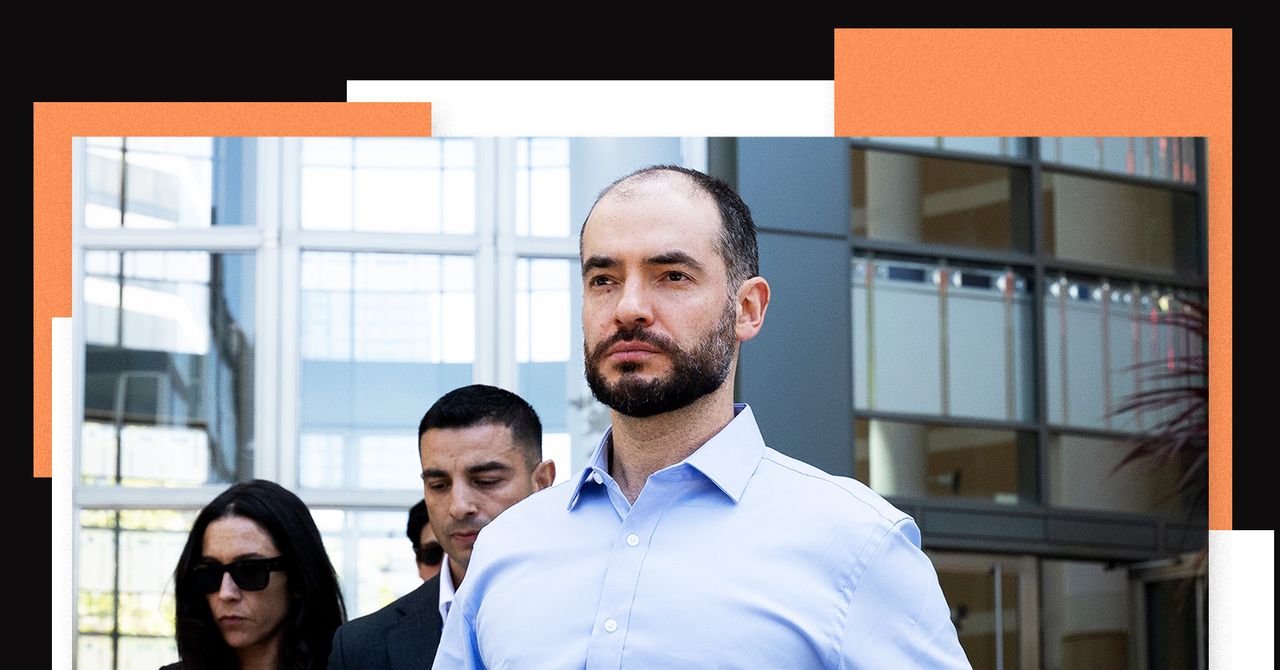
The legal battle waged by Elon Musk against OpenAI and Microsoft moved into its closing phase on Monday, with key appearances from Microsoft’s chief executive Satya Nadella, ex–OpenAI chief scientist Ilya Sutskever, and current OpenAI board chair Bret Taylor.
Sutskever emerged as the center of attention after disclosing his ownership share in OpenAI’s for-profit division, now valued at roughly $850 billion overall, with his personal stake estimated at about $7 billion. This positions him among the biggest individual investors ever identified in OpenAI. Earlier during proceedings, OpenAI president Greg Brockman publicly confirmed for the first time that he holds OpenAI shares worth approximately $30 billion.
Brockman was among the founding members of the research lab, and Sutskever came on board not long after, declining a $6 million yearly pay package from Google. Brockman described the two as being inseparable until Sutskever played a central role in the brief ouster of Sam Altman as OpenAI’s chief executive in 2023. Sutskever had gathered documentation pointing to what he alleged was a pattern of dishonesty by Altman and even helped draft a board memo outlining the concerns. Despite attempts to mend the relationship, Sutskever has remained distanced from both Brockman and Altman since then, an OpenAI attorney noted on Monday.
Sutskever, who took the stand in a button-down shirt and trousers — the first male witness to do so without a blazer — appeared saddened by his estrangement from OpenAI. (He departed and launched a rival AI firm in 2024.) “I had a strong sense of ownership over OpenAI,” he remarked at one point Monday. “I poured my life into it, and I genuinely cared about it — I didn’t want to see it fall apart.”
Sutskever’s account lent support to Musk’s argument that Altman is unfit to lead an AI laboratory with the potential to develop artificial general intelligence. He also spoke about the superalignment team he helped establish, which was focused on making sure future AI models remain safe, crediting it as doing OpenAI’s “most consequential work for the years ahead.” That team was dissolved in May 2024, not long after Sutskever’s departure.
At the same time, Sutskever’s remarks also strengthened OpenAI’s argument that Musk never secured any binding agreements regarding his contributions to the nonprofit. Musk has alleged that such commitments were made and that Altman and Brockman broke them by pursuing a highly profitable commercial subsidiary — the crux of his lawsuit. Sutskever explained that OpenAI required enormous capital to build computational systems rivaling the human brain, and while fundraising efforts had some traction, shifting to a for-profit model was seen as the clear path forward by everyone involved.
“Think of it as the gap between an ant and a cat,” Sutskever told US district judge Yvonne Gonzalez Rogers when asked how greater computing power helped OpenAI advance. “Without funding, there’s no large-scale computing infrastructure.”
Ultimately, Sutskever — a notable AI researcher who also pursues painting in his free time — spent roughly an hour on the witness stand and rarely made eye contact with anyone present.
Musk’s legal team had tried to designate Sutskever as an adverse witness given his significant financial interest in OpenAI, but the effort was unsuccessful. However, Judge Gonzalez Rogers granted lawyers on both sides additional flexibility in their questioning of Sutskever, citing what she called his “distinctive circumstances” in the matter.
The Upheaval
A large portion of Monday’s proceedings revisited the widely reported events surrounding Altman’s dismissal and subsequent reinstatement as CEO in November 2023. Nadella characterized the move by Sutskever and fellow board members to fire Altman as unprofessional and reiterated that he “never received a satisfactory explanation” for the alleged lack of transparency that drove their decision. Nadella also testified that he and his Microsoft colleagues discussed 14 candidates who might join OpenAI’s board if Altman were brought back — at least two of whom the Microsoft group rejected and one who ultimately joined. Microsoft characterized its role as offering recommendations.
Sutskever said he backed firing Altman because a workplace “where leaders operate without accurate information” is “unsuited to achieving any significant objective.” Yet he faulted his fellow board members for moving too hastily, lacking sufficient experience, and relying on “poor legal guidance.”
Microsoft’s Investment
In his suit, Musk claims that Microsoft helped turn OpenAI into a profit-driven enterprise far beyond what he originally envisioned. Nadella testified that Microsoft initially backed OpenAI with reduced-cost cloud computing services but could no longer sustain that arrangement “once the costs began escalating.” A for-profit entity that Microsoft could invest in, with the possibility of financial returns, became a more acceptable arrangement.
But as time went on and expenses continued climbing, Microsoft sought greater benefits from the alliance. “We will lose 4 billion next year!!!” Nadella wrote in a 2022 email to his senior team regarding the OpenAI partnership. He pushed for a new deal that would also give Microsoft access to AI expertise from the startup, which he consistently wrote as “Open AI” in his messages.
