



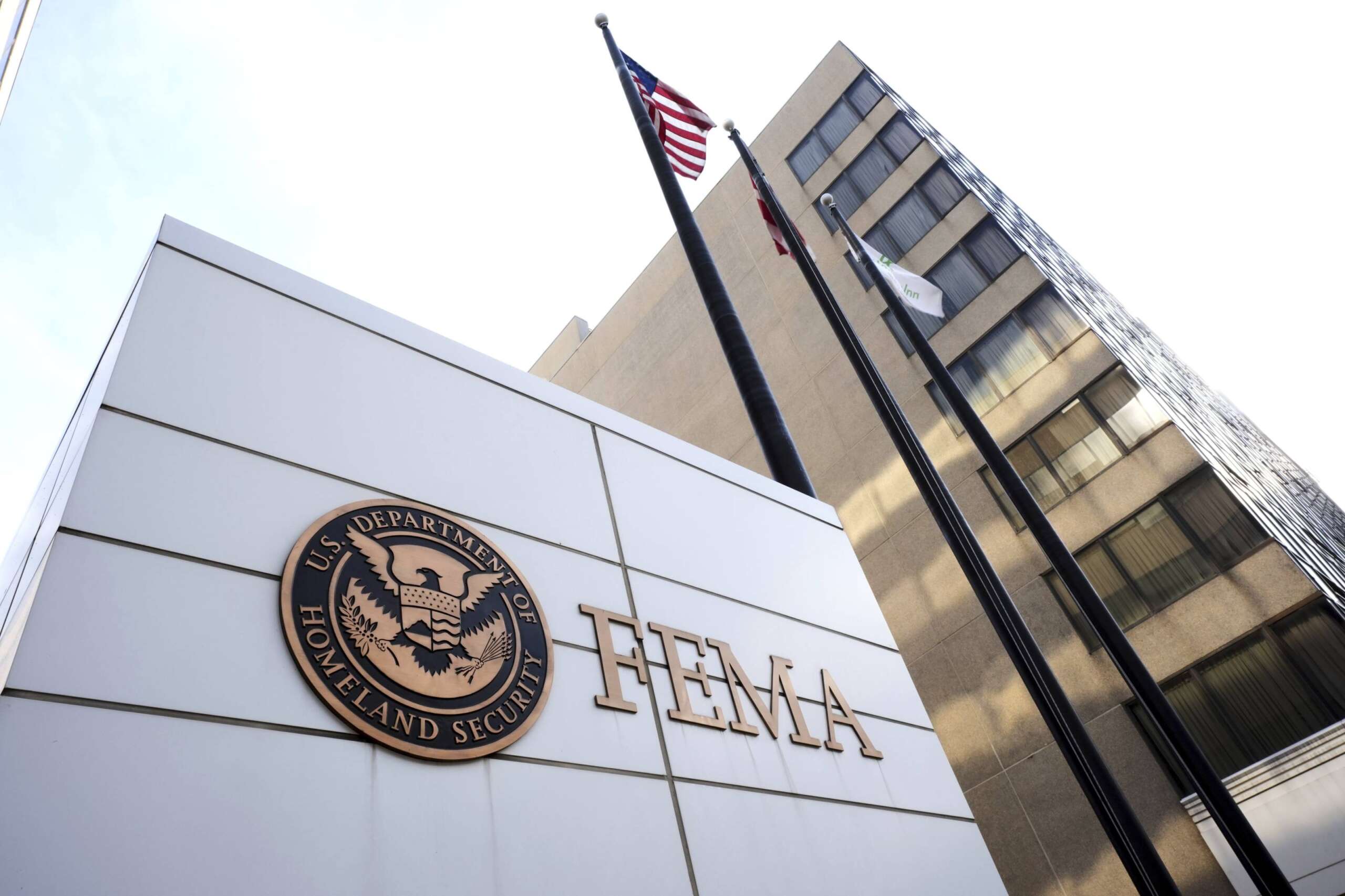
On Monday, President Donald Trump put forward Cameron Hamilton as his pick to head the Federal Emergency Management Agency. This marks a significant return for the ex-Navy SEAL, who was dismissed from his position as FEMA’s acting chief last year after publicly supporting the agency’s continued existence.
Hamilton’s selection follows a shift in the Trump administration’s stance, moving away from earlier pledges to eliminate FEMA—an agency that has faced intense criticism from the president. Hamilton’s nomination, given his previous argument that ending FEMA would not serve the nation’s interests, is the most recent sign of this evolving position.
Should he be confirmed, Hamilton would serve as the primary advisor to Trump and Homeland Security Secretary Markwayne Mullin on emergency management matters. He would also become FEMA’s first permanent administrator during Trump’s second term. The agency has seen three acting leaders so far, including Hamilton’s short stint from January to May 2025.
He would inherit an agency struggling under the turbulent leadership of Kristi Noem at the Department of Homeland Security, which oversees FEMA. The agency’s staff has been significantly impacted by large-scale departures, restrictive policies, and a 75-day DHS shutdown that concluded on April 30.
Hamilton must ensure the agency is ready for the upcoming summer disaster season, which is just weeks away. At the same time, he will need to respond to Trump, who is likely to demand substantial reforms following a council he appointed that recommended major changes last Friday.
“This is the moment to bring stability to FEMA,” said Michael Coen, who served as the agency’s chief of staff under both the Obama and Biden administrations.
Dismissed for Supporting FEMA
Hamilton, who lacked experience as a state or local emergency management director and had previously criticized FEMA publicly, was a contentious selection when Trump appointed him as acting leader in January 2025. This was just days before the president suggested “getting rid” of the agency.
His conflict with DHS officials started when he advocated for a federal role in aiding disaster-affected states, tribes, and territories.
“When the discussion turned to, ‘Now we’re going to abolish it,’ I immediately raised concerns,” he stated last September on the “Disaster Tough” podcast with John Scardena, a former FEMA incident management team leader.
DHS officials even required him to take a polygraph test, accusing him and other officials of leaking details from a private meeting. He passed the test, but acknowledged that his termination was unavoidable.
During a May 7 hearing before a House Appropriations subcommittee, Representative Rosa DeLauro, a Democrat from Connecticut, asked Hamilton if he believed FEMA should be abolished.
“I do not believe it is in the best interest of the American people to eliminate the Federal Emergency Management Agency,” he responded. The following day, he was dismissed.
Hamilton Must Rebuild Confidence
Standing up for FEMA despite knowing it would likely cost him his job earned Hamilton respect and trust among those responsible for guiding communities through crises, according to Scardena, now president of the consultancy Doberman Emergency Management Group, which provides training for emergency managers.
“He won me over, and I believe many others, by his actions,” Scardena remarked.
However, several current FEMA employees, who spoke to The Associated Press on condition of anonymity fearing retaliation, expressed concerns about certain decisions made during Hamilton’s tenure.
In 2024, Hamilton posted content on X spreading misinformation about FEMA’s spending during Hurricane Helene.
While he was acting leader, FEMA stopped door-to-door outreach to assist disaster survivors and terminated a multi-billion dollar resilience grant program, which was later reinstated by a federal judge. The Department of Government Efficiency was granted access to internal FEMA systems containing survivors’ personal data. FEMA employees were also terminated for processing a reimbursement payment to New York City for housing undocumented immigrants under FEMA’s Shelter and Services program.
Hamilton has stated that he believes FEMA requires significant reform. He has expressed a desire for the agency to operate more swiftly, argued that it handles duties he considers outside its core mission, and noted that some states have grown overly reliant on the agency. A council appointed by Trump last week recommended extensive changes to FEMA, which would need approval from Congress.
“I think he will need to rebuild trust throughout the agency,” said Deanne Criswell, who served as FEMA administrator under former President Joe Biden. She added that she believes Hamilton is committed to FEMA and valued his efforts to engage with emergency management directors and former officials during and after his time in the role.
Senate Confirmation May Highlight Experience Concerns
Hamilton could encounter resistance during the Senate confirmation process due to his lack of experience leading an emergency management agency, a typical prerequisite for becoming administrator of an organization with over 21,000 employees.
Federal law mandates that the FEMA administrator possess “a demonstrated ability in and knowledge of emergency management and homeland security” along with at least five years of “executive leadership and management experience.”
Hamilton trained as a Navy hospital corpsman before serving for ten years as a Navy SEAL with SEAL Team Eight. He subsequently worked as a U.S. State Department emergency management specialist handling international crisis response and later directed emergency medical services at DHS.
Copyright
© 2026 The Associated Press. All rights reserved. This website is not intended for users located within the European Economic Area.
