



As part of a broad restructuring initiative, the Agriculture Department is giving certain federal workers until the end of June to choose whether to relocate or step down from their positions.
Staff at the Food Safety and Inspection Service who were identified for reassignment were notified earlier this week about an “updated management-directed reassignment acknowledgement.” The internal communication, reviewed by Federal News Network, gives affected FSIS personnel until June 30 to decide on relocation, with the move taking effect by late September.
Workers unwilling to relocate must take a separation package by month’s end. Those who turn down the reassignment will face “involuntary separation” starting Sept. 30 but might qualify for severance benefits.
FSIS staff who neither resign nor report to their new assigned location by Sept. 30 will be terminated “for failure to accept a reassignment,” according to the notice. These employees will also lose the right to challenge their reassignments before the Merit Systems Protection Board.
It remains uncertain whether the June 30 cutoff applies to other USDA divisions facing relocation. USDA did not promptly reply to Federal News Network’s inquiry for clarification.
USDA has been rolling out a comprehensive reorganization strategy that calls for shifting over half of its Washington, D.C.-area staff to regional hubs nationwide before summer’s end. The relocation initiative impacts personnel at FSIS, the Forest Service, Economic Research Service, National Institute of Food and Agriculture, and Food and Nutrition Service. Roughly 90% of USDA workers already operate outside the D.C. region.
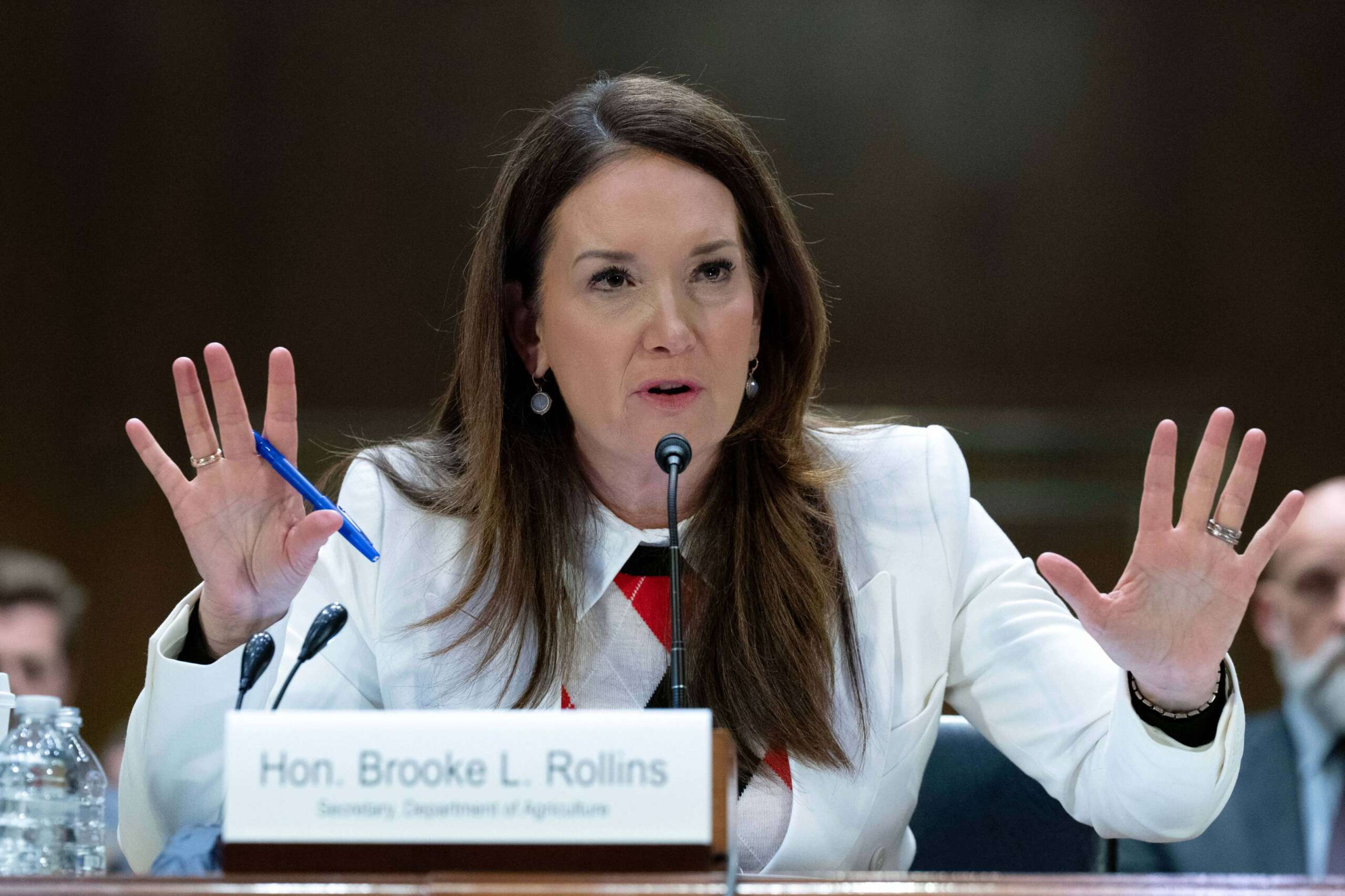
“Our objective is to make this even more impactful because we’ll be working alongside the very communities we serve, rather than remaining here in Washington,” Agriculture Secretary Brooke Rollins explained to legislators during a House Agriculture Committee session on Thursday.
The secretary described the nationwide relocations as a “significant boost” for USDA research capabilities.
“We have remarkable researchers, but the majority prefer not to be in Washington, D.C.,” Rollins noted. “The problem arises when research has been concentrated in D.C. for decades — the work is outstanding, but you miss out on attracting top talent who may be unwilling to relocate to Washington, where living costs are considerably higher.”
However, union surveys tell a contrasting story. A May poll by the National Treasury Employees Union revealed that 80% of D.C.-area FNS staff would leave their positions rather than move this summer.
Comparable results emerged from a May survey by American Federation of Government Employees Local 3403, which represents ERS and NIFA workers. Approximately 76% of union respondents indicated they have no plans to relocate.
“This rushed timeline simply won’t work. It provides no realistic window for employees to relocate and ignores project deadlines, construction schedules, and lease agreements,” a federal union representative, who requested anonymity due to concerns about retaliation, told Federal News Network. “Expecting people to completely uproot their lives and move somewhere they may have never visited within a matter of months is unreasonable.”
The Forest Service plans to shift its headquarters to Salt Lake City, Utah, close all nine regional offices, and retain only 20 of its 77 research sites. The agency is providing separation incentives to employees in advance of the restructuring.
Most FNS personnel will also need to relocate elsewhere in the country, as the agency closes its D.C. headquarters and multiple regional offices. FSIS will move roughly two-thirds of its D.C.-area staff to “mission-critical locations” such as Iowa and Georgia. Numerous D.C.-based ERS and NIFA employees will be heading to Kansas City, Missouri.
Over 15,000 USDA workers departed last year through the deferred resignation program (DRP) and early retirement options.
‘Lump-sum’ reimbursement approach
With relocation efforts progressing, a May 29 USDA memo empowered agency leaders to adopt an alternative method for covering moving expenses — a “lump sum” payment system instead of the conventional approach of calculating costs for each individual employee.
Standard federal reimbursement guidelines include expenses like transporting household belongings, relocating employees and their families, tax adjustments, and other optional items such as temporary storage. USDA’s “lump sum” approach would offer a fixed moving allowance to relocating staff, determined by the department’s cost estimates.
USDA stated in the memo that the “lump sum” system would speed up reimbursement processing, enhance cost forecasting, and lessen administrative workload.
“The conventional method demands substantial paperwork and extended reimbursement periods,” the memo explained. “This lump-sum payment addresses relocation costs and substitutes the existing system of reimbursing documented expenses up to legal limits.”
However, AFGE Local 3403 representatives warned that the new approach could result in reduced reimbursements for many relocating workers. Applying a uniform cost formula across all of USDA might leave some employees covering thousands of dollars in moving expenses themselves, the union cautioned.
“A GS-15 relocating from D.C. faces very different circumstances than a GS-7 moving from Iowa,” a union representative told Federal News Network. “These situations vary significantly and deserve individualized attention.”
Based on AFGE’s calculations, the lump sum approach could place approximately $9,000 to $14,000 in moving costs on employees relocating from D.C. to Kansas City, varying by household size and lease conditions.
AFGE also criticized USDA’s moving cost estimates as “outdated” and highlighted that the lump sum system seems to omit temporary housing support during transitions — a benefit available under the traditional reimbursement framework that some workers may require given the compressed relocation schedule.
During Wednesday’s hearing, Republican committee members voiced backing for the restructuring and downsizing plans, arguing it would place agricultural researchers nearer to the communities they assist. But Democratic members, including Rep. April McClain Delaney (D-Md.), expressed worries about losing years of research, institutional expertise, and seasoned personnel.
“Can we maintain current facilities here with veteran staff while also exploring the establishment of additional labs nationwide?” McClain Delaney asked. “Ultimately, it comes down to preserving our research outcomes and benefits for farmers — while also safeguarding those who have dedicated decades to USDA.”
Rollins, however, maintained that the reorganization would strengthen USDA recruitment and generate greater interest from the wider research sector in joining the department.
“I’m not claiming everything has been flawless or that everyone is eager to relocate,” Rollins acknowledged. “But ultimately, the chance to position these essential functions across America — and align research efforts with leading universities where we invest billions — represents a far more effective use of taxpayer funds.”
Federal News Network’s Jory Heckman contributed to this report.
To reach this reporter regarding recent federal government developments, please email drew.friedman@federalnewsnetwork.com or contact via Signal at drewfriedman.11
Copyright
© 2026 Federal News Network. All rights reserved. This website is not intended for users located within the European Economic Area.
