



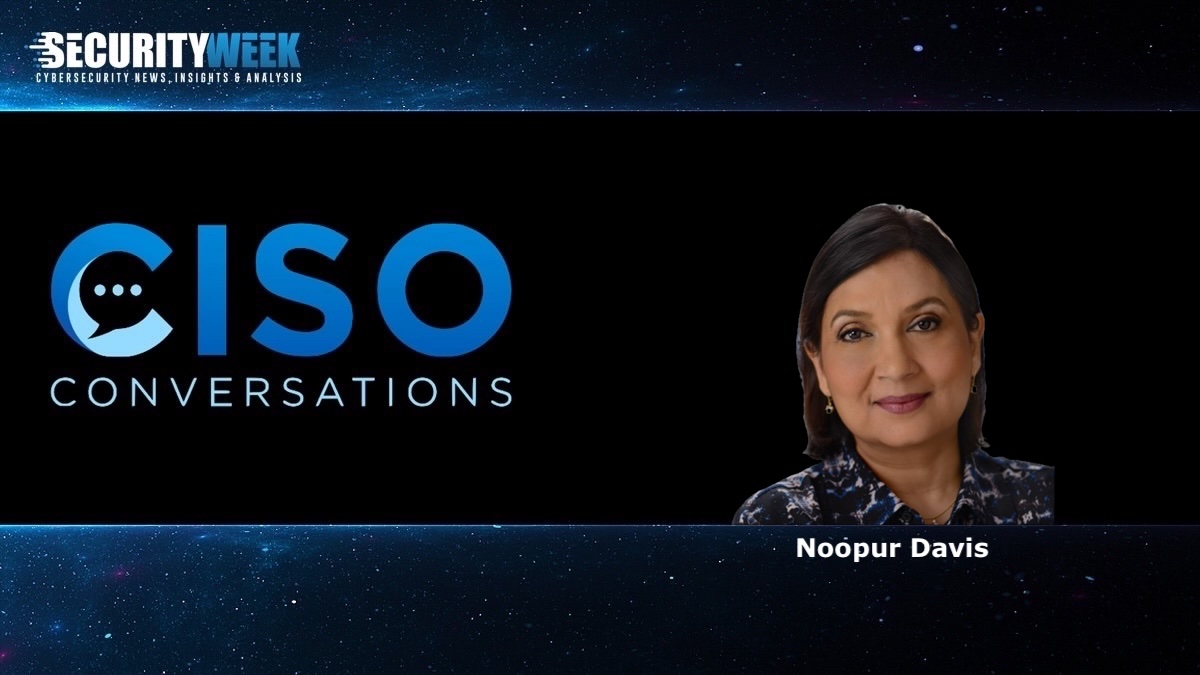
# From Developer to Global CISO: The Unconventional Rise of Noopur Davis
## An Unexpected Path to the Top of Cybersecurity
In the world of enterprise security leadership, most chief information security officers follow a carefully plotted trajectory — degrees in computer science, early roles in IT governance, gradual ascension through security operations. Noopur Davis is not most CISOs. Her journey to the top of Comcast’s global security organization began not with a plan, but with a willingness to say yes to whatever came next.
Today, Davis oversees one of the largest security operations on the planet. With approximately 180,000 employees across four continents, Comcast’s global presence demands a security leader of extraordinary scale and scope. Davis commands a security team of roughly 1,500 professionals distributed worldwide, responsible for protecting a sprawling technology and media ecosystem. But what makes her story truly remarkable is not the size of the organization she leads — it is the unorthodox route she took to get there.
## The Developer Who Became a Leader
Davis started her professional life as a software developer at Intergraph, a company known for its work in graphics and geospatial computing. She fell in love with the craft. The hours dissolved when she was writing code, and she poured herself into mastering the discipline with the kind of obsessive focus that later became associated with the often-cited “10,000-hour rule” of expertise.
Her technical talent did not go unnoticed. Before long, she was promoted into engineering leadership — directing teams across multiple sites, managing people as much as she managed code. By the late 1990s, she had reached the rank of director of engineering, and her interests began to shift. She became fascinated not just with building software, but with understanding how the people who built it actually worked.
That curiosity led her to Carnegie Mellon University’s Software Engineering Institute, where she joined as a senior member of software engineering process management. At CMU, she was immersed in the emerging agile movement, studying how teams self-organize, how decisions get made under uncertainty, and how to motivate knowledge workers toward shared goals. Her work involved collaborating with industry giants including Microsoft, Citi, Lockheed Martin, Hewlett Packard, and the Naval Oceanographic Office — testing organizational methods in real-world environments.
## The Happenstance That Changed Everything
Cybersecurity as a recognized profession was still in its infancy during Davis’s time at Carnegie Mellon. Then Bill Gates published his influential trustworthy computing memo in January 2002 and personally visited CMU to explore collaboration. Because Davis still had coding skills, she was pulled into the emerging field of cybersecurity. She did not plan for this transition. She simply recognized an opportunity, embraced it, and discovered that she loved it.
“I got into cyber because I could still code,” she has reflected. “It was really not anything I had planned. It was very happenstance — but I loved it.”
Her formal transition into security came in 2011, when she joined Intel as VP of global quality — a role that encompassed product security, security incident response, quality assurance, and enterprise agility frameworks. From there, she moved to Comcast in 2016 as SVP of product security and privacy, climbing through the ranks to become corporate EVP, chief information security officer, and chief product privacy officer by 2021, and ultimately Global CISO by 2023.
“My first CISO role was with a Fortune 30 company,” Davis said with a mixture of amazement and confidence. “It still just boggles my mind.”
## Learning Through Experience, Not Mentorship
Most executives benefit from mentors — seasoned leaders who chart a course and offer guidance along the way. Davis did not have that advantage. Without a predefined career plan, she could not turn to anyone who had walked the same path. Instead, she developed her own education system, turning every challenging moment into what she calls a “memo to self.”
One of her earliest lessons came from a manager who recognized her reluctance to step into leadership. She was content writing code and resisted every attempt to move her into a managerial role. Her manager finally told her bluntly: “You have to be open to trying new things. Try it. If a year from now you come back to me and say I want to go back to being technical, okay.” She tried it — and never looked back. She discovered that leadership, too, could be fun.
Another formative moment came early in her career while she was living in Alabama. Her father fell seriously ill, and her mother could not cope alone. Davis needed to move to Pittsburgh to help care for him — a difficult request in an era before remote work existed. She called her boss and expected to be told she had to quit. Instead, her boss offered something extraordinary: he said the company would ship her computer to Pittsburgh and she could work whenever she was able.
“I would come home from the hospital and just sit and work,” she recalled. “Because ‘Oh my god, he’s trusting me!’ I became totally loyal to that company, and it was probably the biggest lesson I ever had in the power of empathy when working with others.”
That experience shaped her leadership philosophy: trust people, show them you care, and they will move mountains for you.
## Bridging the Gap Between Technology and Business
A debate that continues to echo through boardrooms around the world is whether modern CISOs need to be equally comfortable in the boardroom as they are in the server room. Davis’s answer is unequivocal: yes.
“It’s absolutely essential,” she said. “One of the core functions is enabling the business. In all the time I’ve been a CISO, I don’t think I’ve ever said we can’t do something that the business needs to do. It’s always, ‘Okay, understood. Now let’s figure out how to do it in as safe a manner as possible.'”
That dual fluency — understanding both what the business requires and how to achieve it without introducing unacceptable risk — is the hallmark of effective security leadership. Davis is transparent about her limitations. She readily admits that she is not as comfortable parsing dense financial statements as she is reading source code. But she has developed strong working knowledge of profit-and-loss statements and the fundamentals of finance through decades of on-the-job learning.
She notes that many of her peer CISOs have pursued MBA degrees. She has not — though she acknowledges it would likely have been beneficial. “I am sure it would have,” she said. Instead, she has relied on the management training offered by her employers and a conviction that continuous learning is essential at every stage of a career.
## The No-Drama Philosophy
Anyone who has worked in cybersecurity understands the emotional toll of the profession. Security incidents trigger panic. Breaches provoke fear. Compliance failures create urgency that borders on chaos. Davis’s management approach is built on a single, deliberate principle: no drama.
“The CISO deals with the kind of things that can just scare the [synonym for ‘bejesus’] out of an organization,” she explained. “We’ve been in some pretty intense situations here, but I don’t think I have ever just lost it or made my peers or my boss or others lose it.”
The logic is straightforward: calm leaders produce calm teams. When a CISO presents a serious threat with composure and clarity, the natural response from executives is to ask, “How can I help?” rather than “The sky is falling.” The alternative — alarm and panic — creates a stampede of well-intentioned but poorly coordinated reactions that rarely improve the situation.
This same philosophy extends to how Davis manages her security team. She believes in transparency, humor, and emotional honesty — but always without theatrics. “Be happy in front of them, crack jokes with them, and be sad in front of them if you need to — but again, no drama,” she said. “All human emotions are good to exhibit because that’s how you build strong relationships.”
## Building the Right Team
One of Davis’s most insightful observations about team-building challenges a common assumption in the tech industry: the choice is not between brilliant individual contributors and cohesive teams. She wants both.
“I would always pick a team that can work cohesively over individual superstars. But you don’t have to choose between them,” she said. “A brilliant individual contributor is the person who may come up with the next big idea; a cohesive team is how things get done. Some of the most brilliant ideas will just sit on the shelf if there isn’t a team to make them work and get them adopted.”
In practice, Davis personally recruits only the team leaders for each geographical region within Comcast’s global security organization. Her guiding principle in those hires is simple and powerful: hire great people who hire great people. She trusts her leaders to build the teams beneath them, focusing her own energy on selecting the right people at the top of each tree.
“Our global team has more than 100 patents, and I love that,” she said. “But it’s cohesiveness that makes them work and makes them stick.”
## Combating Burnout with Intentionality
Burnout is endemic in cybersecurity. The nature of the work — constant vigilance, high stakes, and the pressure of being the person who prevents catastrophe — creates a relentless stress that few professions match. Davis has thought deeply about how to address this within her organization.
Her approach centers on rebalancing the equation of work and rest. She cannot eliminate the stress inherent in the job, but she can create space for recovery. She described a specific example: her team was given limited-time access to cutting-edge AI models for a critical project. She asked them to work weekends and evenings to make the most of the opportunity — but with a clear promise that when the project concluded, they would each receive a full week of uninterrupted time off.
“We only have two months, but this is a great opportunity,” she told them. “As soon as this is over, you will all have a week off that you can take in any way and whenever you want.”
It is a philosophy of deliberate restoration — acknowledging that pushing people hard requires a corresponding commitment to giving them space to recover.
## What Keeps Her Sleeping Soundly
Given the scale of the threats facing a global technology company, it might be surprising to learn that Davis sleeps well at night. Her secret is not naivety or denial — it is confidence.
“I sleep very well because there are things you can do and things you cannot do. Right now, I know I’ve done what I can do. The team has done its best. The company is doing its best,” she said.
She does not pretend the job is easy or that challenges do not exist. “We’re never happy with where we are. We always want to get better. There’s always a long backlog of things to do to get even better,” she added. But she has cultivated a deep trust in her own preparation and in the capabilities of her team. “Something will always happen; but when — not if — it happens, we’ll deal with it. We know what to do. We’ve done it before. We have the muscle memory.”
Even in the middle of a conversation, the reality of the job does not pause. “While we’ve been talking, I got a message from one of my deputies saying, ‘Urgent. Call me,'” she shared. “I know it’s urgent because the message says so. I’ll call him as soon as we finish here. I know it’s something important or he wouldn’t have messaged me. But I also know that step by step, we’ll solve it.”
## Frequently Asked Questions
**What is a Global CISO, and what does the role entail?**
A Global Chief Information Security Officer is the senior executive responsible for an organization’s entire security posture across all regions and business units. The role involves overseeing security strategy, managing security teams worldwide, ensuring regulatory compliance, and protecting the organization from cyber threats. In Davis’s case, this means leading approximately 1,500 security professionals across multiple continents.
**How did Noopur Davis transition from software development to cybersecurity?**
Davis began as a software developer at Intergraph and eventually moved into engineering leadership. Her transition to cybersecurity was unplanned. While working at Carnegie Mellon University’s Software Engineering Institute, she was invited by Bill Gates to collaborate on trustworthy computing initiatives at Microsoft. Because she still had coding skills, she was able to enter the security field organically — a transition she describes as happenstance rather than strategy.
**Why is a “no-drama” approach important for a CISO?**
Security incidents naturally create fear and urgency. A CISO who reacts with panic can amplify those emotions across an organization, leading to chaotic and poorly coordinated responses. By staying calm, presenting facts clearly, and focusing on solutions, a CISO enables executives and teams to respond effectively rather than react emotionally.
**What does Davis think about MBA programs for CISOs?**
Davis acknowledges that many of her CISO peers have pursued MBA degrees and admits that she likely would have benefited from doing the same. She notes that she has instead relied on management courses offered by her employers and believes strongly in the value of continuous training and education throughout one’s career.
**How does Davis handle team recruitment?**
Davis personally recruits only the team leaders for each geographical region within her global security organization. Her core principle is to hire people who are not only excellent individually but also capable of building strong teams beneath them. She delegates the construction of full teams to those leaders.
**What does Davis do to prevent burnout among her security team?**
She recognizes that stress in cybersecurity cannot be entirely eliminated, so she focuses on creating intentional recovery periods. She gives her team advance notice of intense projects and pairs demanding work with guaranteed time off afterward, ensuring that high-intensity efforts are balanced with meaningful rest.
**What is the scale of Comcast’s security operations under Davis?**
Comcast has a global workforce of approximately 180,000 people spread across North America, Europe, Asia, and Australia. Davis leads a dedicated security team of around 1,500 members, making hers one of the largest security organizations in the corporate world.
## Conclusion
Noopur Davis’s career offers a compelling counter-narrative to the conventional wisdom that success requires a meticulous, pre-planned trajectory. She began as a developer, stumbled into cybersecurity through an unexpected invitation, and rose to lead one of the world’s most complex security operations — not because she mapped out every step, but because she remained open to each new opportunity as it appeared.
Her leadership philosophy — built on calm, empathy, no drama, and a deep respect for both individual brilliance and team cohesion — has shaped a security organization that is not only technically formidable but also humanely managed. She proves that in cybersecurity, as in life, some of the most powerful leadership comes not from following a plan, but from having the wisdom and courage to embrace whatever interesting challenge appears next.
For aspiring security leaders, her journey offers an important lesson: your career does not need to look a certain way. What matters is the willingness to learn, the courage to try something new, and the dedication to bring your whole self to whatever role you occupy — planned or otherwise.
Thank you for reading.
