



Key takeaways
Crypto safety is increasing past digital threats, with criminals more and more focusing on people straight by bodily coercion fairly than attempting to use blockchain vulnerabilities or hack wallets.
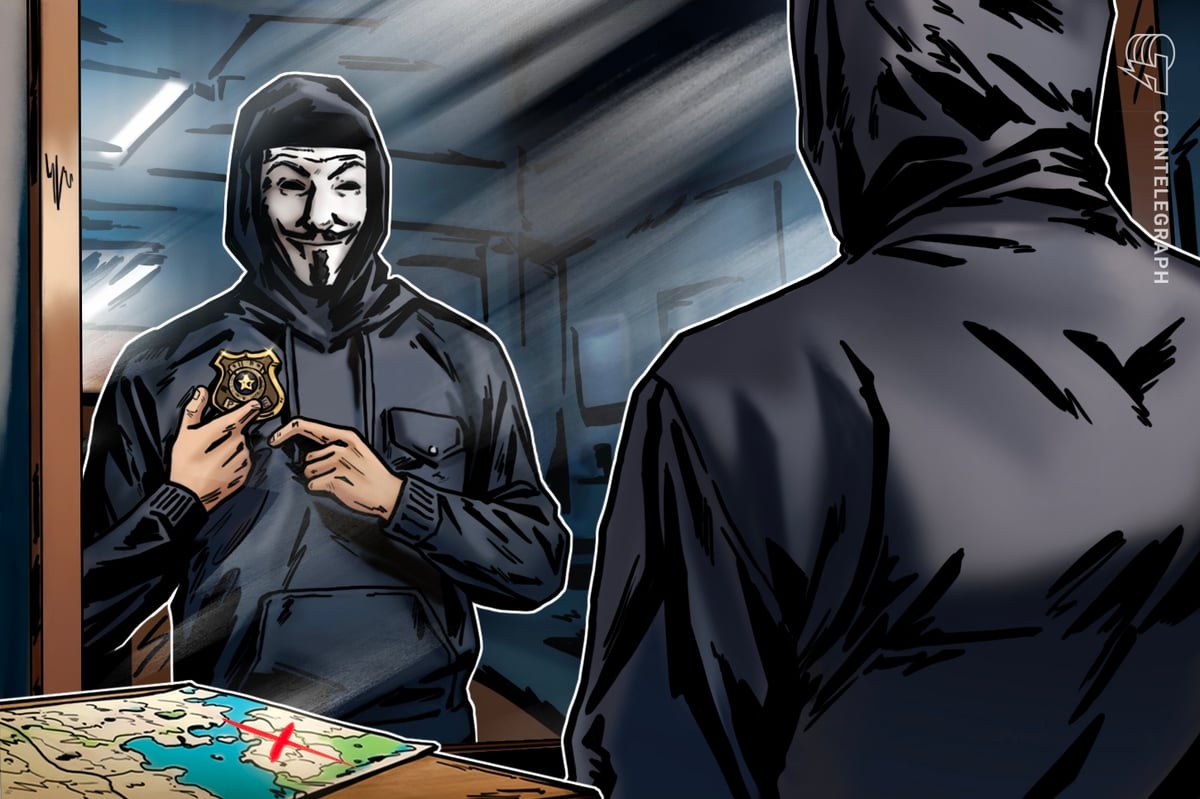
The French case illustrates how attackers used a faux police raid and violence to drive a Bitcoin switch price $1 million, bypassing encryption solely by compelling the sufferer to authorize the transaction.
Wrench assaults are rising, with criminals utilizing threats or drive as an alternative of technical exploits. This highlights how human vulnerability can override even probably the most safe cryptographic programs.
Impersonating authority figures similar to police is extremely efficient as a result of it combines worry, urgency and social conditioning, making victims extra prone to comply with out questioning the scenario.
Digital defenses are now not the one entrance line in crypto safety. Whereas phishing and change hacks have lengthy been main threats, a rising variety of thefts now bypass code solely and goal crypto holders straight.
A latest case in France highlights this shift. Attackers posing as police staged a “raid” and bodily coerced a pair into transferring almost $1 million in Bitcoin (BTC). This was not a failure of software program, however a high-stakes theft carried out by bodily drive.
When the sufferer, not the pockets, turns into the goal
The incident occurred in Le Chesnay-Rocquencourt, a city close to Paris, the place a pair of their late 50s was allegedly assaulted inside their residence.
Right here is the chronology of the incident:
Three people disguised as law enforcement officials gained entry to the house.
The couple was threatened at knifepoint.
The husband was pressured to ship Bitcoin to the attackers.
Each victims sustained accidents, and the husband was bodily restrained and tied up.
The assailants fled the scene in a automobile.
French authorities are presently investigating the matter, with prices together with armed theft and arranged prison conspiracy.
What distinguishes this case isn’t solely the usage of violence, however the particular technique employed.
Relatively than trying to crack encryption, the perpetrators bypassed it solely by coercing the proprietor into authorizing the switch.
Why impersonating law enforcement officials is so efficient
Posing as legislation enforcement officers is usually efficient as a result of it faucets into a number of psychological triggers:
Authority: Persons are socially conditioned to obey police directives.
Urgency: The looks of an official raid creates the impression that speedy compliance is important.
Worry: Any resistance can appear as if it might result in prison penalties.
When criminals current themselves as police, victims usually fail to query:
The explanation for his or her presence.
The legitimacy of their calls for.
The authenticity of the complete scenario.
Below stress, the impulse to obey tends to overpower the intuition to confirm or query what is going on.
In crypto, this danger is even higher as a result of a single authorised transaction can transfer vital funds in seconds.
Do you know? The time period “wrench attack” turned standard within the crypto area after a web-based comedian joked that threatening somebody bodily is less complicated than breaking encryption. It displays a real-world shift wherein attackers bypass advanced programs by focusing on individuals fairly than know-how.
From simulated police raid to coerced Bitcoin switch
Not like typical robberies that focus on money, jewellery or different tangible gadgets, this assault particularly focused digital cryptocurrency holdings.
The attackers’ goal was easy: drive the sufferer to hold out an instantaneous crypto switch.
This type of theft could be tough to include for a number of causes:
Stolen funds could be transferred wherever on the earth inside minutes.
Blockchain transactions are usually irreversible.
As soon as transferred, funds could be moved shortly, which might make tracing and restoration tougher.
When the sufferer retains direct management over their pockets, criminals don’t have to steal {hardware} or break by safety. They solely have to drive the sufferer to approve and ship the transaction personally.
Understanding wrench assaults within the cryptocurrency area
It’s usually far simpler to threaten an individual with a wrench than to attempt to crack their encryption.
Relatively than trying to hack a pockets, perpetrators might use:
Threats
Bodily violence
Different types of coercion
These strategies are used to drive victims to disclose non-public keys or authorize the switch of funds. Such assaults bypass even the strongest technical protections.
Irrespective of how robust the encryption is, human vulnerability could make that safety irrelevant.
Do you know? Some high-net-worth crypto holders now use “decoy wallets” with small balances. In a coercive scenario, they will reveal these wallets as an alternative of their primary holdings, including an additional layer of psychological and monetary safety.
Why these assaults have gotten extra frequent
A number of underlying components are driving this enhance:
Development in self-custody: A rising variety of customers now maintain their very own non-public keys and handle their belongings straight, making them extra speedy and accessible targets.
Visibility of high-value targets: Many cryptocurrency traders, firm founders and executives preserve public profiles that make their wealth and identification comparatively simple to determine.
Advances in cybersecurity: As digital pockets safety improves and distant hacking turns into tougher, criminals are more and more turning to the softer goal, the human consumer.
On the spot international liquidity: Cryptocurrency allows near-instant transfers of worth wherever on the earth with out banks or intermediaries performing as gatekeepers.
In 2025 alone, documented instances of verified wrench assaults reportedly rose sharply, rising 75% from 2024. Europe, and France particularly, stood out as a rising hotspot for such incidents. Monetary losses reached $40.9 million in 2025, marking a 44% annual enhance. Whereas kidnapping remained the first risk vector, bodily assaults surged by 250%.
Why France has skilled a surge
France has not too long ago recorded a number of high-profile violent crimes linked to cryptocurrency:
Kidnappings carried out to extort cryptocurrency ransoms.
House invasions particularly focusing on high-profile figures within the crypto trade.
Coordinated operations by organized prison teams aimed toward stealing digital belongings.
These recurring incidents level to a shift in prison conduct:
Extra deliberate efforts to determine people who maintain cryptocurrency.
Elevated surveillance of their bodily places and day by day routines.
A rising choice for direct bodily focusing on over purely digital strategies.
As cryptocurrency adoption continues to broaden, public consciousness of who owns it’s also rising. Sadly, the bodily dangers related to that visibility are rising as nicely.
Why criminals more and more select coercion over hacking
Crypto safety has develop into more and more robust. {Hardware} wallets, multisignature setups and chilly storage options make distant hacking far tougher.
Coercion, nevertheless, modifications the equation.
Even the strongest technical protections might fail if a sufferer is coerced into unlocking their {hardware} gadget, revealing their credentials or authorizing a transaction.
Coercive assaults bypass cryptographic defenses solely, goal factors of human entry and exploit pure human reactions.
For perpetrators, this strategy is usually sooner and extra dependable than attempting to interrupt by technical defenses.
Why Bitcoin stays notably uncovered in duress conditions
Bitcoin’s core structure provides it appreciable power, but it surely additionally creates vital vulnerability when the proprietor is beneath coercion.
Its key options embody:
The flexibility to switch worth instantly
The absence of any central entity able to reversing transactions
Permissionless, worldwide accessibility
In a scenario the place the holder is pressured to switch funds, these traits may end up in:
Property being moved virtually immediately
Just about no practical probability of restoration
Attackers quickly transferring funds throughout a number of addresses
The identical qualities that give Bitcoin its independence and worth additionally make stolen funds extraordinarily tough to recuperate as soon as they’re transferred beneath duress.
Do you know? Personal safety corporations have began providing specialised safety companies for crypto traders, together with journey danger assessments, house safety audits and digital footprint discount methods aimed toward stopping focused assaults.
How French authorities are responding
French legislation enforcement companies are actively investigating the incident, with specialised organized crime models main the hassle.
Potential prison prices beneath assessment embody:
Though authorities are rising enforcement in response to such incidents, these instances proceed to current severe challenges due to:
The speedy cross-border motion of stolen belongings
The pseudonymous and irreversible nature of cryptocurrency transactions
The involvement of organized {and professional} prison teams
Key safety takeaways for cryptocurrency homeowners
This incident underscores a serious shift within the nature of cryptocurrency safety threats.
Defending technical programs alone is now not sufficient. Safeguarding wallets, non-public keys and bodily units should now be paired with robust private safety measures.
Important protecting steps embody:
By no means publicly reveal or talk about the extent of your cryptocurrency holdings.
Hold your real-world identification separate out of your pockets addresses and possession.
Use multisignature wallets in order that no single particular person or compromised key can authorize transfers.
Distribute signing authority and key management throughout totally different geographic places or trusted events.
Cointelegraph maintains full editorial independence. Guides are produced with out affect from advertisers, companions or business relationships. Content material printed in Guides doesn’t represent monetary, authorized or funding recommendation. Readers ought to conduct their very own analysis and seek the advice of certified professionals the place applicable.
