



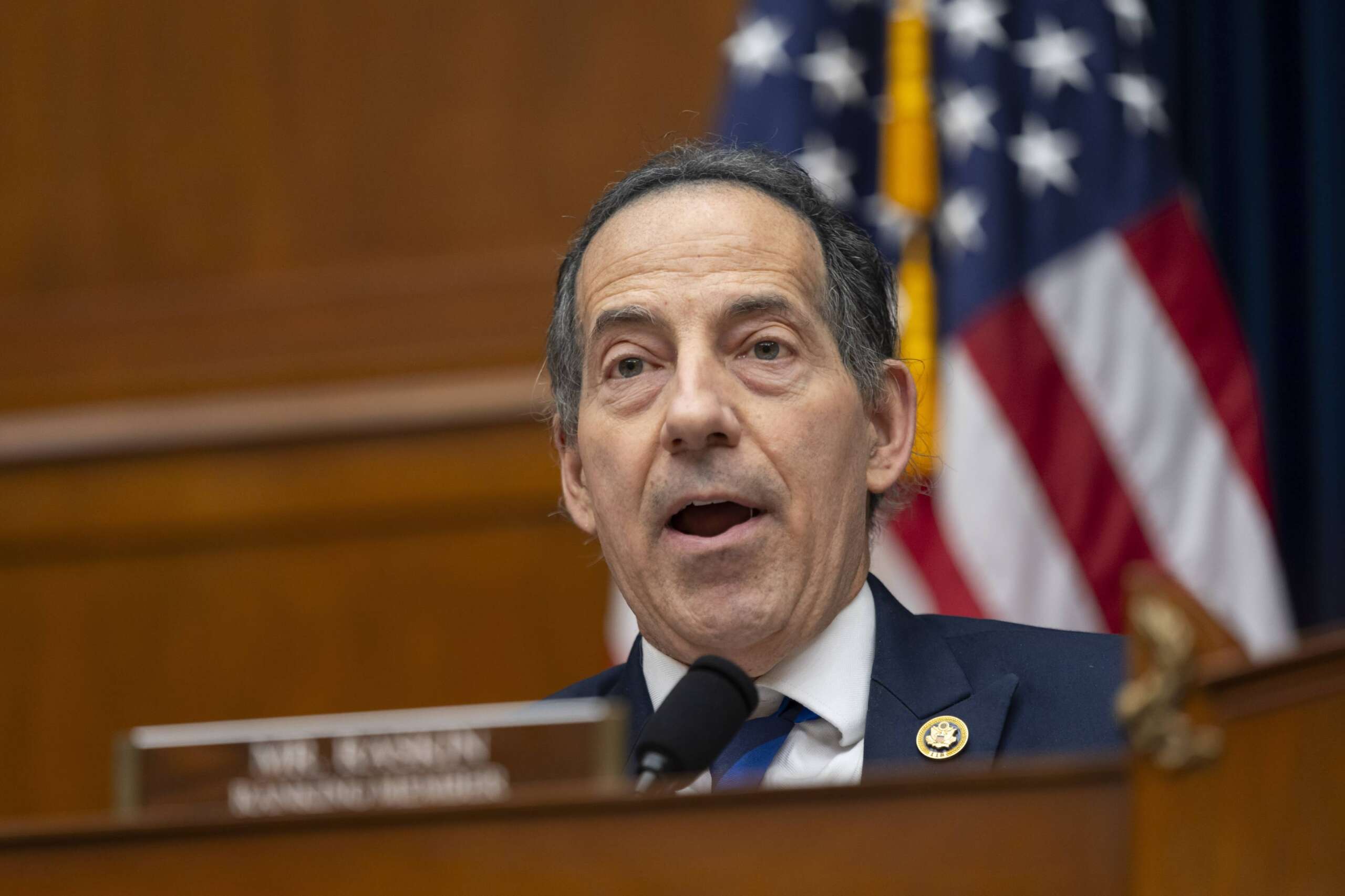
With the future of the Combined Federal Campaign uncertain, Democratic members of Congress are pressing the Trump administration to preserve the decades-old charitable giving initiative for federal workers.
A coalition of lawmakers, spearheaded by Rep. Jamie Raskin (D-Md.), along with Sens. Chris Van Hollen (D-Md.) and Angela Alsobrooks (D-Md.), cautioned that ending the CFC would “disrupt and destabilize” thousands of nonprofit organizations that count on its support. They are calling on the Office of Personnel Management to keep the program running in 2026 and into the future.
“OPM has taken several steps that weaken the CFC,” the Democrats stated in a letter sent Thursday to OPM Director Scott Kupor. “We are worried that the program is now on the verge of shutting down.”
It remains uncertain whether the CFC will proceed this year. An OPM spokesperson informed Federal News Network that the agency has not yet reached a final decision on whether to conduct the campaign.
However, OPM made moves earlier this year that hinted at a possible end to the program. In February, the agency declared it would shut down the CFC’s online giving portal by early March. The CFC website now displays a notice confirming the portal is being taken offline. It advises users to download receipts and other records before the site is completely shut down.
“The site could go offline at any time,” the website warns.
Following the portal’s shutdown, Democrats are raising alarms about the potential cascading effects on participating organizations if the CFC is discontinued.
“The recent shutdown of online portals for both charities and donors poses a serious threat to their operations,” they wrote. “Given the strong return on investment the CFC delivers and the critical lifeline it provides to charities nationwide, we urge you to protect this essential program.”
For over six decades, the CFC has organized an annual government-wide fundraising drive, enabling federal employees to donate to thousands of charities around the globe through payroll deductions. Since its launch during the Kennedy administration, the CFC has generated a total of $9 billion.
Each year, more than 4,400 charities take part in the CFC. The 2025 giving cycle brought in an estimated $40 million, even amid persistent setbacks and weeks of delays caused by overlap with last fall’s government shutdown. By contrast, the 2024 campaign collected nearly $70 million in federal employee donations.
Trump administration officials have voiced concerns about the expense of maintaining the program in 2026 and beyond. OPM has indicated it would be “evaluating changes” to the CFC and has raised the possibility of ending it entirely. Officials pointed to low participation rates and “excessive administrative costs” as key issues.
Last August, the Trump administration temporarily paused the CFC’s annual campaign but later decided to move forward with the 2025 cycle. At the time, Kupor explained that the 2025 CFC would proceed “only because many charities have already invested significant time and resources preparing for it throughout the year.”
When asked about the Democrats’ letter, an OPM spokesperson referenced a September 2025 blog post that estimated the CFC cost $22 million in external contractor fees and listing fees to administer last year.
“This means for every $1 a federal employee donates, roughly $0.33 (or 33%) never reaches the intended charity,” Kupor wrote in the blog post. “And that’s before the charities themselves allocate a portion of those funds to cover their own administrative costs… So, if you’re a federal employee donating through the CFC, only 47 cents of every dollar you give actually reaches the intended beneficiary.”
In their letter, however, Democrats challenged the administration’s claim that the program is too expensive to sustain, contending that it “leaves out critical details about how the CFC is structured and the long-term value it provides.”
The letter notes that charities pay fees to take part in the program, which helps offset operating expenses — and over time, the lawmakers argued, the CFC saves hundreds of millions of dollars by gathering donations that might otherwise need to come from federal funds.
“If there are improvements OPM can make to further boost the CFC’s efficiency, we encourage you to pursue them in collaboration with long-standing charity partners,” the Democrats wrote. “But a unilateral decision to dismantle the program entirely is not the answer.”
According to the Democrats, some organizations involved in the CFC have warned that fully ending the donation program would create serious financial difficulties.
“Many charities depend on the funds they receive through the CFC to carry out their work,” the Democrats wrote. “Losing these resources would force them to cut back on their programs, making it extremely hard for them to serve the vulnerable communities that rely on them.”
Ann Hollingsworth, vice president for government affairs at The Nonprofit Alliance, described the CFC’s continuation in 2026 and beyond as “essential.”
“The CFC is being wound down in real time — from the OPM office responsible for running it being effectively closed to participating organizations losing access to records and data they paid for through program fees,” Hollingsworth said in an email. “[The letter] reaffirmed strong backing for preserving the CFC and underscored the significant and diverse charitable impact that flows from such a program.”
If you’d like to reach this reporter about recent developments in the federal government, please email drew.friedman@federalnewsnetwork.com or connect on Signal at drewfriedman.11
Copyright
© 2026 Federal News Network. All rights reserved. This website is not intended for users located within the European Economic Area.
